


Thursday, 18 June 2026 The Alpine Europe: Innovation in the Circular Economy Summer School 2026 with students from the University of Primorska, Saarland University and Oregon State University has started!
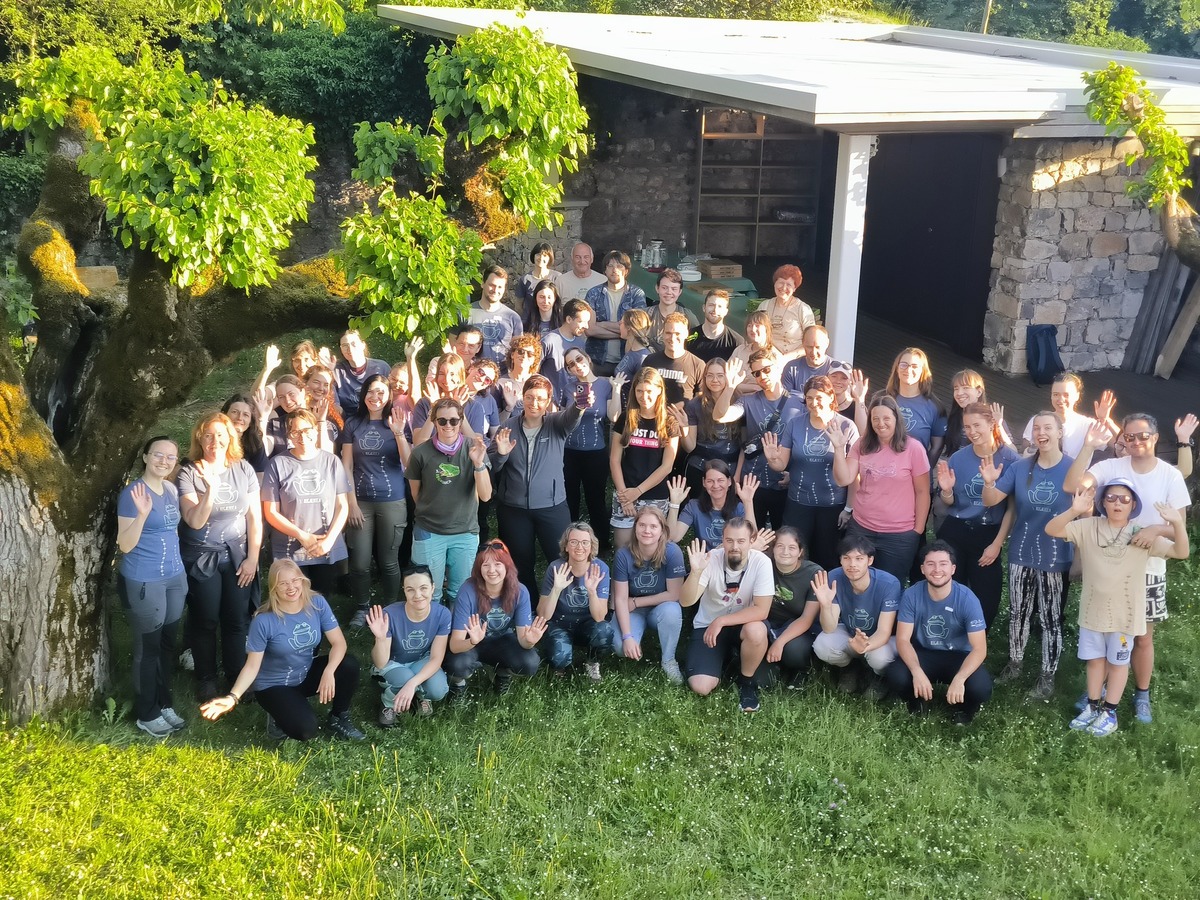
Yesterday marked the beginning of the Alpine Europe: Innovation in the Circular Economy Summer School 2026, bringing together students from the University of Primorska, Oregon State University, Saarland University and partner institutions for two weeks of learning, collaboration and cultural exchange.
The first day included a guided tour of Ljubljana, where participants explored the city’s rich history, culture and architecture. The tour was led by Dr. Črtomir Tavzes, InnoRenew CoE, UP IAM researcher, who introduced the group to Slovenia’s capital and its unique heritage.
The participants were accompanied by Dr. Andreja Kutnar, department chair of InnoRenew CoE, UP IAM and Dr. Mohammad Derikvand, InnoRenew CoE, UP IAM researcher.
Led by faculty from the University of Primorska and Oregon State University (USA), the Summer School is organised by UP FAMNIT, UP IAM and the NEBAP Hub in collaboration with Oregon State University, a global partner of the T4EU Alliance. As such, this summer school presents a crucial step in strengthening the global relevance of T4EU and its partners.
We look forward to an inspiring programme of lectures, field visits, practical workshops and new international connections!


Tuesday, 16 June 2026 Graduation Ceremony celebrates 166 new graduates
Today, June 16, 2025, the 16th Graduation Ceremony of UP FAMNIT took place in the hall of Sv. Frančišek Asiški in Koper. The ceremony once again brought together graduates, their families, and academic staff in celebration of the completion of their studies.
At the threshold of its 20th anniversary, FAMNIT’s study and research activities are today strongly interconnected and clearly oriented towards interdisciplinarity. This close integration, together with high-quality academic work, is reflected both in research achievements and in the faculty’s diverse study portfolio. It currently comprises 7 (and from the next academic year 9) undergraduate programmes, 8 master’s programmes, and 6 doctoral programmes, more than half of which are also offered in English.
The number of graduates continues to grow year by year. This year, there are 166 graduates, which is why, for the second consecutive year, the Graduation Ceremony is held in two separate sessions. In the morning, degrees were awarded to most undergraduate graduates, while in the afternoon the ceremony continued for graduates of the undergraduate Biopsychology study programme and all master’s programmes.
In both parts of the ceremony, graduates and alumni of the faculty addressed the audience, sharing stories that reflected the connection between academic paths and professional development. In the morning session, the speakers were graduates Ivana Kresevič (B.Sc. in Finance Mathematics) and Jernej Grubar (B.Sc. in Conservation Biology). In the afternoon session, the addresses were delivered by graduate Jani Suban (Master’s degree in Computer Science) and Iza Resnik Strozak, our successful alumna (she concluded the master’s study programme of Nature Conservation), who currently serves in the management of MM Količevo leading transformations in quality management, environmental standards, and sustainability strategies in a complex industrial environment.
The musical programme was performed by a student of the Music School Koper, Anna Sofia Dodič (harp), and by students of Koper Gymnasium (Art Gymnasium – Music programme), Maša Kogovšek (guitar) and Vita Novak (accordion).
As every year, the faculty also awarded commendations to students who excelled in their studies, research, or extracurricular activities. This year’s recipients are: Alja Šlenc, Makar Korshunov, Hristina Gelevska, Nina Jovčić, Bogdan Šinik, Sofija Kochovska, Laura Ogrin, Eric González Vicent, Adrian Požun, Vanja Gomboc, and Artem Nesterov.


Monday, 15 June 2026 T4EU Pupils Labs: workshops for Škofja Loka Gymansium students
On 12 June, 30 students from Škofja Loka Gymnasium visited us as part of the T4EU Pupils Labs initiative, which aims to bring research, science, and the concept of knowledge-based entrepreneurship closer to young people.
Following an introductory presentation of the UP FAMNIT and the T4EU initiative, the students participated in two workshops. In the first workshop, they explored medicinal and aromatic plants characteristic of the Mediterranean environment, such as immortelle (Helichrysum italicum), winter savory, and lavender. They learned about their properties and the methods used to obtain essential oils and other plant extracts.
During the second workshop, the students investigated the importance of pollinators for food production and ecosystem conservation. Through hands-on activities, they learned about pollen development, carried out experiments to determine pollen viability and germination, and observed the results under a microscope.
After the workshops, the students visited the Piran Aquarium, which is part of the University of Primorska Science Centre. There, they learned about the characteristic organisms of the northern Adriatic Sea and gained a deeper understanding of the marine environment and its conservation.


Monday, 15 June 2026 University of Primorska participated at a High-Level Meeting on the future of the European bioeconomy with European Commissioner Jessika Roswall
Dr. Andreja Kutnar, InnoRenew CoE, UP IAM’s department chair, was among the invited speakers of the High-Level Stakeholder Dialogue “From Strategy to Action: Accelerating Europe’s Bioeconomy Revolution”, which was held in Brussels in the presence of Jessika Roswall, the European Commissioner for Environment, Water Resilience and a Competitive Circular Economy. The event provided an important opportunity for the University of Primorska’s expertise to be represented in the discussion shaping the future development of Europe’s bioeconomy. The meeting took place on 12 June 2026 and was organised as part of the New European Bauhaus Festival.
The discussion at the high-level meeting involved experts and representatives of European institutions, research organisations, industry and civil society, enabling an open and substantive exchange of views about the further implementation of the EU Bioeconomy Strategy and the key steps needed to accelerate the development of a competitive and sustainable European bioeconomy.
Dr. Andreja Kutnar contributed to the discussion on the development of sustainable bio-based materials, the circular economy and the role of research and innovation in the transition towards a climate-neutral and competitive Europe:
“This meeting offered a valuable opportunity to exchange perspectives and outline our ambitious goals. It is essential that wood, as one of Europe’s key materials, receives the recognition it deserves. The discussion clearly contributed to advancing the transition toward a sustainable bioeconomy.”
Key topics at the meeting included several European Commission initiatives related to bioeconomy, such as the European Bioeconomy Regulators and Innovators’ Forum, the European Bioeconomy Investment Deployment Group, Biotech Act II and EU bioeconomy dialogues with Member States on the implementation of the EU Bioeconomy Strategy. Particular attention was also given to the preparation of the Bio-Based Europe Alliance (BEA), a voluntary initiative of companies committed to collectively purchasing bio-based materials, products and applications worth 10 billion euros by 2030.
Throughout the participation in this high-level meeting, the University of Primorska further strengthened its role in European discussions on the development of the bioeconomy and in fostering cooperation between the research, industry, and policy sectors in shaping sustainable and circular solutions.

Image: European Commission

Image: European Commission

Image: European Commission
Friday, 12 June 2026 University of Primorska at the NEB Festival in Brussels
The New European Bauhaus (NEB) Festival opened yesterday in Brussels, Belgium, with the opening ceremony attended by Ursula von der Leyen, President of the European Commission. Durin her visit to the NEB Festival fair, she visited selected stands, including the NEB Academy Alliance project booth, where she meet with Dr. Andreja Kutnar, coordinator of the project. The President of the European Commission, together with António Costa, the President of the Council of the European Union, were the first visitors to the NEB Academy Alliance booth, marking a great start of the festival.
Together they discussed about the project’s progress, which is led by University of Primorska, and shared its vision for developing the skills needed to support the New European Bauhaus transition, particularly in relation to the future of the built environment.
The NEB Festival is bringing together a wide range of innovative initiatives that are helping to shape Europe’s sustainable and inclusive future. The festival highlights projects that combine design, sustainability, and new approaches to the built environment.
NEB Academy Alliance project has received notable high-level recognition for its role in advancing education and skills development for the green transition. The project is being presented as an important contribution to strengthening competencies aligned with the goals of the New European Bauhaus. It focuses on developing future-oriented knowledge and skills needed to support sustainable transformation in the built environment, combining innovation, design, and environmental responsibility.
The University of Primorska is represented also at the WoodStock project booth, which today had the honor of welcoming Ekaterina Zaharieva, European Commissioner for Startups, Research and Innovation. During her visit, she also admired the WoodStock rulers, made from wood reclaimed from the historic Servite Monastery, which is currently undergoing renovation by the University of Primorska.
The NEB Festival offers a rich program and provides anunique forum for connecting, creating new partnerships and sharing best practices. The University of Primorska is present at the NEB Festival with several projects that are being showcased at the festival fair, besides the NEB Academy Alliance and WoodStock, also Life BE-Wooden, and BIOARCH, as well as several other projects, which is highlighting its commitment to advance sustainable solutions with research education and cooperation.


Foto: European Commission

Thursday, 11 June 2026 Best Paper Award at ACM UMAP 2026 for UP FAMNIT researchers
Dr. Marko Tkalčič and Assist. Uroš Sergaš have received the Best Paper Award in the late-breaking results (LBR) track at the ACM UMAP 2026 conference, which is taking place from June 8 to 11 in Gothenburg, Sweden.
ACM UMAP (User Modeling, Adaptation and Personalization) is one of the leading international conferences in the field of user modeling, personalization, and adaptive intelligent systems, and is ranked as an A-category conference according to the CORE ranking.
The award-winning paper, titled "Progress Feedback for Countering Selective Exposure: When Visualization Can Backfire", was developed in collaboration with researchers from Jönköping University, Sweden. The authors include Janine Riemann, Jasmin Alt, Uroš Sergaš, Marko Tkalčič, and Bruce Ferwerda.
The study explores whether different types of visual feedback about users’ news consumption can reduce selective exposure—i.e., the tendency to prefer information that confirms existing beliefs. The authors compared an analytic visualization of viewpoint balance with a metaphorical “growth” visualization framing exposure to opposing views as personal development. In a controlled experiment with 84 participants, neither approach significantly increased engagement with belief-opposing content compared to a control condition.
These results suggest that simple visualization-based feedback alone is not sufficient to meaningfully change users’ information-seeking behavior, and that more advanced or structural interventions may be needed.
We sincerely congratulate the award recipients on this achievement.

Wednesday, 10 June 2026 UP FAMNIT students take first place at national BISC-E competition with the SediMateria project
A team of students from the University of Primorska, Faculty of Mathematics, Natural Sciences and Information Technologies (UP FAMNIT), has won first place in the Slovenian round of the Bio-based Innovation Student Challenge Europe (BISC-E), a Europe-wide student competition that promotes bio-based innovation and entrepreneurship. With this achievement, the team has qualified for the European final, where it will represent Slovenia in September 2026. This is also the first time the University of Primorska has participated in the competition.
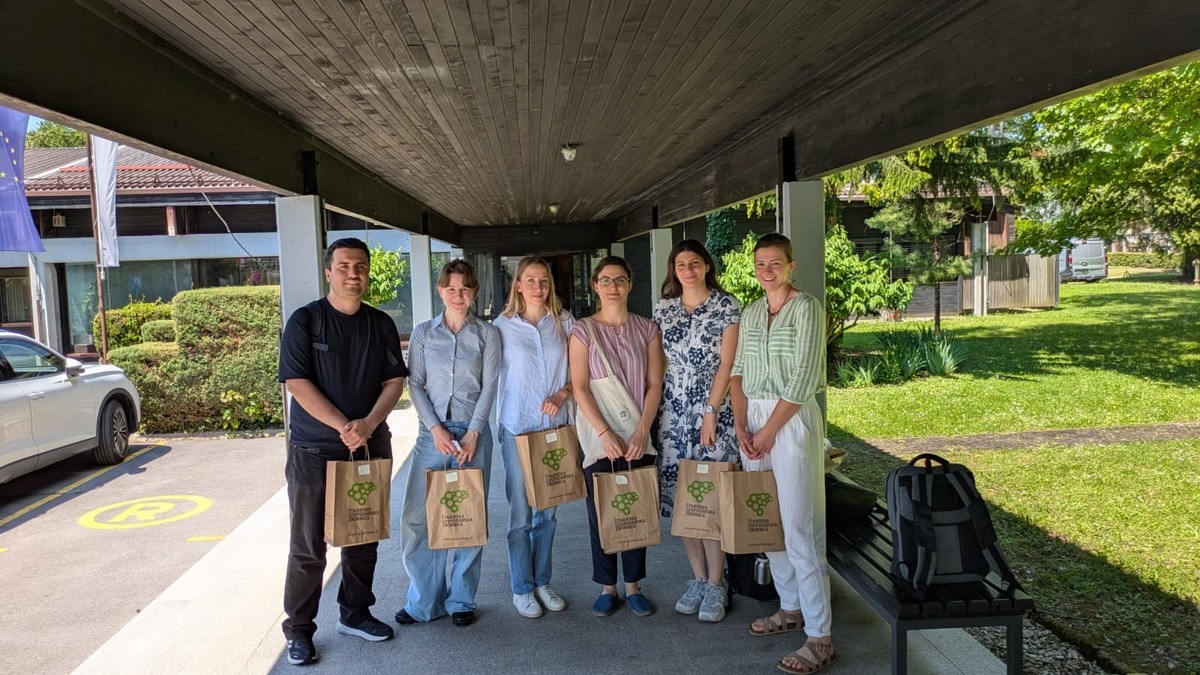
The winning project, From Sawmill Residues and Marine Sediments to Sustainable Construction (SediMateria), explores the development of a sustainable building product by combining marine sediments from the Port of Koper with sawmill residues. The project investigates the development of a bio-clay board, a non-load-bearing building element made from biological and geological resources for insulation and interior finishing. By linking waste and residual streams, the project proposes an innovative product that reduces resource consumption, lowers environmental impact, and supports the transition to a bio-based, circular construction sector.
The project was developed under the supervision of Dr. Andreja Kutnar, department chair of InnoRenew CoE, UP IAM. The team consists of Katarina Legat and Zoja Mohorčič, students of the Master’s programme Sustainable Built Environments, and Špela Vrtovec, Una Vuletić, Erfan Asgari and Olga Srejić, PhD candidates in the doctoral programme Renewable Materials for Healthy Built Environments, who are also involved in research activities at InnoRenew CoE, UP IAM.
BISC-E (Bio-based Innovation Student Challenge Europe) is a Europe-wide student competition that promotes entrepreneurship and encourages students to develop innovative bio-based products and processes that address technological, environmental, and societal challenges. The European final brings together the winning teams from national competitions across participating European countries. The national coordinator of the competition is SRIP – Circular Economy, in collaboration with the Biotechnical Faculty of the University of Ljubljana.
Tuesday, 9 June 2026 We Hosted Students from the Technical Gymnasium of the ŠC Kranj
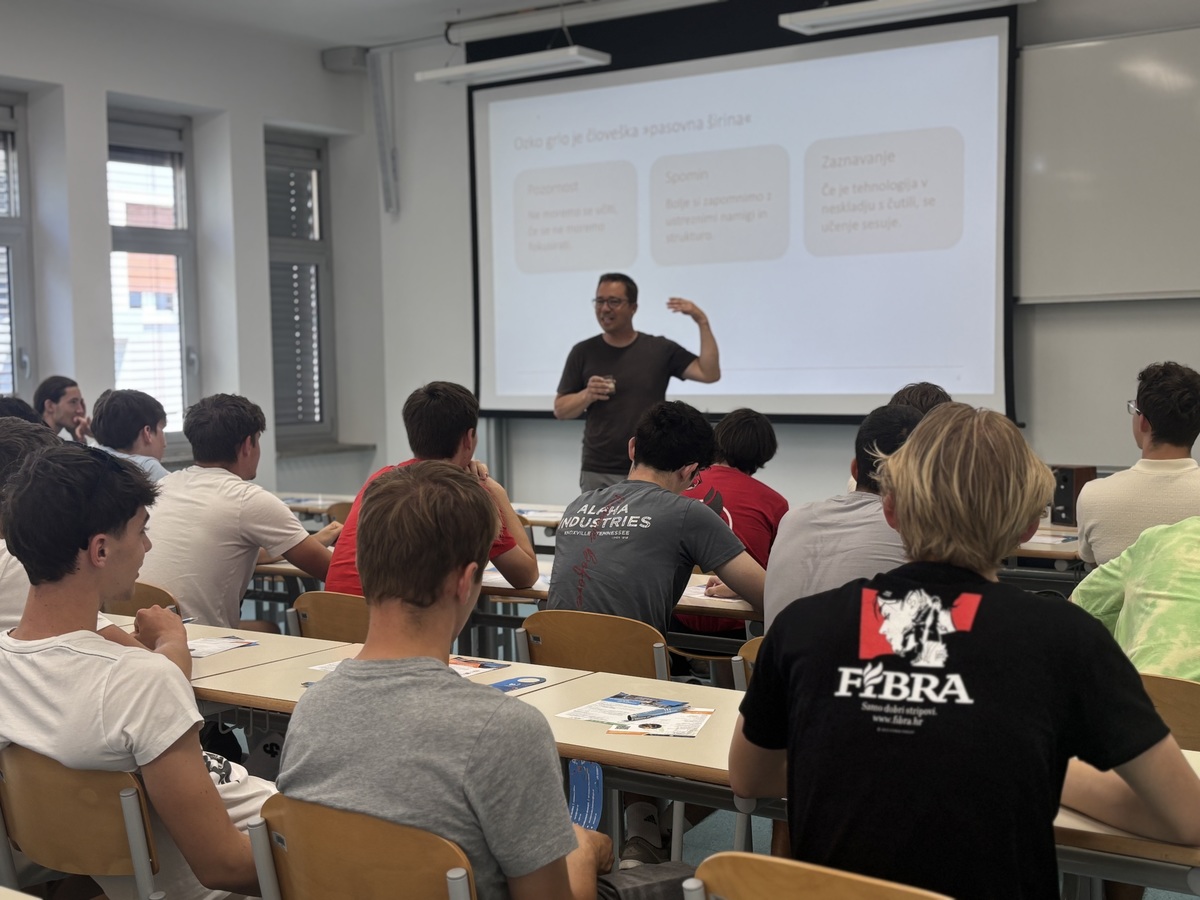
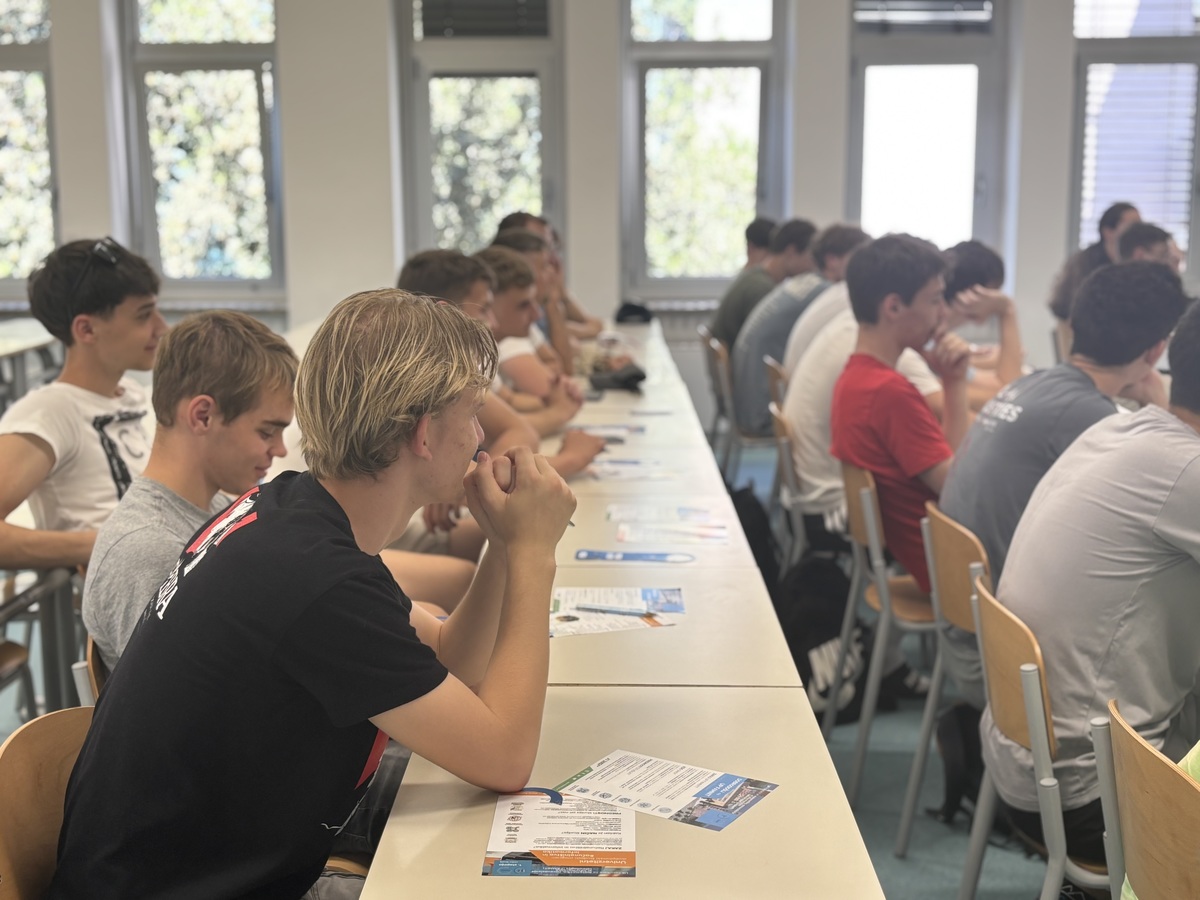
Today, we welcomed 53 students and four accompanying teachers from the Technical Gymnasium of the Kranj School Centre to UP FAMNIT's premises.

Upon arrival, the students were divided into two groups and given a detailed introduction to our Computer Science programme. They learned about the curriculum, practical work opportunities, research activities, and career prospects for graduates.
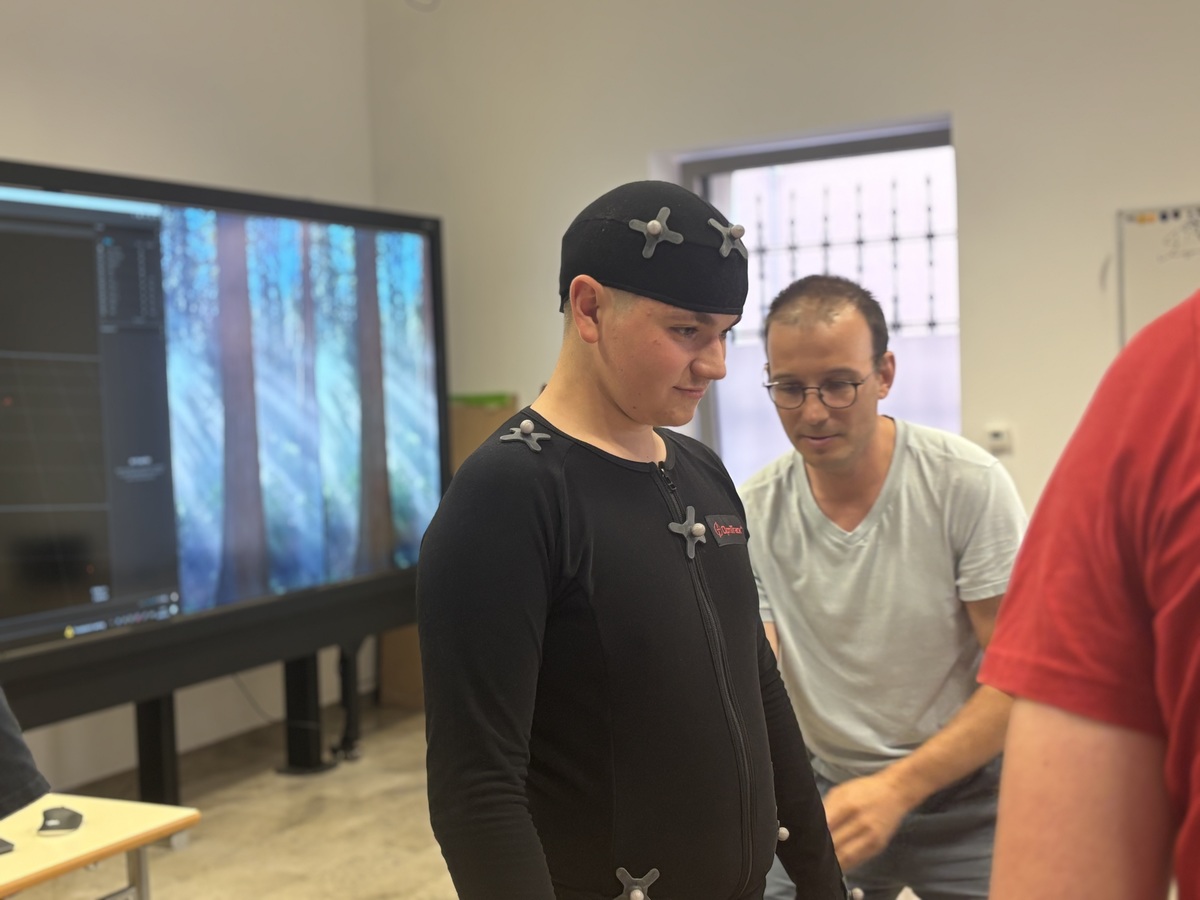
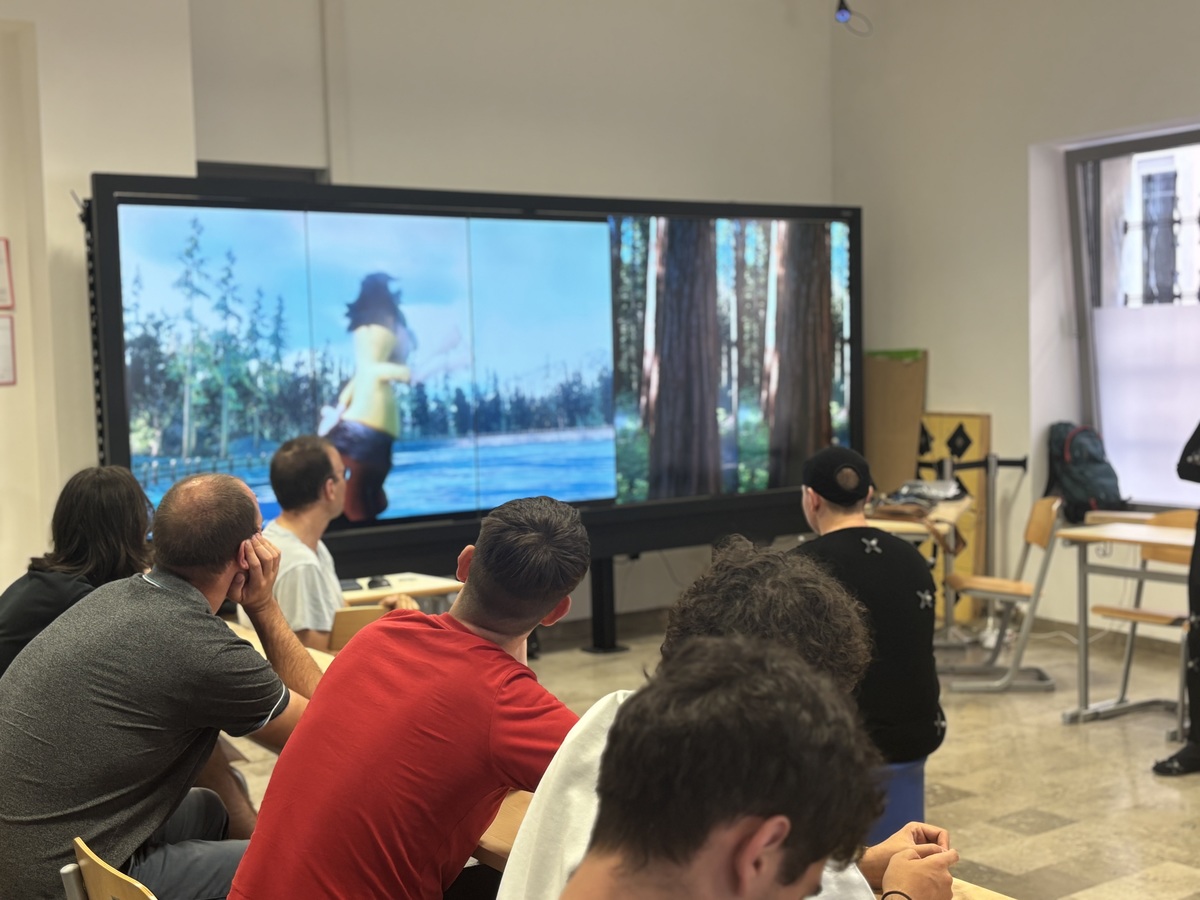
After the presentation, the students attended a workshop titled "Full Body Motion Capture ," where they explored the basics of full-body motion capture technology. They learned how these systems are used for character animation in films, video games, and virtual reality. Through hands-on activities, they tested different techniques and gained insight into data processing and its use in digital environments.
As part of their visit, the students also visited the company Titus in Dekani, where they were introduced to the company's operations and activities.
Monday, 8 June 2026 Presentation of the topic of the doctoral dissertation of Aja Bončina
We invite you to the presentation of the topic of the doctoral dissertation Application of novel molecular tools to investigate ecology and immunological traits of wild boar of the student Aja Bončina, enrolled in the doctoral study programme Conservation Biology (in Slovene).
The presentation will take place on Wednesday, 17 June 2026 at 11.00 in the classroom Livade-BOTANIKA.
You are kindly invited!
Thursday, 4 June 2026 Visit of Pupils from Vojka Šmuc Primary School, Izola: From aromatic plants and Markov chains to Slovenia’s largest wooden building
Today, 16 pupils from Vojka Šmuc Primary School in Izola visited us as part of the T4EU Pupils Labs initiative, which aims to bring research, science, and the concept of knowledge-based entrepreneurship closer to young people.
Following an introductory presentation of the UP FAMNIT and the T4EU initiative, the pupils participated in two interactive workshops. Dr. Alenka Baruca Arbeiter led the workshop Exploring Aromatic Plants Through Research, during which the pupils learned about medicinal and aromatic Mediterranean plants such as immortelle (Helichrysum italicum), winter savory, and lavender. They explored the characteristics and uses of these plants, learned about the production of essential oils, hydrolats, and other plant extracts, and gained insight into research activities related to their sustainable cultivation. Dr. Ana Zalokar conducted the workshop From Snakes and Ladders to Stock Prices. Through board games, pupils were introduced to Markov chains and their application in predicting various processes. During the workshop, they counted pathways, forecast weather patterns, and explored stock market price movements.
A special highlight of the visit was a tour of the InnoRenew CoE laboratories, guided by Dr. Črtomir Tavzes. The pupils visited Slovenia’s largest wooden building and learned about its sustainable features, the use of locally sourced materials, and energy-efficient solutions that help reduce the environmental impact of modern construction.


Thursday, 4 June 2026 International Academy of Wood Science Appoints First Female Vice President on Its 60th Anniversary – Prof Andreja Kutnar from University of Primorska
On the occasion of its 60th anniversary, the International Academy of Wood Science (IAWS) has appointed its first female Vice President. Professor Andreja Kutnar of the University of Primorska was elected to this historic role on June 2, 2026. She has been a Fellow of the IAWS since 2021.
Founded on June 2, 1966, in Paris, the IAWS is a non-profit global organization that brings together leading experts across all fields of wood science and related technologies. With more than 400 Fellows representing every continent, the Academy has, for six decades, fostered international collaboration and excellence in wood science. Fellowship in the IAWS is awarded through a rigorous process of nomination and election, recognizing outstanding contributions to the field.
Marking a significant milestone in its history, the IAWS has, for the first time, elected a woman to its executive leadership. Professor Kutnar succeeds Professor Ingo Burgert from ETH Zurich, who assumed the role of IAWS President on the same day.
The 60th anniversary celebrations took place during an international conference held in Zurich, Switzerland, from June 1 to June 4, 2026, hosted by ETH Zurich. The event brought together more than 100 participants from around the world to discuss the latest advancements in wood and wood-based materials. During the conference, Professor Kutnar delivered a plenary lecture highlighting the research activities of InnoRenew CoE in the field of wood science.
Her election as IAWS Vice President further strengthens the University of Primorska's international standing within the global scientific community.
Reflecting on her appointment, Professor Kutnar stated: “The IAWS is home to many renowned wood scientists with exceptional knowledge from around the globe. My ambition is to open doors for young wood scientists, supporting them in becoming the future leaders of wood science worldwide.”

Photo: Miran Kambič
Friday, 29 May 2026 CLT Passport project of Stilles nominated for GZS Gold Award with involvement of InnoRenew CoE, UP IAM in development
The CLT Passport project, developed by Stilles, has been nominated for the Chamber of Commerce and Industry of Slovenia Gold Award for regional innovations 2026. The InnoRenew CoE, UP IAM team was involved in the development of the CLT Passport, showcasing a synergy between industry and science that is essential for the competitive development of the European wood industry.
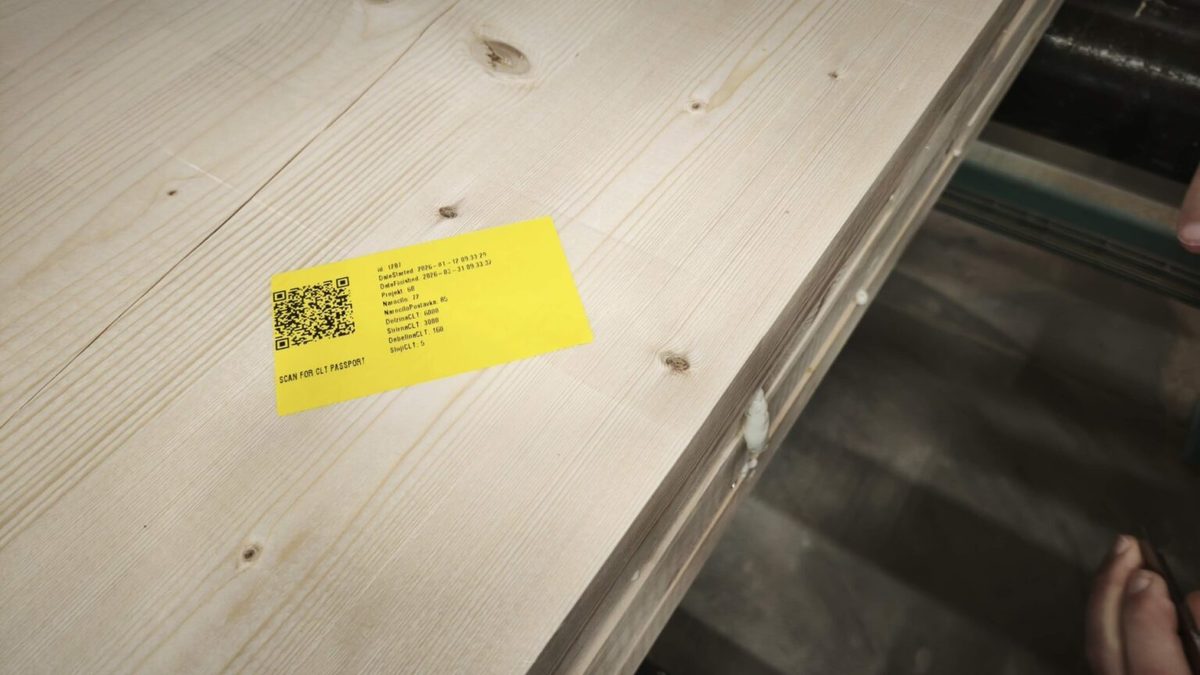
The digital solution enables full lifecycle traceability of cross-laminated timber (CLT) panels and provides structured access to key production and material data from raw material origin to final installation in buildings. This supports increased transparency, data-driven decision-making, and improved reliability in timber construction.
Each CLT element is linked to a QR code that provides access to verified production and quality data, including wood origin and grading, adhesive information, pressing parameters, equipment calibration, environmental production conditions, and quality control records. This enables efficient retrieval of information throughout the service life of a building.
The project is positioned within the framework of current European regulatory developments, including the Construction Products Regulation (CPR, 2024/3110) and the Ecodesign for Sustainable Products Regulation (ESPR, 2024/1781), which are related to the development of digital product passports for construction materials.
This nomination highlights the importance of collaboration between industry and research organisations in the development of digital and sustainable solutions for the built environment, particularly in the field of timber construction and material traceability systems.
More about the project can be found in the article “Stilles’ CLT Passport Project Nominated for the Chamber of Commerce and Industry of Slovenia Gold Award”, published on the Stilles website.
Thursday, 28 May 2026 Successfully Concluded the 5th REGALNICA Event - inventory of the European tree frog
Thursday, 28 May 2026 UP FAMNIT Welcomed Students from II. Gymnasium Maribor
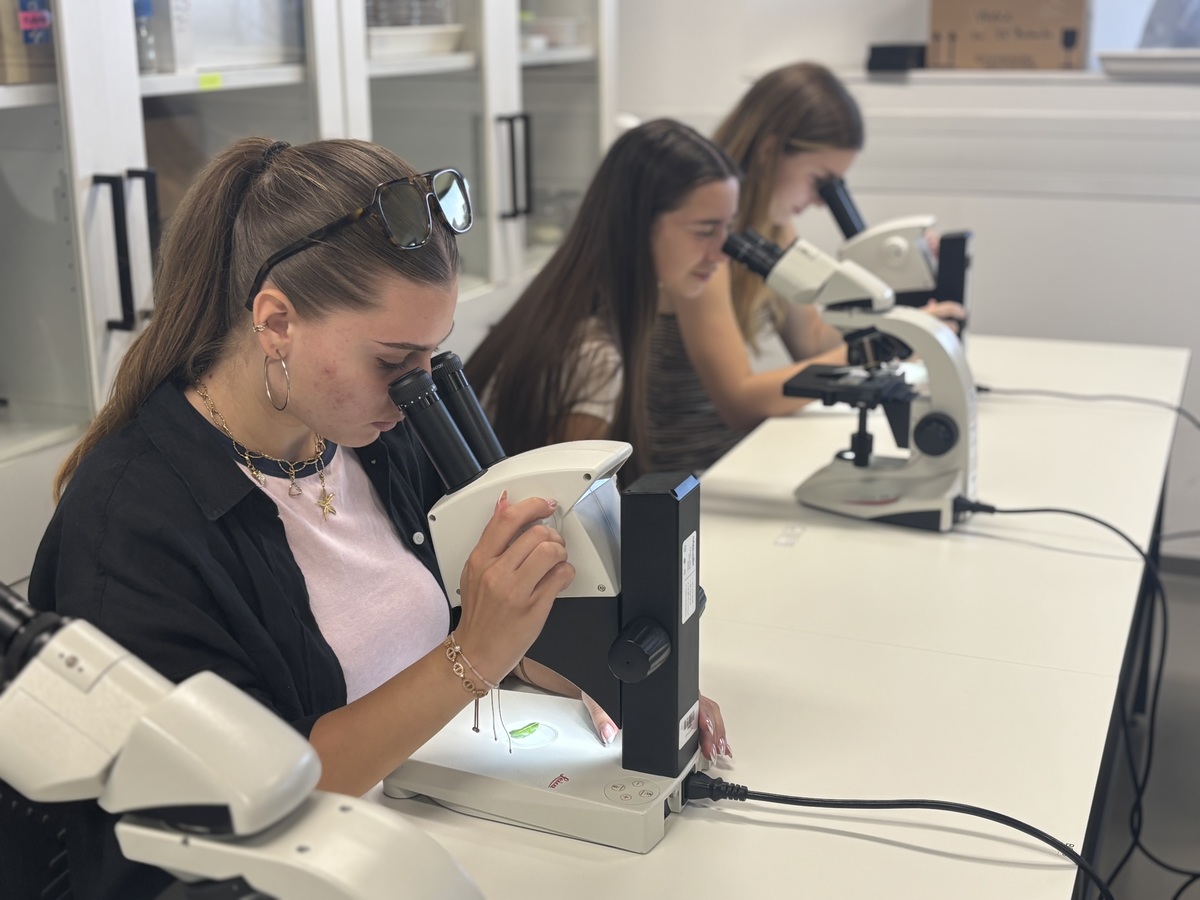
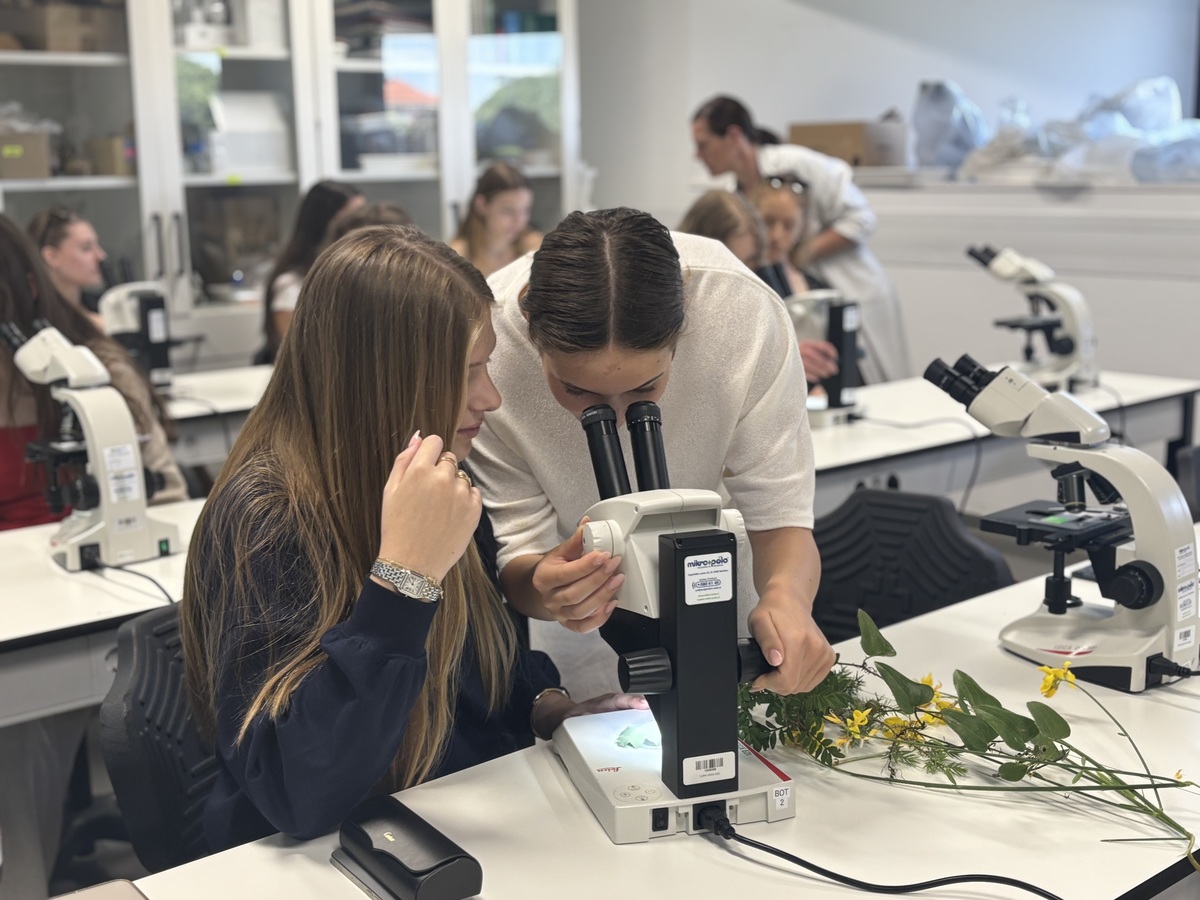
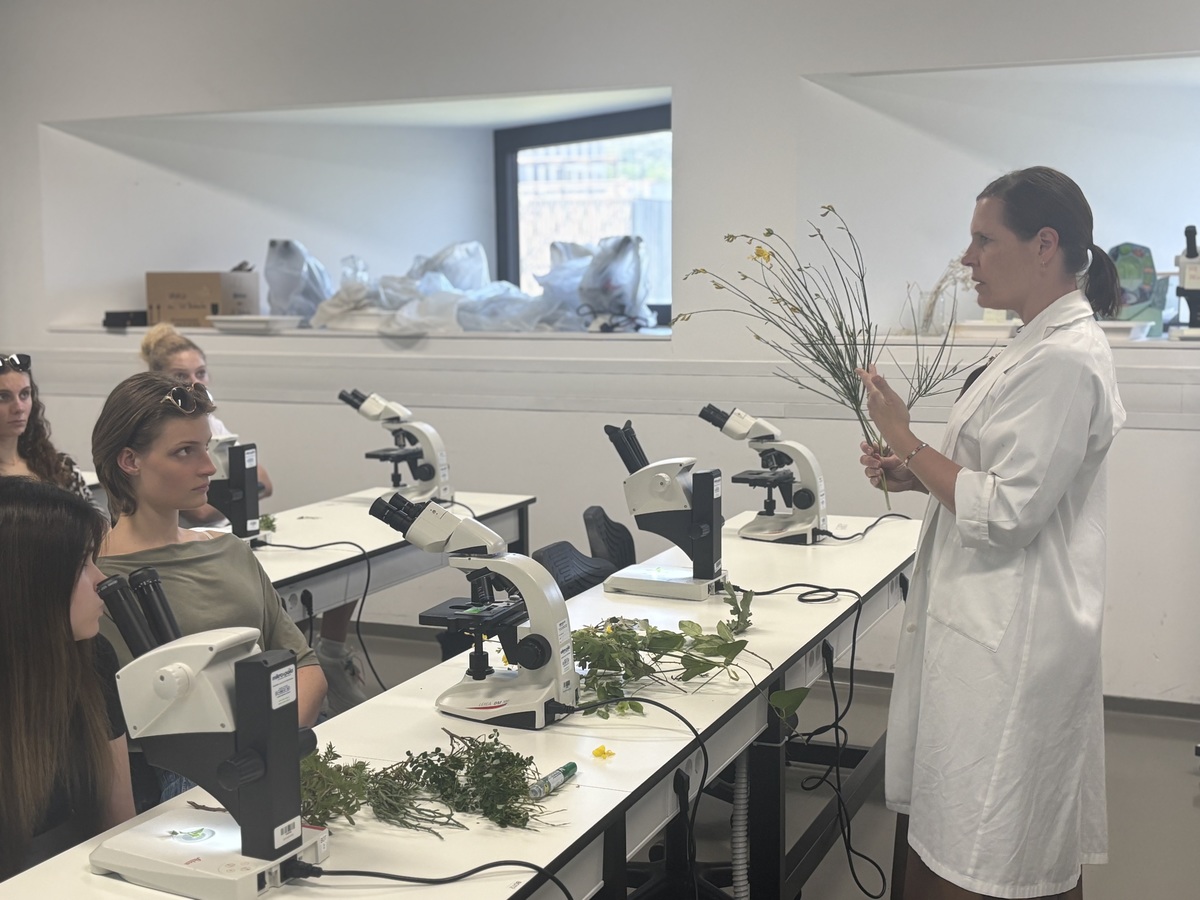
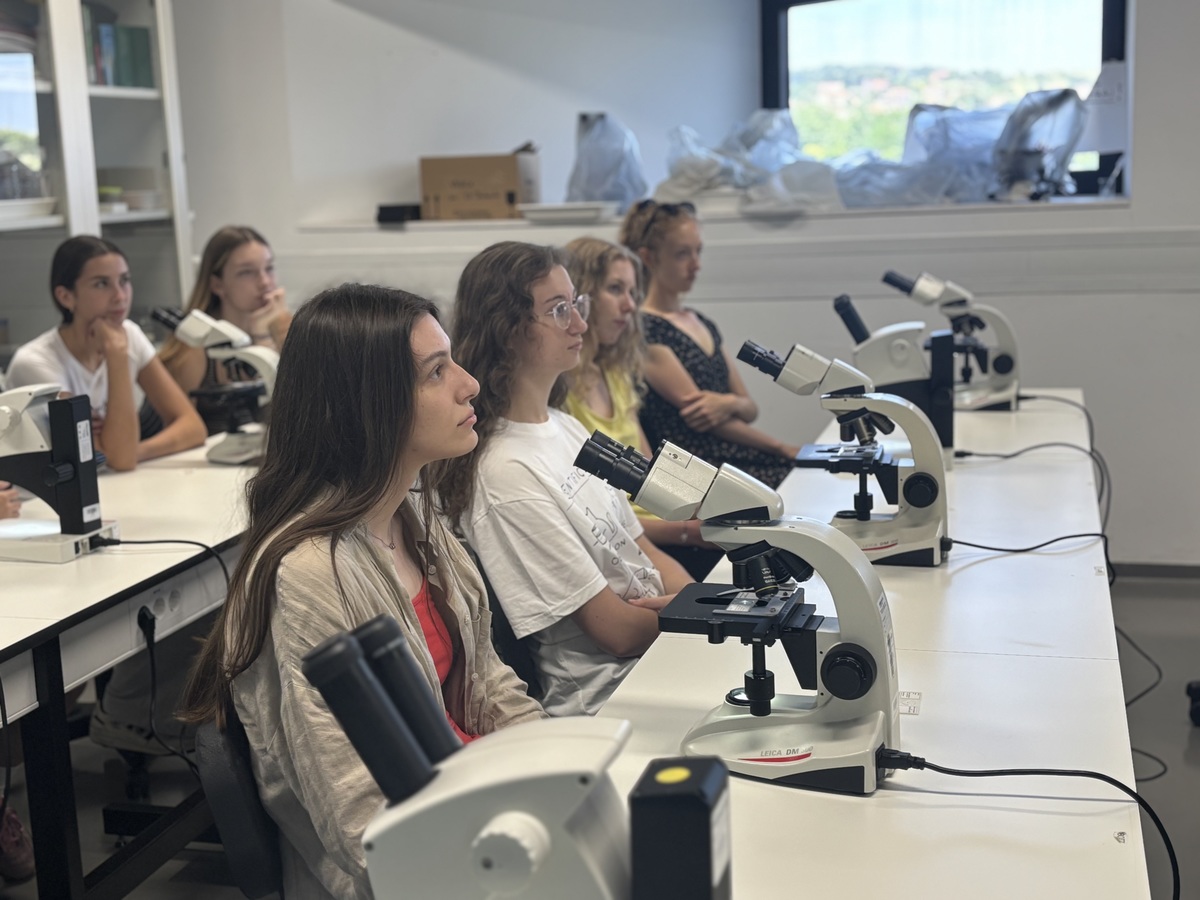
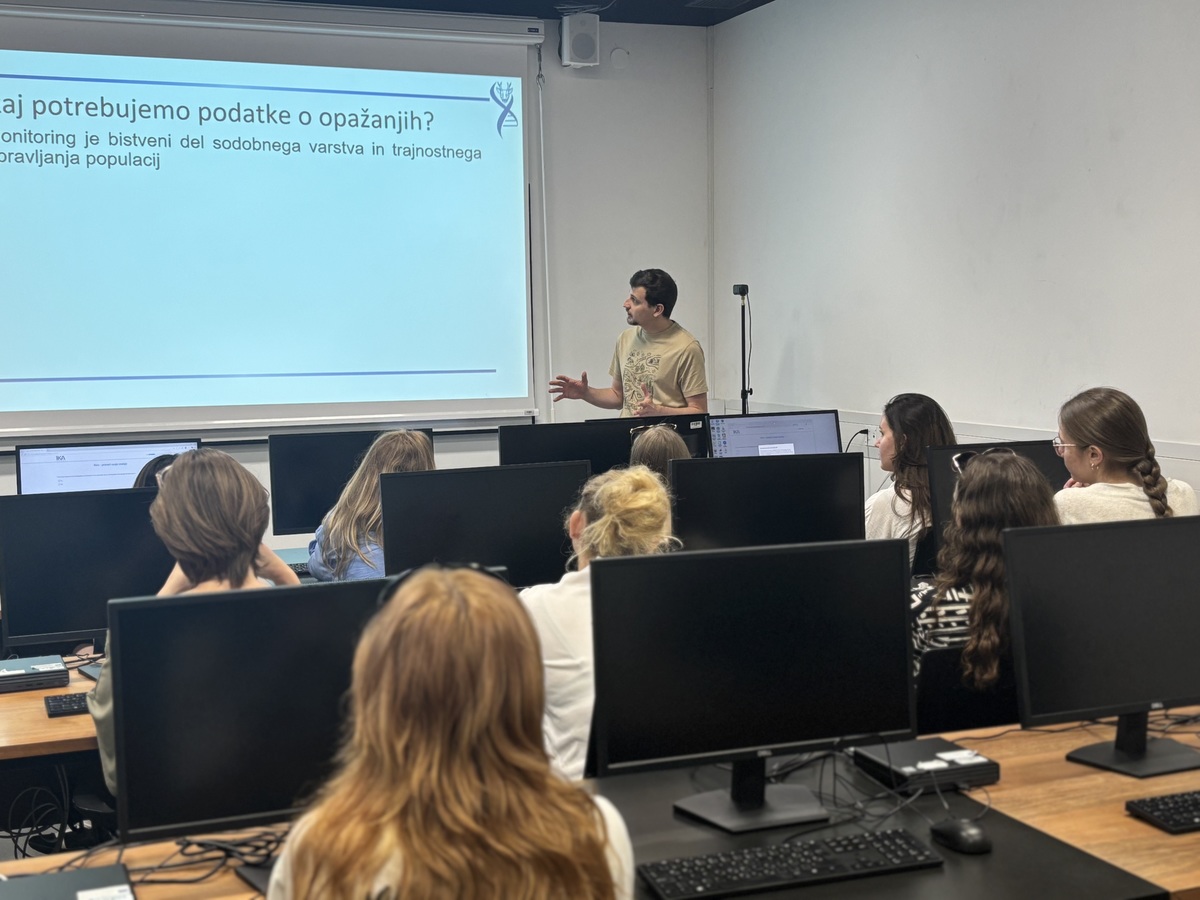
Today, we hosted19 students and two teachers from the II. Gymnasium Maribor at the Livade 1.0 facility. The students were first divided into two groups, within which two workshops took place.
The first workshop, entitled Flora of the Slovenian Littoral, was led by Assoc. Prof. Dr. Živa Fišer from the Department of Biodiversity (UP FAMNIT). During the workshop, the lecturer presented several representatives of the flora of the Slovenian coast, with an emphasis on Mediterranean species such as laurel and olive trees, as well as their morphological adaptations to environmental conditions characterized by drought, high temperatures, and intense solar radiation. Along the Slovenian coast, we can also find halophytes, plants adapted to growing in environments with higher salt concentrations. These plants also exhibit numerous adaptations, some of which are similar to adaptations to water scarcity. The students learned why this is the case during the workshop.
The second workshop, entitled Presentation of the SRNA Application for Monitoring Wildlife Populations, was conducted byAssist. Luka Duniš. Students and teachers had the opportunity to participate in a treasure hunt called “Fantastic Animals and Where to Capture Them”, during which the students learned how to collect and use wildlife data. The scientific application SRNA, developed as part of the Step Change project and intended for collecting wildlife data, was also presented. During the workshop activities, the students became familiar with the principles of citizen science and learned how to record data on the presence of wildlife using the SRNA application, as well as how to use camera traps for monitoring wild animals.
At the end of the visit, the students and teachers went to Piran, where they enjoyed a guided tour of the Aquarium Piran.
Thursday, 28 May 2026 Successfully Concluded the 5th REGALNICA Event - inventory of the European tree frog
On Saturday, May 23, 2026, the fifth edition of the traditional REGALNICA event took place, starting at the Pr Nanetovh Promotion and Congress Center in Matavun.
The event was organized by the Škocjan Caves Park, Slovenia, the Department of Biodiversity UP FAMNIT, and the National Institute of Biology (EKOS – Department for Organism and Ecosystem Research, NIB). Its main objective was to collect data on the occurrence of the European tree frog (Hyla arborea) in ponds across southwestern Slovenia, where this charming amphibian was once widespread and abundant.
This year’s survey brought together around 65 participants from various organizations. The largest group consisted of students, but the event also attracted experts, local and cross-border nature enthusiasts, as well as several families with children. At the beginning of the event, the organizers presented the results from the previous year and explained the fieldwork procedures. Each of the 19 survey teams, consisting of two to five members, then received information about their assigned locations. Before heading into the field, participants also enjoyed a social gathering organized by the hosts.
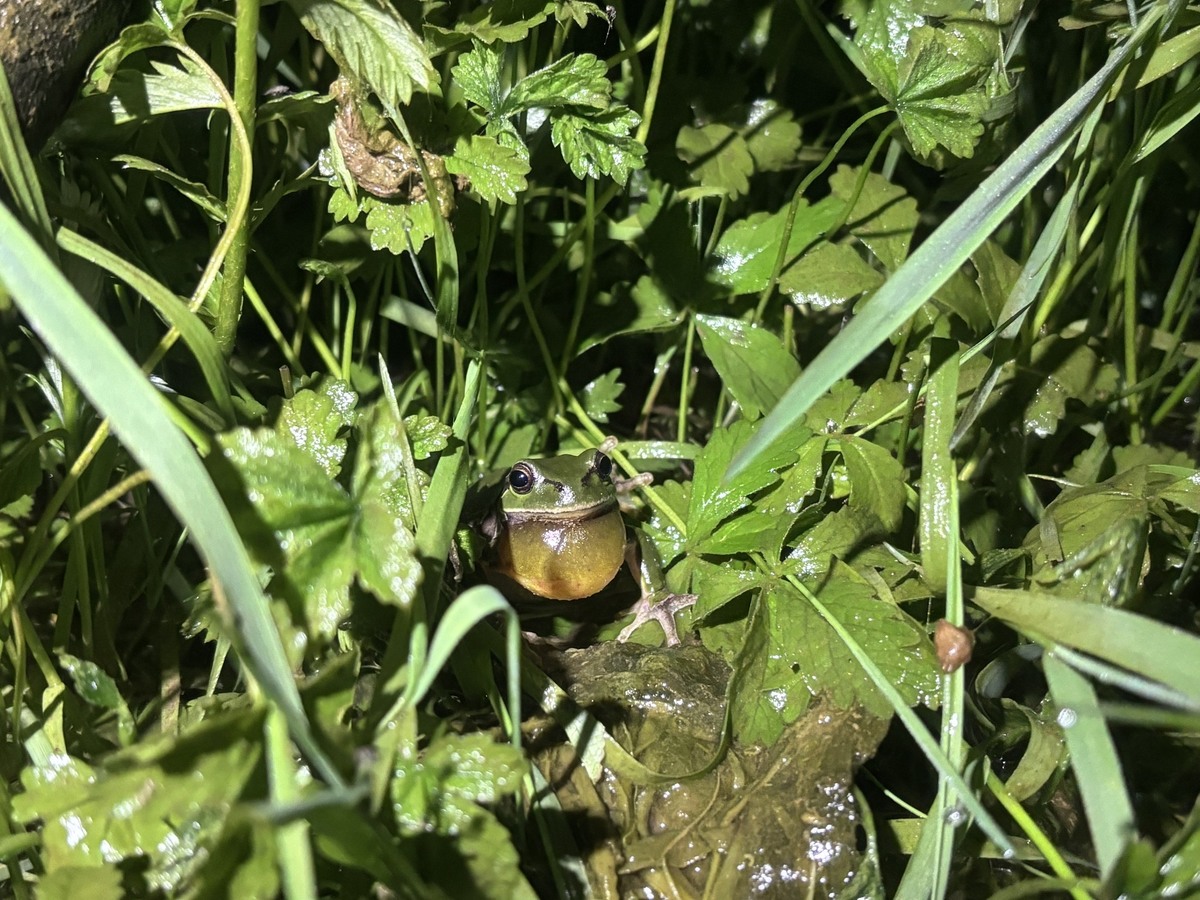
Between 9:00 PM and 1:00 AM, each team visited between four and eight ponds, surveying them for the presence of the target species and other amphibians. This was primarily done by listening for calling frogs, while some participants were also successful in obtaining photographic records. Altogether, the teams surveyed 129 ponds and confirmed the presence of the European tree frog at 20 locations.
Through the combination of academic expertise and a citizen science approach, the project generated valuable information that will help clarify the baseline status of local tree frog populations and support future research in the surveyed areas. The results of REGALNICA will also contribute to habitat restoration planning, particularly regarding pond restoration in the region. Preliminary findings indicate that the presence of the European tree frog in local ponds has declined significantly in recent years compared to historical records stored in the database of the Centre for Cartography of Fauna and Flora.
Given the positive response from participants, without whom such an event would not have been possible, the organizers hope that REGALNICA will continue and further develop in the years to come.
Wednesday, 27 May 2026 An Important Contribution to Understanding Plant Diversity in the Mediterranean
A study co-authored by Assist. Prof. Peter Glasnović, PhD, from the Department of Biodiversity, as the lead author, makes an important contribution to understanding patterns of plant diversity in the Mediterranean.
About the study:
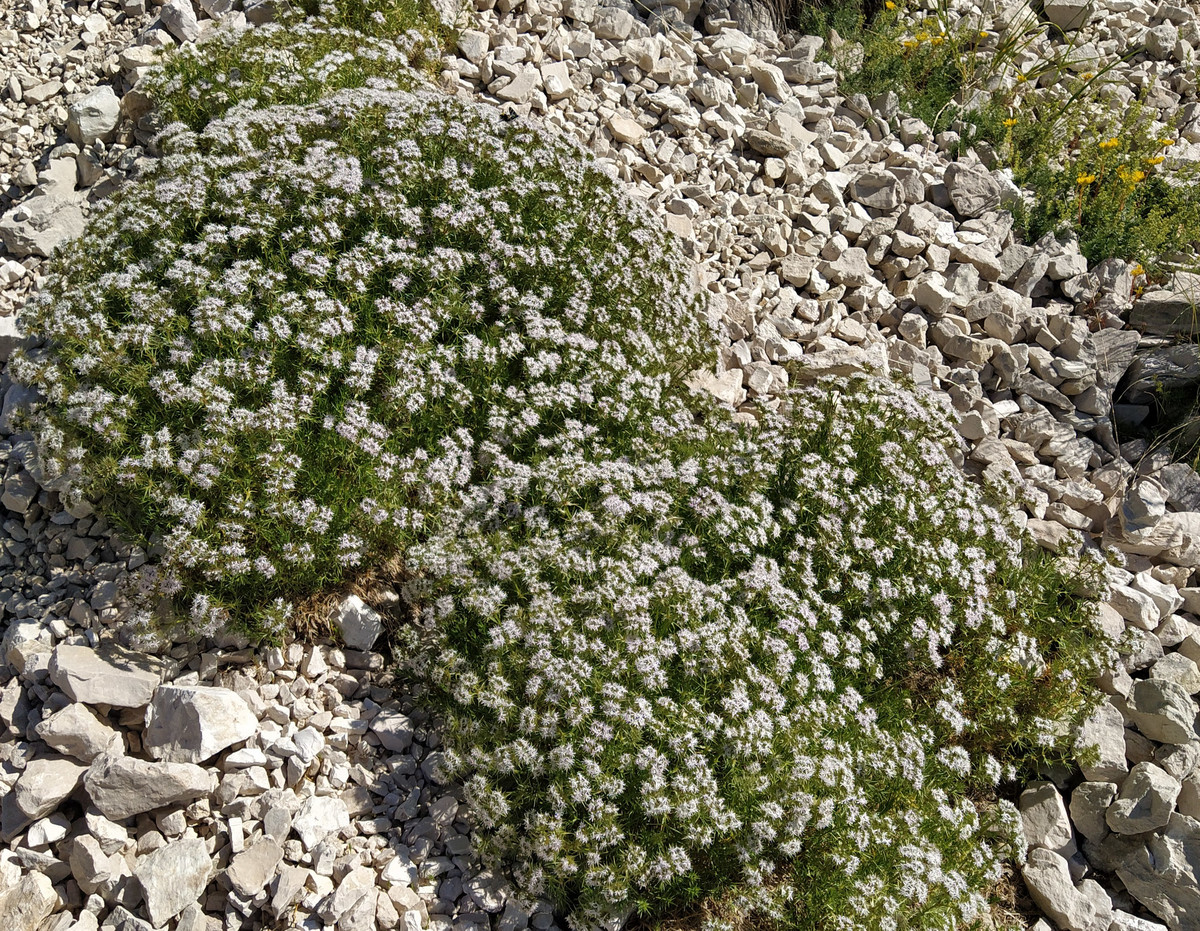
The research sheds light on the evolutionary history of Drypis spinosa, a plant species of the amphiadriatic-ionian region that inhabits scree slopes across the Balkan and Apennine Peninsulas, with disjunct populations in the Kamnik–Savinja Alps. Using modern molecular, morphometric, and spatial approaches, the researchers investigated the species’ genetic diversity and its distribution both today and during the Last Glacial Maximum.
The results show that the mountainous regions of the western Balkans play a key role in preserving genetic diversity, while also revealing previously unrecognized historical connections between populations on the Balkan and Apennine Peninsulas. The findings contribute to a better understanding of biogeographical processes in the Mediterranean, one of the world’s biodiversity hotspots, and offer new insights into the evolution of plant species in this region.
The study was published in the Journal of Biogeography and is freely accessible at the following link.
Tuesday, 26 May 2026 The Faculty Hosted Numerous International Researchers and Professors in May
Every year, our faculty hosts numerous distinguished professors and researchers from universities around the world, with whom our faculty members have maintained successful long-term research collaborations . Such visits play an important role in strengthening the faculty’s international connections, fostering the exchange of knowledge, and developing joint research projects, scientific publications, and doctoral collaborations. This May, we once again welcomed several renowned experts who visited our faculty as part of research stays and collaborations with our research groups.
Among the guests was Prof. Dr. Daniel le Roux, who visited the HICUP laboratory hosted by Assoc. Prof. Klen Čopič Pucihar and Prof. Dr. Matjaž Kljun from the Department of Information Sciences and Technologies. During his visit, he highlighted the long-standing and successful cooperation between the researchers: “This is my second time here. I first visited in 2023, and shortly afterwards, Matjaž and Klen from the HICUP lab visited me in South Africa. At the moment, we are once again hosting researchers from your faculty at Stellenbosch University, where I work. We have already published one joint research paper together, and we are currently working on a second one, which will be very exciting. We are also delighted that one of my students from South Africa has applied for a PhD position in Matjaž and Klen’s lab, which would make him the first PhD student from South Africa at your faculty.”

Researcher Dr. Jordan Aiko Deja from De La Salle University was hosted by Prof. Dr. Matjaž Kljun and Assoc. Prof. Klen Čopič Pucihar from the Department of Information Sciences and Technologies. Professor Marko Tkalčič was visited by Assoc. Prof. Petar Knees from TU Wien and Assoc. Prod. Bruce Ferwerda from Jönköping University.
"My time visiting FAMNIT and HICUP has always been a delightful one. Not only does it bring back memories, but it also reminds me that I will always have a home in Koper. During my visit, I even got the chance to get my old desk and setup back, and now I have to set up two more prototypes for our future collaborations. I'm looking forward to all the results and scientific findings that we will get to share in the future. One day, I hope to come back and present a lecture too. Always grateful for the time!" summed up his experience, Dr. Jordan Aiko Deja.

The faculty also welcomed Professor Vladimir Gurvich, a renowned expert in operations research and a long-time researcher at the RUTCOR center at Rutgers University. During his visit, he stated: “I am happy to be in Koper again and to continue our long-standing collaboration with Professor Milanič and Matjaž. I am also pleased to present my work here.” His research focuses primarily on combinatorial game theory and graph theory, particularly classes of perfect graphs. He is well known for his key contributions to positional game theory and the analysis of Boolean functions, where his results closely connect structural graph properties with theoretical computer science.

His research combines mathematics and theoretical computer science, and he is regarded as one of the leading experts in structural and extremal graph theory as well as graph limits. He has received numerous prestigious scientific awards, including two ERC grants and the European Prize in Combinatorics. He is also widely known for solving several decades-old open mathematical problems, including the Lovász–Plummer conjecture. Professor Vladimir Gurvich and Professor Daniel Kráľ were hosted by Assoc. Prof. Matjaž Krnc from the Department of Information Sciences and Technologies.
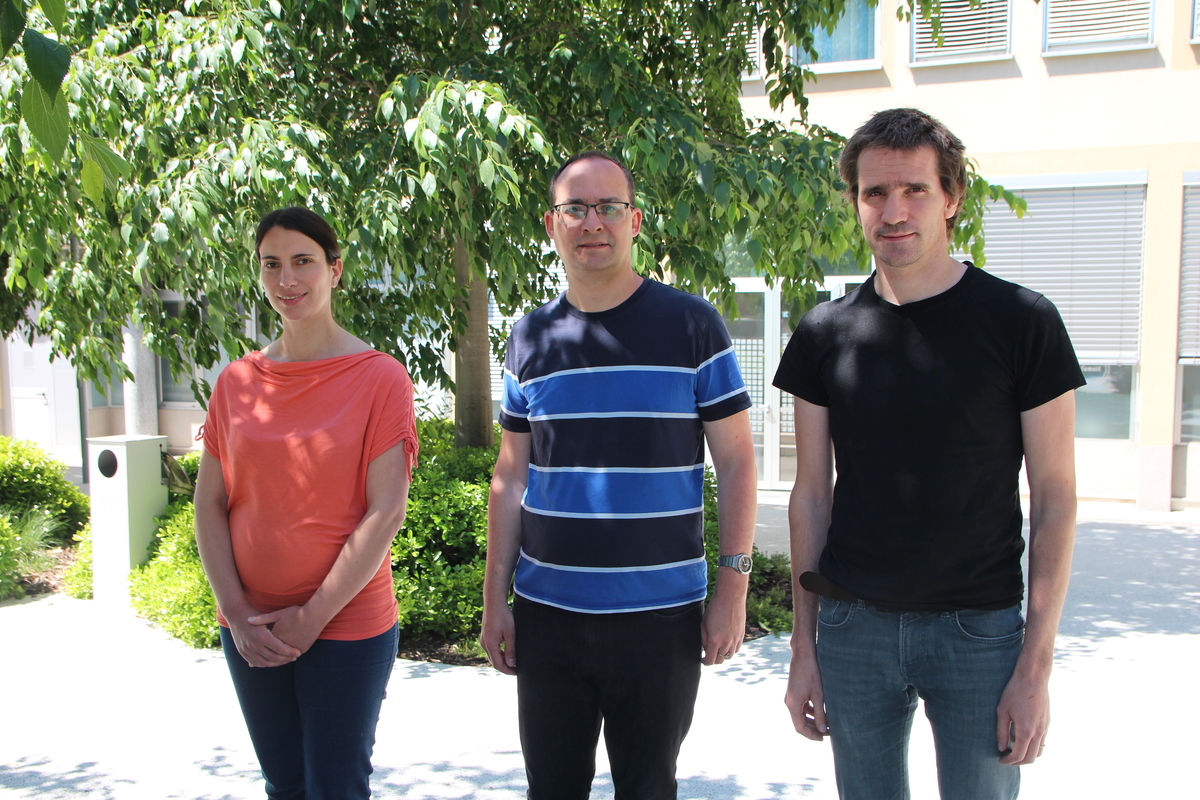
Among the May visitors was also Prof. Dr. Francesco Ricci from the Free University of Bozen-Bolzano, whose research focuses on recommender systems. During his visit, he emphasized his collaboration with Prof. Dr. Marko Tkalčič: “I work in the field of recommender systems, and I am particularly interested in methods for evaluating these systems. Professor Tkalčič is also an expert in this area, especially in research concerning the influence of users’ emotions and moods during interaction with recommender systems. Current technologies are still not sufficiently developed to effectively incorporate these aspects. I believe that in the future, together with Marko, we will be able to develop new approaches and technologies that will better help us understand human emotions, personality, and their influence on the use of recommender systems.”

Monday, 25 May 2026 How AI Is transforming film and media: Marko Tkalčič led discussion with Oscar winners
Professor Marko Tkalčič moderated the panel discussion »The Impact of AI on the Future of Film, Gaming, and Media Arts« on May 23 at ISFMF (International Sound & Film Music Festival) in Varaždin, Croatia.
ISFMF is recognised as one of the world’s leading festivals dedicated to film music and sound. The festival began its journey in 2012, with its first edition taking place in 2013. It was founded with a clear and powerful vision — to create a space where sound is not secondary but essential, and where film music is recognised as a fundamental element of storytelling and emotional expression in cinema. For more than a decade, the festival has brought together internationally acclaimed composers, sound designers, filmmakers, and creative industry professionals, fostering dialogue on the future of film and media arts. The 14th edition of the festival, which was held from 21 to 24 May, featured numerous distinguished guests, including several Academy Award winners and nominees.
The panel moderated by Prof. Tkalčič focused on the impact of artificial intelligence on the future of film, video games, and media arts. The discussion raised questions of authorship, creative control, and ethical boundaries at a time when artificial intelligence is already actively transforming production processes and the ways in which sound and media content are created.
The panel featured internationally renowned experts from the film industry:
- Alex Serdiuk, Co-founder and CEO of Respeecher, a leading company in AI voice technologies;
- James Mather, Oscar winner for Top Gun: Maverick;
- Mark Ulano, Oscar winner, known for his work on Titanic and collaborations with Quentin Tarantino and Martin Scorsese;
- Laia Casanova, internationally recognised for her work on Sirât.
Prof. Tkalčič explores the intersection of artificial intelligence, psychology, and human behaviour. His work brings a critical, human-centred perspective to the evolving relationship between technology and creativity. Through his work, he makes an important contribution to understanding how technology can support, rather than replace, human creativity in contemporary media.
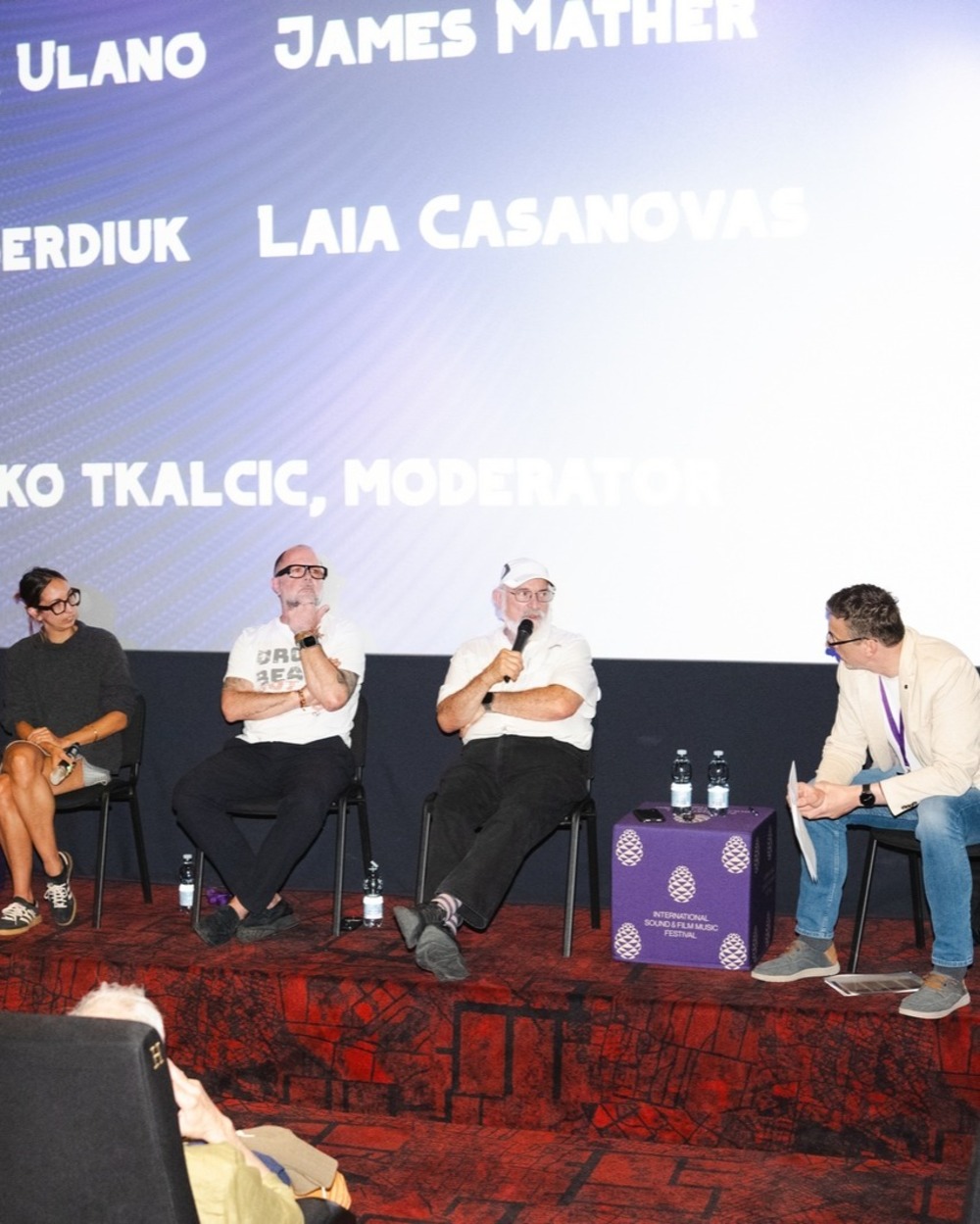
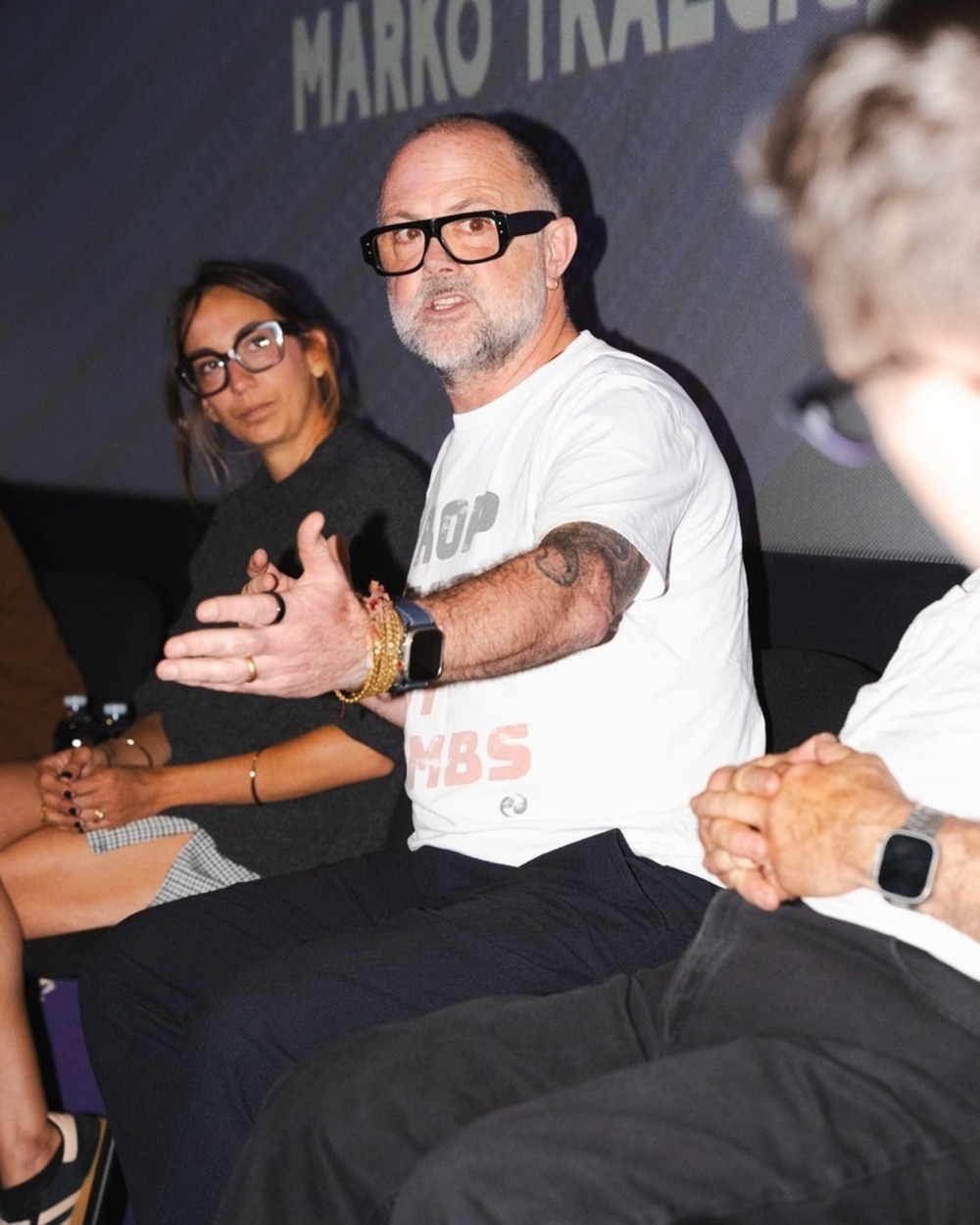
Foto: ISMF

Friday, 22 May 2026 Research Day at the Piran Grammar School and Secondary School for Electrical Engineering and Maritime Studies
Each year, third-year students at the Piran Grammar School and Secondary School for Electrical Engineering and Maritime Studies undertake research projects on topics of their own choosing. At the end of the process, the school hosts its traditional “Research Day,” an event designed to highlight the importance of research and give students insight into how research is conducted in practice.
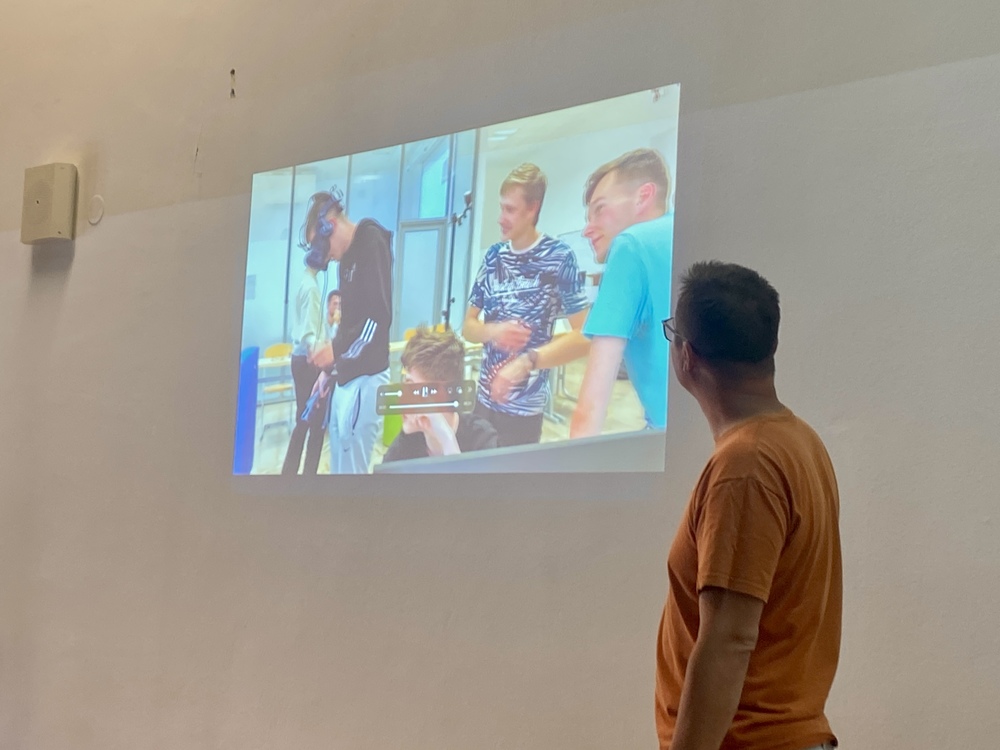
This year’s event was also attended by Prof. Matjaž Kljun from the Department of Information Sciences and Technologies, who introduced students to his research work and the fields of modern information technologies.
After the presentation, some students also presented their first research findings, showcasing the diversity of research topics and the creativity of young researchers.
At UP FAMNIT, undergraduate, master’s, and doctoral study programmes in Computer Science are offered. Application deadlines are published here, and anyone interested can contact the Student Services for additional enrollment information.

Thursday, 21 May 2026 New book titled Radar-Based Human-Computer Interaction has been published by Springer Nature
We are pleased to announce that Springer Nature has published the new book Radar-Based Human-Computer Interaction, edited and co-authored by Assoc. Prof. Dr. Klen Čopič Pucihar from the Department of Information Sciences and Technologies at UP FAMNIT. Prof. Dr. Matjaž Kljun, also from the Department of Information Sciences and Technologies at UP FAMNIT, made an important contribution to the book as a co-author of several chapters.
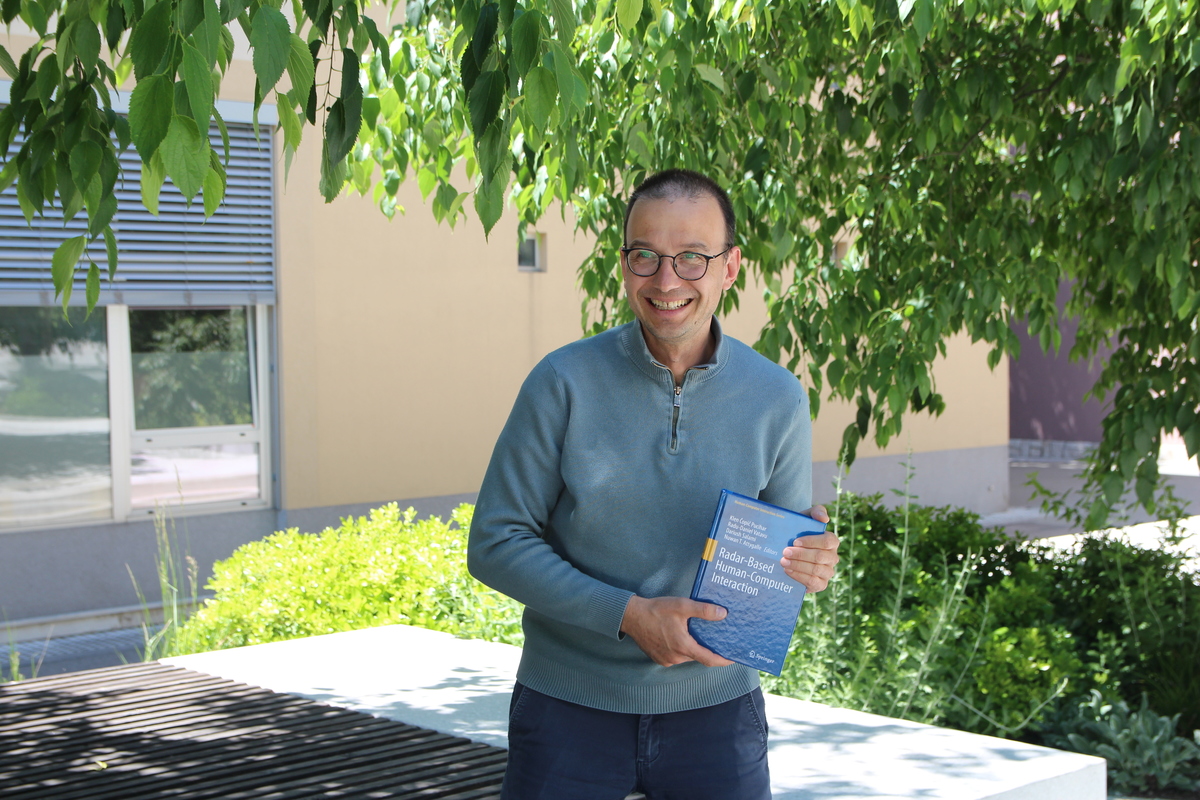
The book explores how radar enables reliable, contactless sensing of human presence, gesture-based interaction, and the recognition of user intentions without physical contact. Through scientific and technical contributions by experts in radar engineering, signal processing, human-computer interaction, computational modelling, and machine learning, it presents techniques and tools for signal processing, provides an overview of publicly available datasets, and highlights new applications involving radar-based sensing.
Radar-Based Human-Computer Interaction lays the foundations for this emerging interdisciplinary field. It addresses researchers and professionals interested in developing the next generation of reliable, adaptive, and privacy-preserving user interfaces using radar technology.
Wednesday, 20 May 2026 The Transform4Europe (T4EU) Chair Programme – Open Call for the Academic Year 2026/2027 is now open for recruiting!
We are pleased to announce that the Call for Transform4Europe Chair Programme within the T4EU Alliance for the academic year 2026/2027 is now open.
We invite members of the teaching staff to apply for mobility opportunities within the partner universities of the T4EU Alliance in areas related to the Alliance’s priority fields:
- Social Transformation, Community Building and Inclusion
- Digital Transformation and Smart Regions
- Environmental Transformation and Sustainability
Applicants must:
- be employed in a teaching and/or research position at one of the T4EU Alliance universities and hold at least a doctoral degree or be currently enrolled in a doctoral programme at the respective university,
- have relevant teaching and research experience in the T4EU priority areas,
- have relevant intercultural communication experience,
- possess adequate knowledge of English and/or other languages, as required by the host university,
- demonstrate general digital literacy and any specific digital competencies required by the host university,
- demonstrate an entrepreneurial mindset, characterised by competences that enable them to identify and seize opportunities and ideas, and transform them into social, cultural, or productive value.
Please make sure to review the conditions and requirements of the individual host university before applying. Please also note that funding from the University of Primorska is not foreseen within this programme. We also recommend contacting the relevant academic contact person at the host university before submitting your application.
Link to the Open call: /en/resources/files/news/t4euchairprogrammeopencall.pdf
This call is open from 1 May 2026, and all approved mobilities must be completed by 30 August 2027.
Applications must be submitted via the online application form available at the following link: https://forms.office.com/Pages/ResponsePage.aspx?id=bISeJtSi0Um-kYOp6zRiky9k64RUVLNMm7iHwY-PCMpUQjAxMzc1TEwyMklSSEFGQVQ1QkpIQzhVNy4u&origin=Invitation&channel=1
Wednesday, 20 May 2026 The 5th Famnit Hackathon 2026 brought together 56 young programmers
The GDG on Campus University of Primorska team brought together programming and coding enthusiasts for the fifth consecutive year at the FAMNIT Hackathon 2026, held at the UP FAMNIT premises.
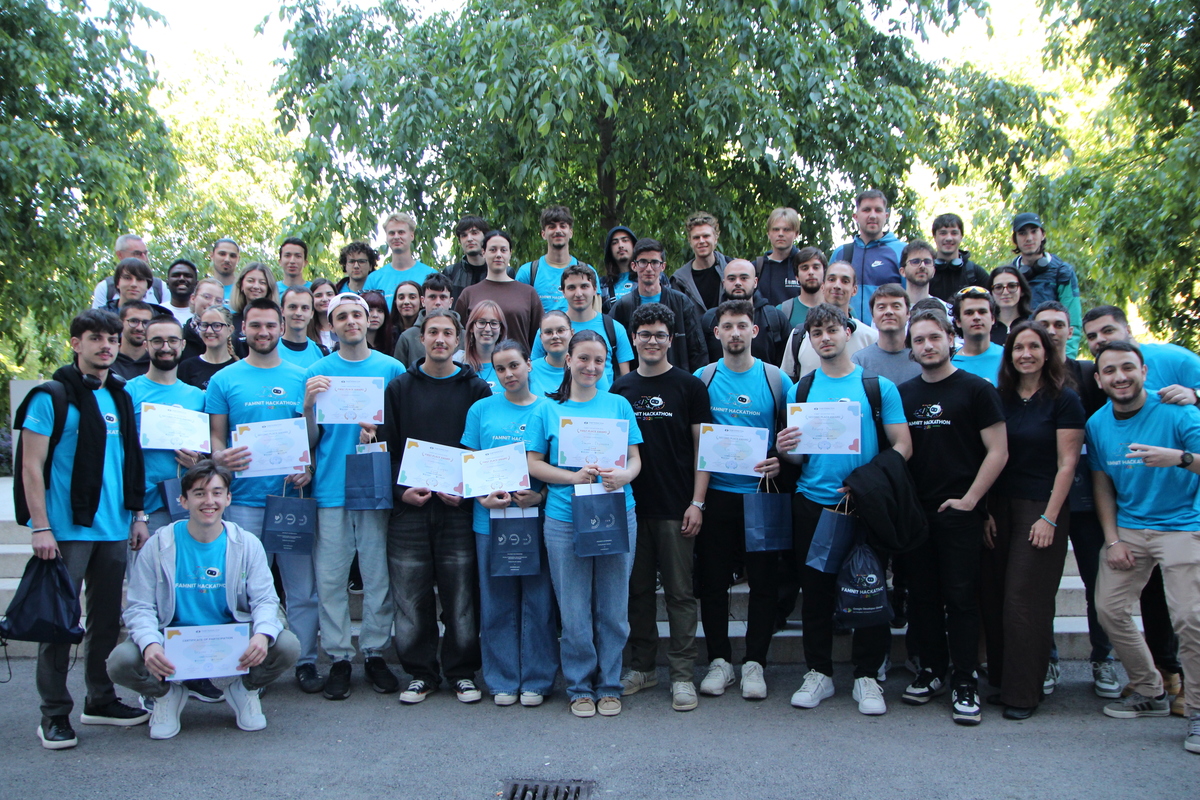
Between May 16 and 17, 2026, 56 programming enthusiasts participated in the UP FAMNIT Hackathon 5.0. During the two-day event, they demonstrated creativity, teamwork, and problem-solving skills while tackling various challenges.
One of the highlights of this year’s Hackathon was the presence of a special guest, Professor Toralf Trautmann from the Dresden University of Applied Sciences (HTWD).
At the end of the event, the best teams received generous prizes sponsored by the event partners. Members of the first-place team received 600 euros and a Raspberry Pi 5, the second-place team received 500 euros and an Arduino Uno Q, while the third-place team received 300 euros and a Raspberry Pi Zero 2 W. In addition, all members of the winning team received Sony WH-CH720N headphones, while 40 lucky participants also received Raspberry Pi Pico W devices.
The judges of the 5th Hackathon included representatives from HTW Dresden, Prof. Trautmann, Arsen Matjaž Finc from the Nielsen Lab, Irena Fonda from the YouSea Institute, and Dr. Branko Kavšek (UP FAMNIT).
The first-year students did an exceptionally good job. Their projects ranked among the top-rated entries, and they delivered outstanding work in just 24 hours — despite competing against Master’s and graduate-level students.
Winning Teams of the 5th Hackathon
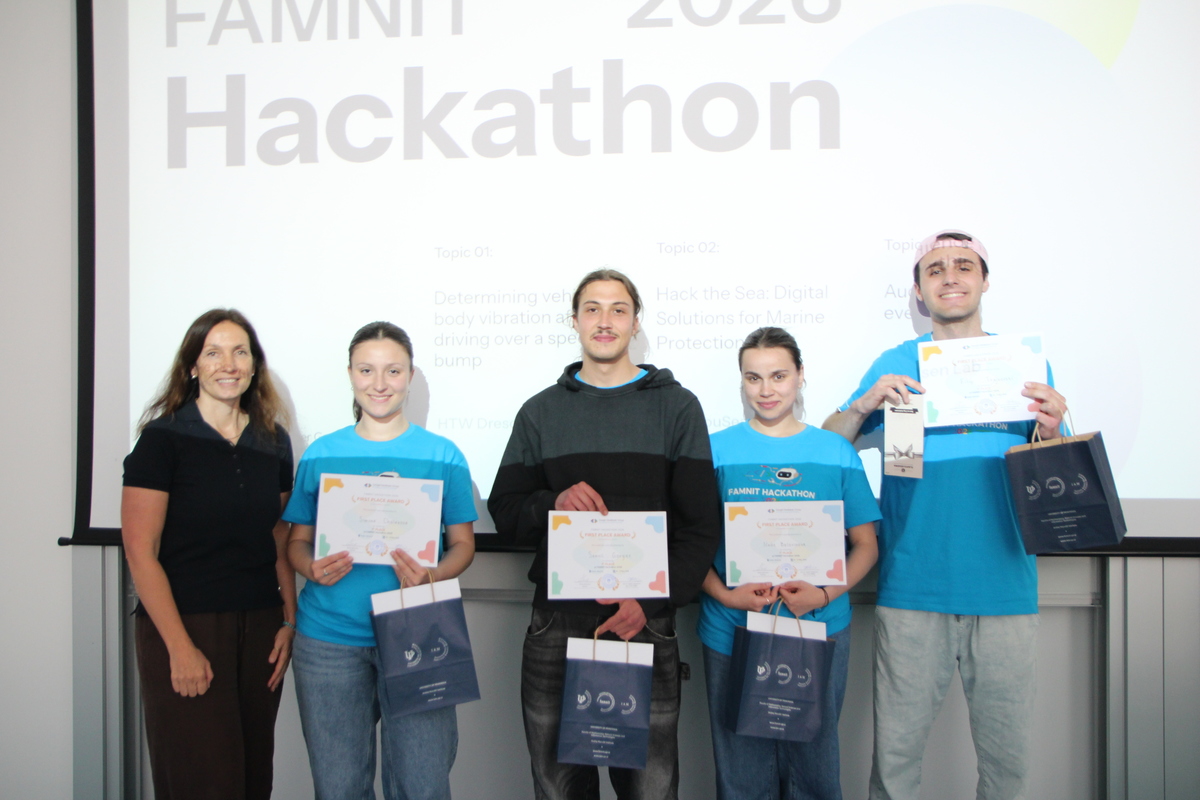
1st Place – smile.py
(Simona Cholakova, Nade Belovinova, Samoil Gorgiev, Filip Trajkoski) Project: Hack the Sea: Digital Solutions for a Thriving Ocean – Harnessing the Power of Technology to Protect Our Planet’s Most Vital Resource
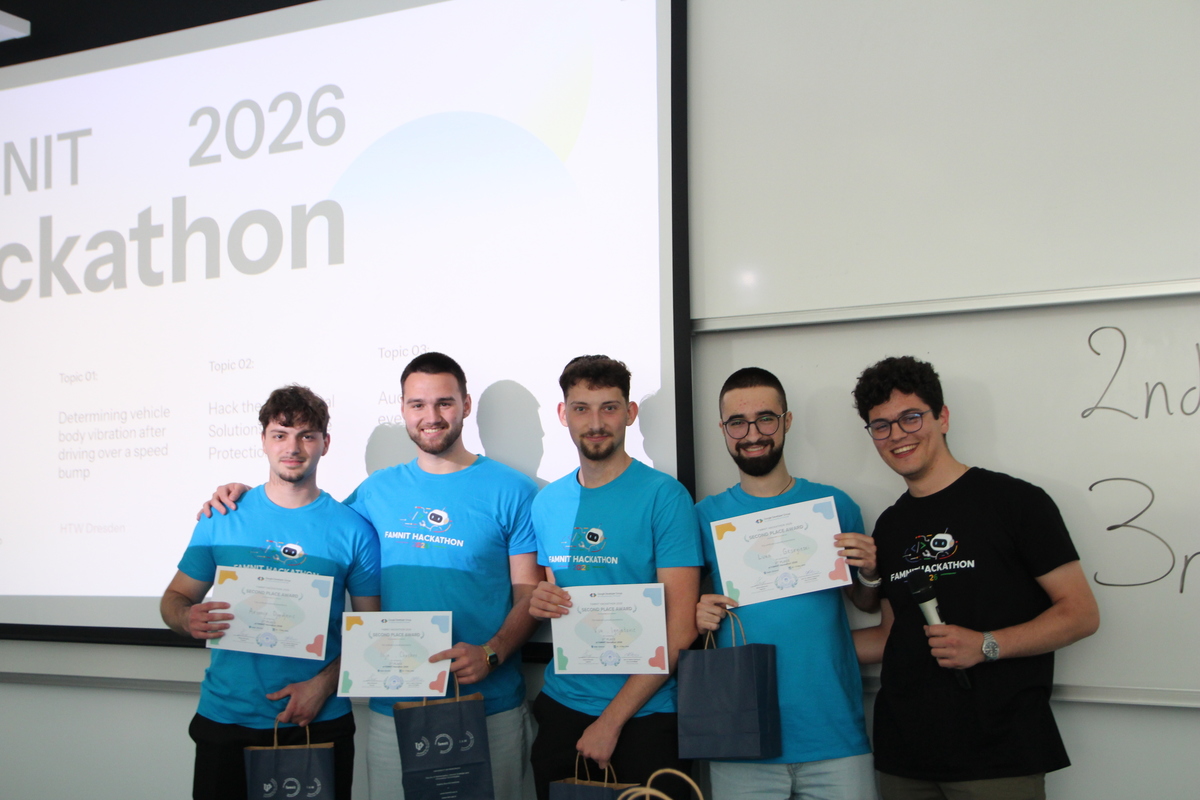
2nd Place – Beli Gavrani
(Luka Georgieski, Ilija Chrchev, Arsenije Djordjevic, Vuk Ignjatović) Project: Water Clarity Prediction System
3rd Place – Diznac
(Nikola Murgovski, Pavel Jolakoski, Gjore Janevski) Project: Attention-Score: A Real-Time Viewer Attention Analysis Platform
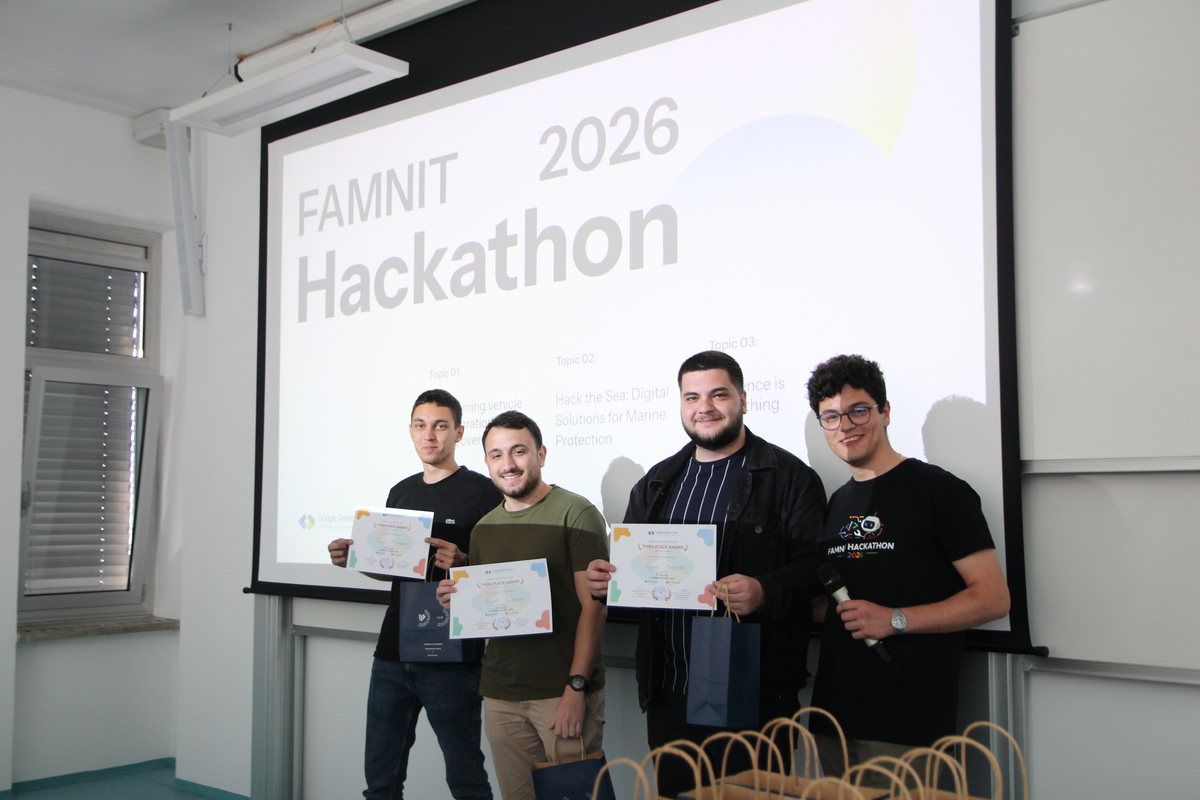
Other teams also developed excellent programming solutions, while many students were invited to follow-up meetings with sponsors to discuss potential internship opportunities.
We would like to thank all companies and organizations that expressed interest in networking with our students. Their representatives also took on mentoring roles during the competition and participated in the jury evaluating the final solutions.
The main sponsors of the event were Nielsen Lab, Razum, Dinit Card Services, and HTW Dresden. Event partners included InnoRenew CoE, Better, EURES, UP FAMNIT, HICUP Lab, DLTLT Lab, Visit Koper, Red Bull, and Sladoledarna.
Throughout the entire weekend, participants were provided with meals and energy drinks.
The organizers would also like to express sincere gratitude to the mentorsMilan Milivojčević, Karolina Trajkovska, Nilukshan Krishnaram, Nikola Kovačević, Nevena Stojnić, and Danilo Lazić for their support in connecting with students, to the FAMNIT promotional team for increasing the visibility of the event, to the FAMNIT Student Council for their support in organizing the event and to the event photographer, Anastasija Damnjanovska.
Google Developer Groups on Campus are communities of undergraduate and postgraduate students at universities around the world who work in the field of Google technologies.
GDG on Campus University of Primorska – Koper, Slovenia, provides developers with a learning environment and welcomes students from all undergraduate and postgraduate study programs who strive to enhance their knowledge and skills in the field of modern technologies. Learning takes place through interactive workshops and seminars, with lecturers who equip members with broad knowledge and best practices.
We also invite you to visit the GDG Primorska Instagram profile and official website.
Wednesday, 20 May 2026 Dr. Vita Poštuvan finalists for the 2025 Mentor of the Year Award
The Young Academy Association has presented the Mentor of the Year Award for the seventeenth consecutive year. The award highlights the importance of quality mentorship for successful doctoral studies. This year, they received 78 valid applications, in which 68 different mentors were nominated. Among the five finalists is Dr. Vita Poštuvan (UP IAM, UP FAMNIT) , who was nominated for the award by her doctoral student Vanja Gomboc, also on behalf of her colleague Lucija Rojc, as well as Dr. Nina Krohne and Dr. Meta Lavrič, who have already earned their doctorates under her mentorship. Thus, her nomination was supported by absolutely all of her former and current mentees, which in itself is proof of her high-quality work.
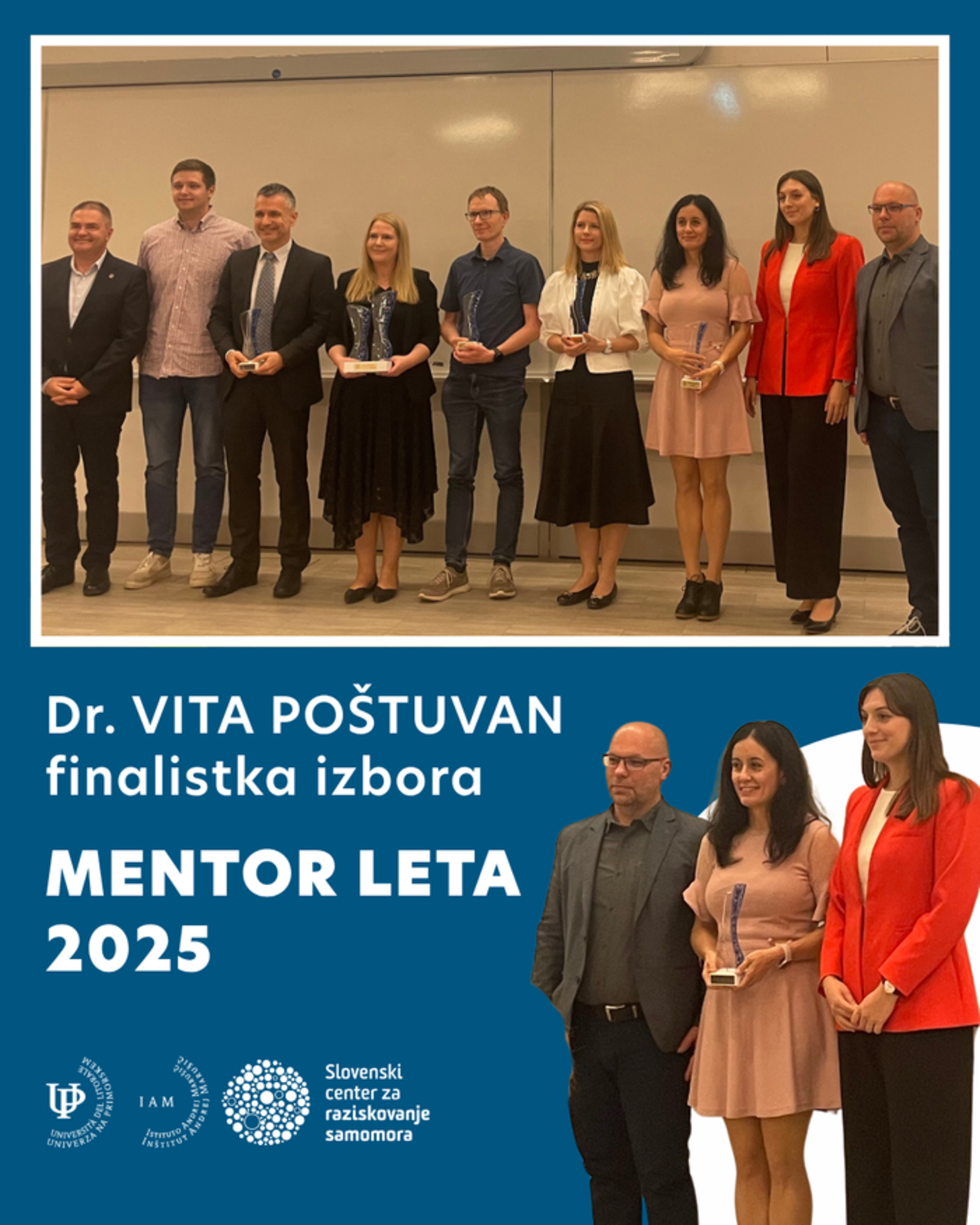
Dr. Vita Poštuvan is a psychologist who, in her research and intervention projects, focuses on the study and prevention of suicidal behavior, the promotion of mental health, the grieving process, and ethics; she is the deputy head of UP IAM SCRS. She is actively involved in teaching at various faculties and coordinates the doctoral program in Suicidology and Mental Health at UP FAMNIT.
She has supervised more than 80 students on their final projects, primarily master’s students in psychology and doctoral students in suicidology and mental health. She is the author of numerous publications: she has published 85 scientific articles—a large proportion of which in the world’s most prestigious journals—more than 50 chapters in scientific monographs, and has over 620 entries recorded in the SICRIS database; and in the SCOPUS database, she has an h-index of 33, which ranks her among the most cited Slovenian experts in the fields of psychology and psychiatry. She is a regular guest at prestigious institutions and conferences both in Slovenia and abroad.
She is the editor-in-chief of the journal GeroPsych and an active member of professional associations such as the IASP and EFPA at the international level, and the DPS and DVKT at the national level. As a researcher, she has visited Austria, the United Kingdom, and Japan, and has also worked professionally in China and India. As a cognitive-behavioral therapist, she provides psychological counseling, and as a member of the National Civil Protection Unit for Psychological Assistance, she offers psychological support during crises and disasters. By providing direct support to people, she combines her academic and scientific work with professional psychological practice.
Upon her nomination, Vanja Gomboc emphasized that she values her mentor’s ability to identify the mentee’s strengths and, through professional support, encourage them to achieve the best possible results.
We sincerely congratulate Dr. Viti Poštuvan and wish her continued success in supporting young people at the start of their research careers!
The Young Academy (MA) is the successor to the Slovenian Association of Young Researchers (DMRS), which was founded in 1995. After twenty years of operation, they decided in 2016 to expand their focus beyond doctoral students to include early-career researchers in their activities. The main purpose of the association is to bring together doctoral students and early-career researchers, as well as young people active in research and higher education in Slovenia and Slovenians working in these fields abroad.
Friday, 15 May 2026 Participation in the Erasmus+ BIP Program Monitoring Transitional Ecosystems at the University of Patras (Greece)
Five students from the Nature Conservation study program and Associate Professor Dr. Živa Fišer from the Department of Biodiversity at UP FAMNIT participated in the international Erasmus+ BIP program Monitoring Transitional Ecosystems, which was held this year at the University of Patras in Greece. The program brings together universities from Slovenia, Italy, and Greece and promotes interdisciplinary cooperation in the research and conservation of Mediterranean transitional ecosystems.
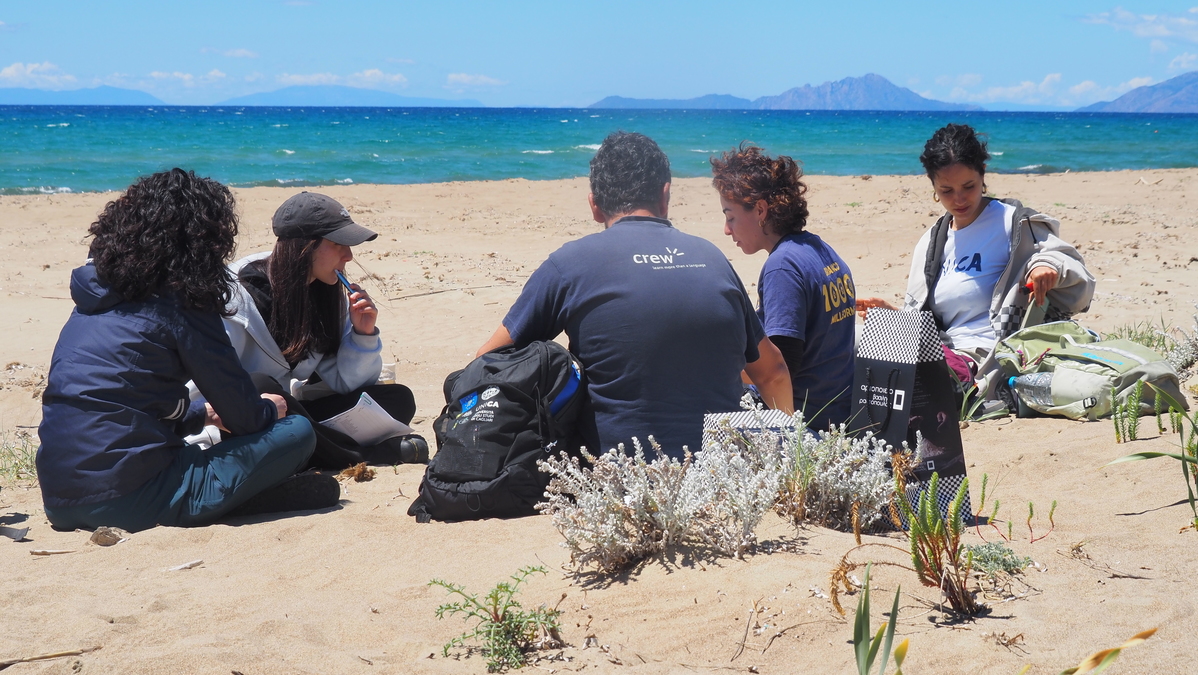
This year marked the second consecutive edition of the program; last year, a similar program was organized at the University of Cagliari in Sardinia.
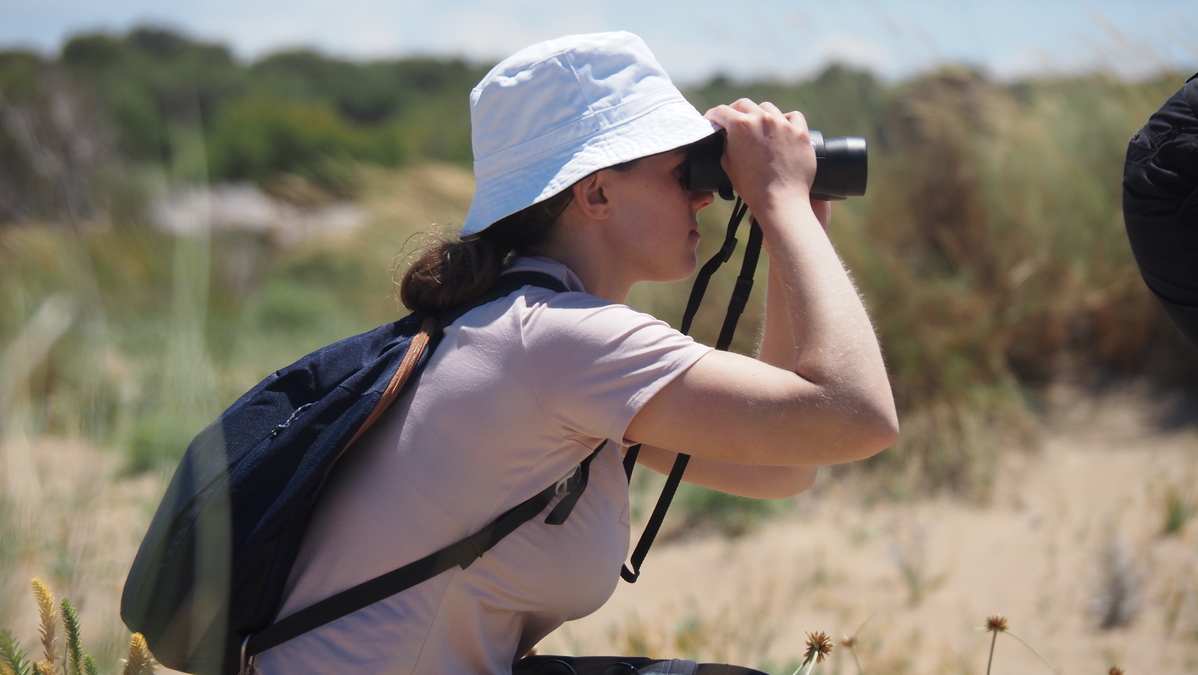
Participants spent two days at the University of Patras, where lectures, presentations on research methods, and group work in international settings took place. Three additional days were dedicated to fieldwork in important protected areas of western Greece, including the national parks and Ramsar sites of Kotychi–Strofylia, Messolonghi–Aitoliko, and Amvrakikos National Park. Working in international groups, the students monitored the status of species, habitats, and ecosystem services, and also met with managers of protected areas.
The program offers students valuable international experience, opportunities to develop practical fieldwork skills, and participation in an interdisciplinary and intercultural environment. At the same time, it strengthens cooperation between universities and opens opportunities for further collaboration in biodiversity research and conservation in the Mediterranean.
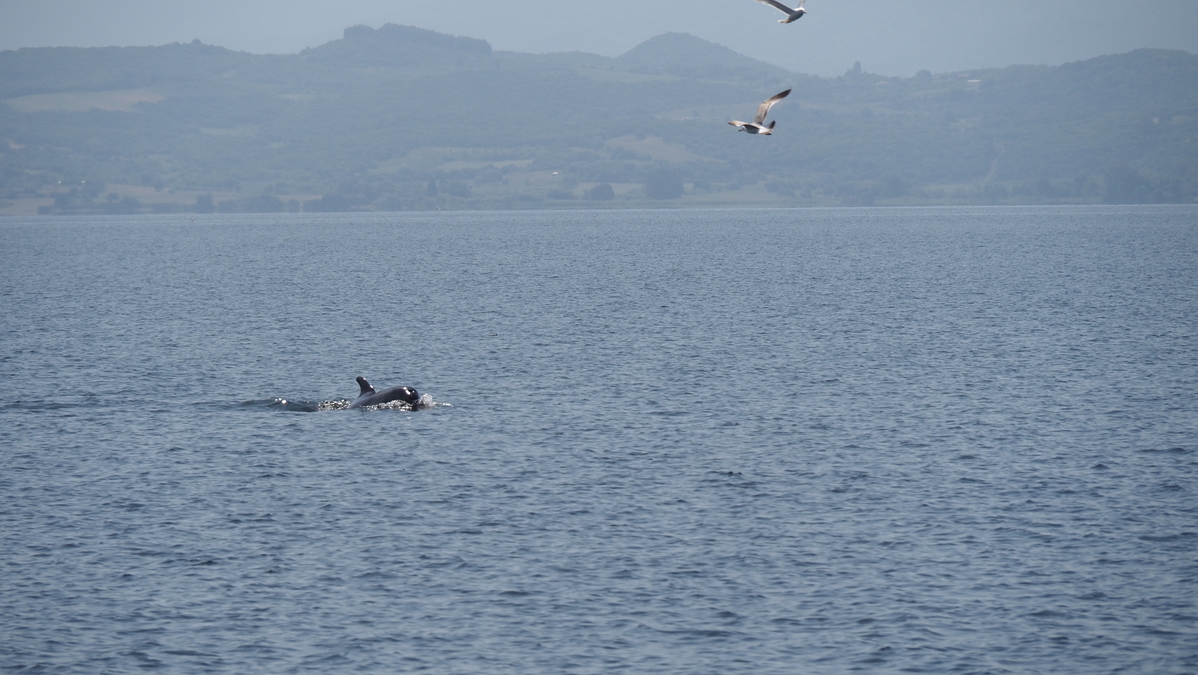
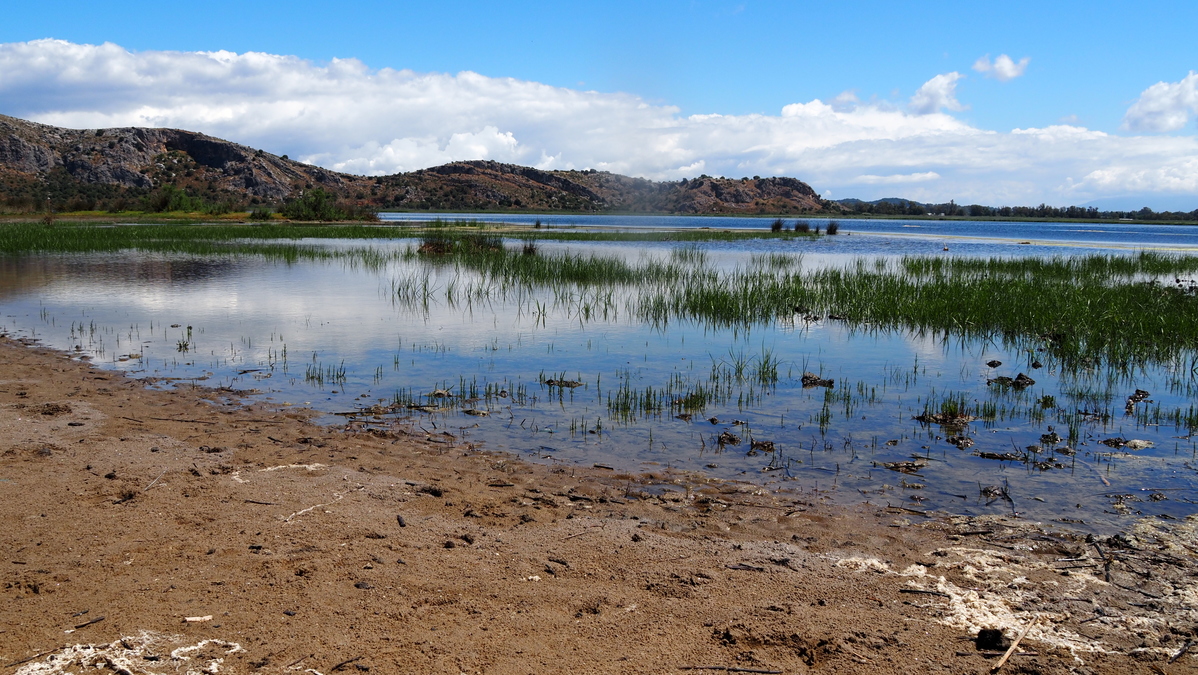
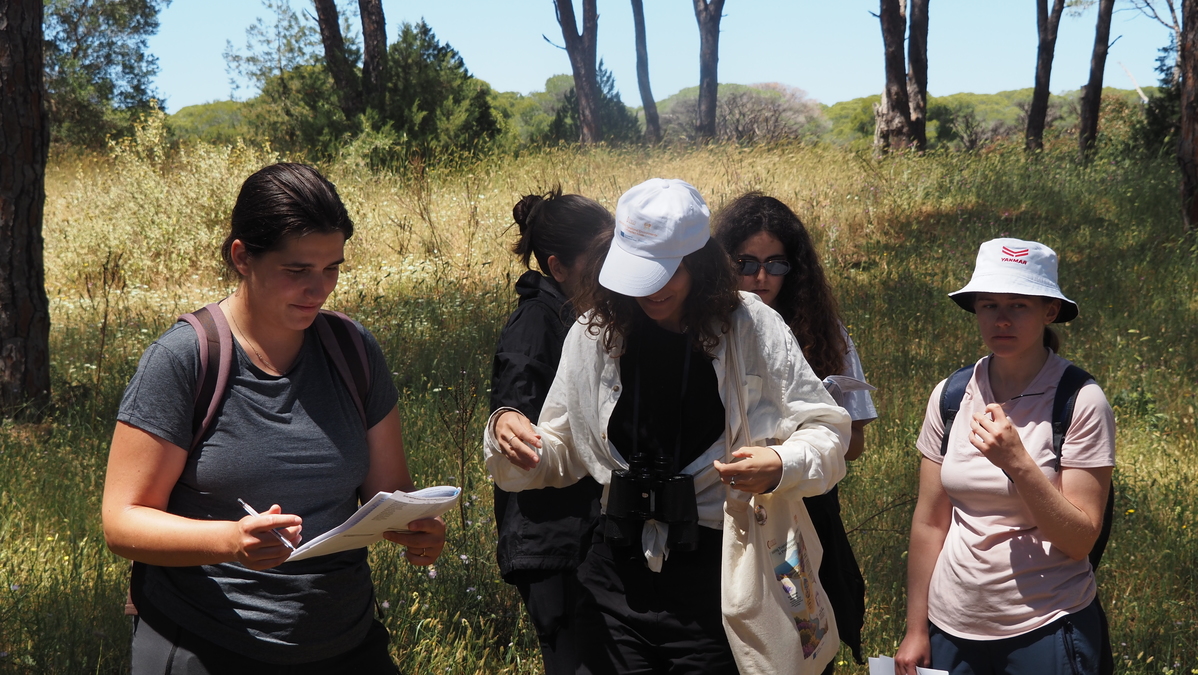
Thursday, 14 May 2026 Presentation of the topic of the doctoral dissertation of Donya Bazyar Khoshroodi
We invite you to the presentation of the topic of the doctoral dissertation Development and Analytical Modelling of Demountable CLT–Concrete Composite Floors with Tightenable Notch Connections of the student Donya Bazyar Khoshroodi, enrolled in the doctoral study programme Renewable Materials for Healthy Built Environments (in English).
The presentation will take place on Tuesday, 26 May 2026 at 8.00 in the classroom Pseudotsuga, InnoRenew CoE, UP IAM, Livade 6a, Izola and via Microsoft Teams on link:
https://teams.microsoft.com/meet/372886381698943?p=rE2ma81s2YnpukITwu
You are kindly invited!
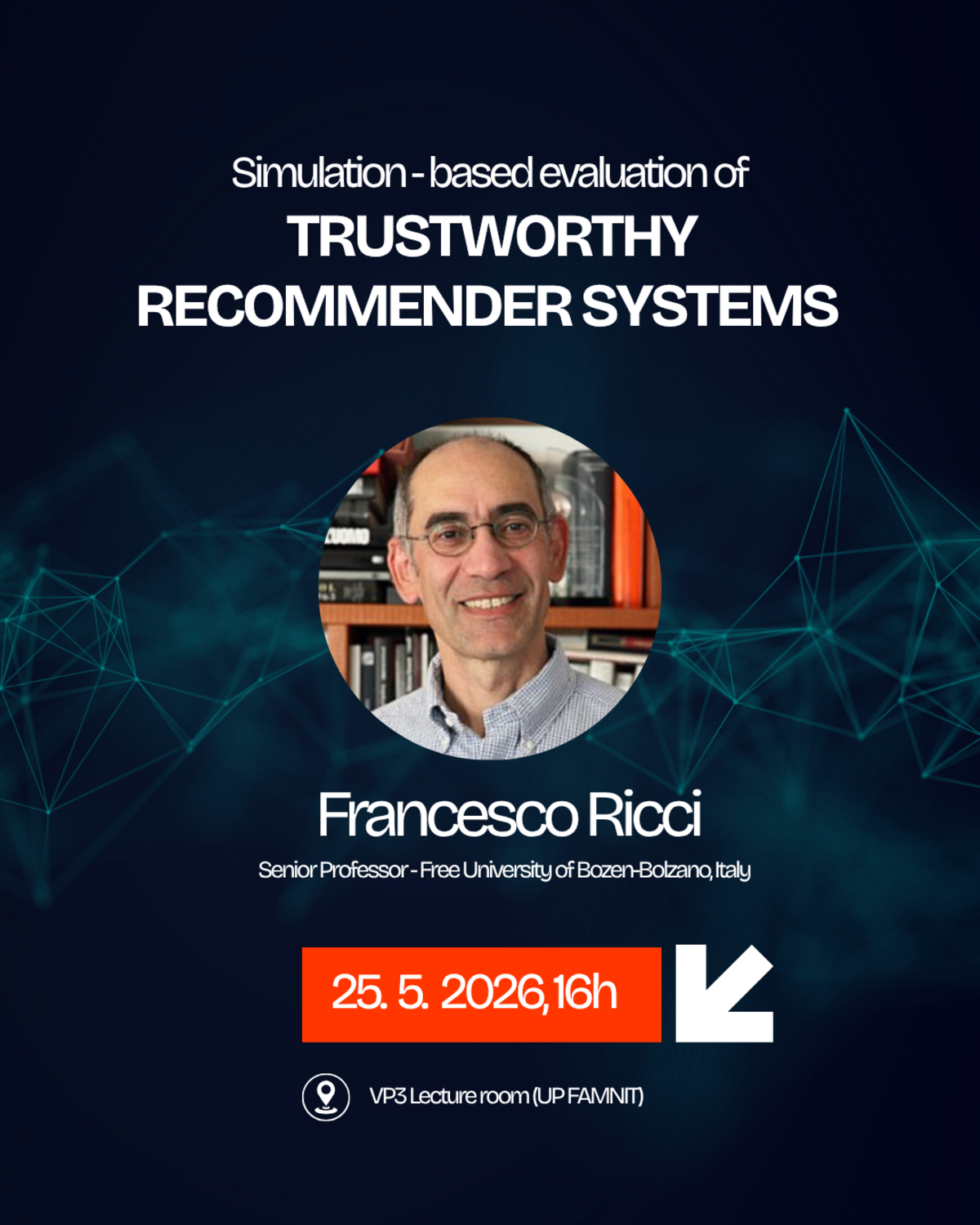
Wednesday, 13 May 2026 Francesco Ricci: Simulation-Based Evaluation of Trustworthy Recommender Systems
You are invited to a lecture by Francesco Ricci, which will take place on Monday, May 25, at 4:00 PM in the lecture room VP3, UP FAMNIT.
Francesco is a senior professor in Computer Science at the Free University of Bozen-Bolzano (UNIBZ), Italy. He is a member of the UNIBZ Competence Center on Sustainability and a member of the Steering Committee of the Digital Humanism Initiative, TUW, Vienna.
His current research interests focus on the usage of Artificial Intelligence techniques, such as Recommender Systems and intelligent agents, in supporting human collaboration with AI, and ultimately improving users' decision-making processes and well-being. He is interested in building systems that can help groups and individuals to make more rational and fair decisions in complex and context-dependent scenarios, such as news and tourism.
He is the author of more than 250 highly cited, refereed publications. He coedited the Recommender Systems Handbook, a reference publication, and served as president of the steering committee of the ACM conference on RSs.
Recommender systems (RSs) are personalized artificial intelligence (AI) tools routinely used by online platforms to promote algorithmically selected news, posts, music, travel, and videos. This talk will focus on the goal of making these systems more trustworthy, ensuring they better serve the various stakeholders interested in their functionality, especially the end users and the providers of the recommended items. A novel type of user/system interaction simulation framework, proposed as an approach to assess RSs performance, will therefore be presented.
Compared to the standard train/test ML evaluation approach, this framework enables a better estimation of the longitudinal and multidimensional effects (positive and negative) that an RS can have. The core idea is to more faithfully simulate users' reactions to the recommendations produced by the tested RS by relying on a calibrated algorithmic model of how users make their choices, i.e., select items among the recommended ones. This approach departs from the standard ML testing mechanism that leverages testing data sampled from historical user/ system interaction logs, which, unfortunately, were acquired when users interacted with unknown and different RSs.
The application and usefulness of this evaluation approach will be exemplified in a particular case study: sustainable tourism management, specifically, how to mitigate overtourism, respect local communities, and still satisfy tourist preferences.
Tuesday, 12 May 2026 May 12: International Women in Mathematics Day and research excellence in Izola
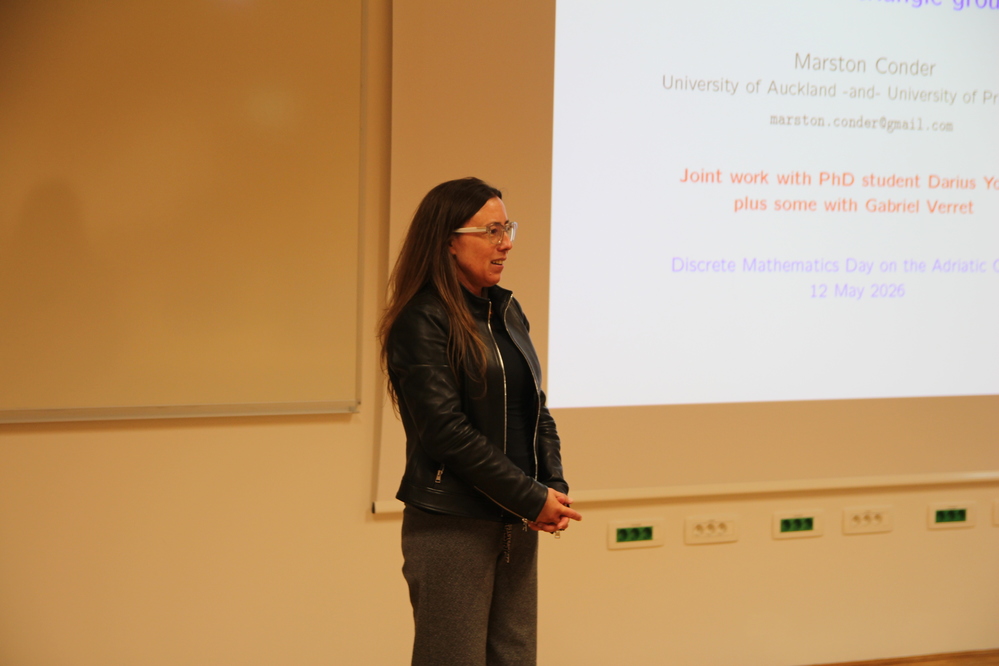
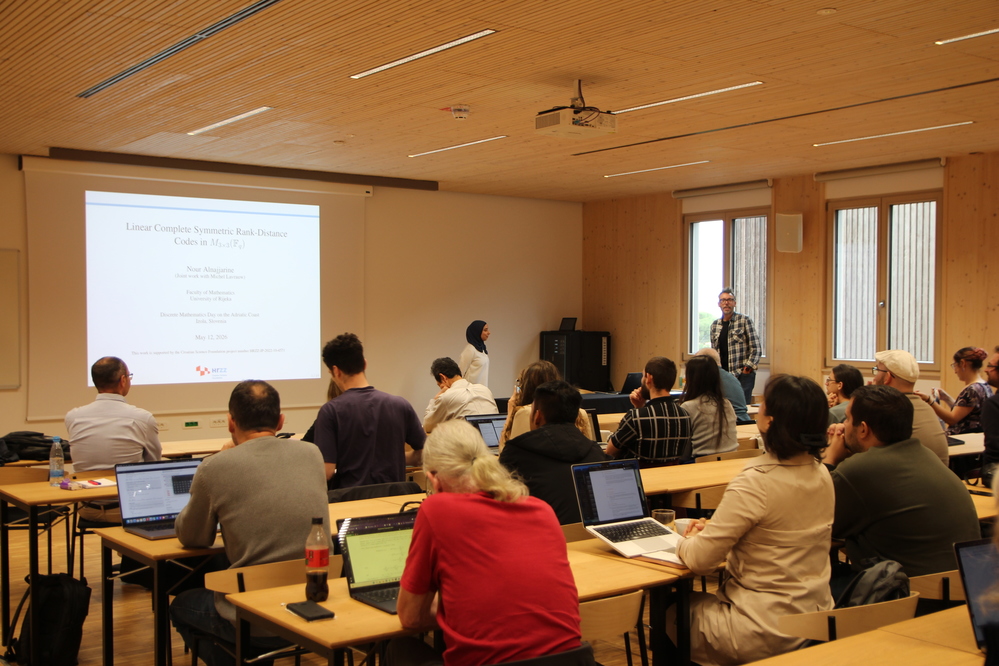
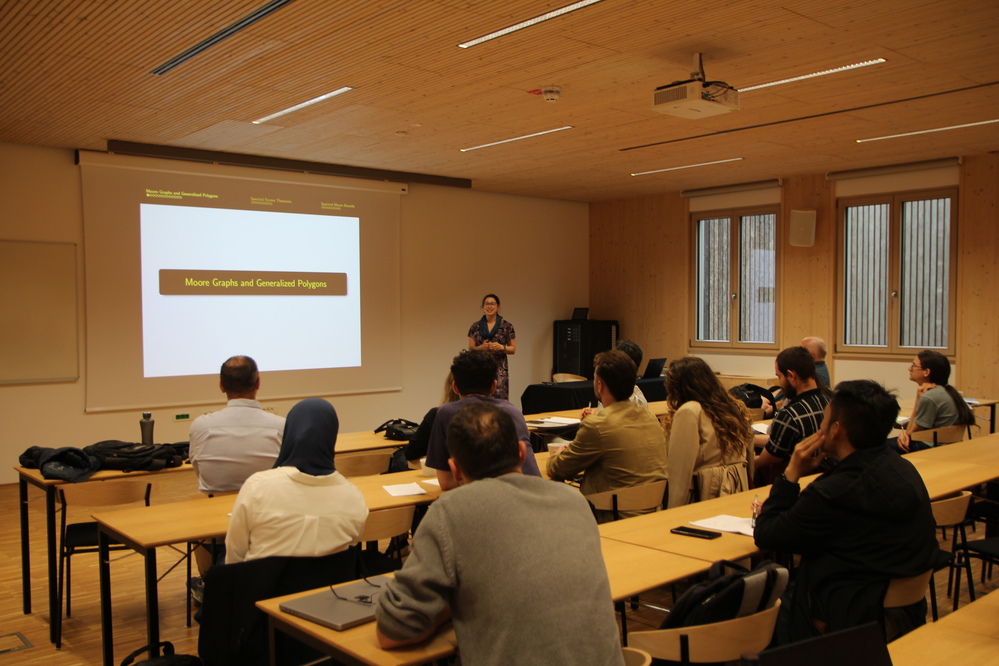
The Discrete Mathematics Day on the Adriatic Coast (DMD AC 2026) workshop is taking place today at the InnoRenew CoE building in Izola. The event brings together 38 mathematicians from across the Adriatic region with the aim of strengthening academic collaboration and fostering new connections between universities and research institutions. Organizers of the workshop are UP FAMNIT, UP IAM and SDAMS.
Several of the invited speakers are already engaged in ongoing collaborations with researchers at UP FAMNIT, while some are visiting our university for the first time. Professor Marston Conder recently participated in the CSD 11 conference in Kranjska Gora, also organized in cooperation with SDAMS. Professor Akihiro Munemasa is visiting UP for the first and he will also be an invited speaker at the 11th Slovenian Conference on Graph Theory, which will take place from June 20–26, 2027, in Bled. We are very pleased to see such ongoing collaborations and to welcome both new and returning colleagues to our university.
International Women in Mathematics Day
In 2019, six regional women-in-mathematics associations launched the first May 12 International Women in Mathematics Day celebration and formed a coordination group, making it the first and unique global initiative linking regional organizations for women in mathematics worldwide.
As May 12 is also celebrated as International Women in Mathematics Day, DMD AC 2026 provides a meaningful opportunity to mark this important occasion. The day is dedicated to recognizing the achievements and contributions of women in mathematics worldwide, promoting equal opportunities in the field, and encouraging young women to pursue mathematical careers. It is celebrated on May 12 in honor of the birthday of Maryam Mirzakhani, the first woman, and the first Iranian, to receive the Fields Medal.
In this spirit, the workshop organizers are especially proud to welcome a number of distinguished women among the invited speakers and to highlight their scientific excellence and leadership in mathematics. DMD AC 2026 is also listed among the global events celebrating women in mathematics: https://may12.womeninmaths.org/2026-list.
Between May 1 and May 20, two movies about women in mathematics are available to watch for free. Viewing links are available here: https://may12.womeninmaths.org/ideas#films.
»If we knew things would be so complicated, I think we would have given up,” she said. Then she paused. “I don’t know; actually, I don’t know,« she said. “I don’t give up easily.«
— from interview with Maryam Mirzakhani, in Quanta Magazine
Monday, 11 May 2026 Presentation of the topic of the doctoral dissertation of Vanja Mileski
We invite you to the presentation of the topic of the doctoral dissertation Time Series Forecasting of Customer Spend using Inception-Residual Convolutional Neural Networks of the student Vanja Mileski, enrolled in the doctoral study programme Computer Science (in Slovene).
The presentation will take place on Thursday, 14 May 2026 at 12.30 in the classroom FAMNIT-MP5.
Thursday, 7 May 2026 European Doctoral Day 2026
The University of Primorska (UP) has joined 200 European universities in their efforts to designate May 13 as European Doctoral Day. In Europe, where science and research are established as fundamental values, this initiative aims to highlight the importance of doctoral education, doctoral candidates, and PhDs for Europe as a whole.
At the University of Primorska, we will mark the first European Doctoral Day 2026 with a series of four events at the University’s member institutions:
 UP Faculty of Mathematics, Natural Sciences and Information Technologies (UP FAMNIT)
Presentation of doctoral students’ research papers
Doctoral students will present their research areas and scientific results. The audience will include both academic staff from the University of Primorska and the wider public, as the event will be held in a hybrid format with the option to join via a publicly available link: https://upr-si.zoom.us/j/65127426860?pwd=kYjS6yFt6yeUcYAGGPcnJShbb5UI7r.1.
May 13, 14:00, lecture room VP3: Enrico Talotti (University of Nova Gorica, and University of Primorska) - Towards the enumeration of EL-semihypergroups
We investigate finite semigroups equipped with a preorder relation that is compatible with the semigroup operation and we develop an enumeration methodology based on automorphism group actions. For a fixed finite semigroup S, the automorphism group Aut(S) acts naturally on the set Pre(S) of compatible preorders via pushforward; the orbits of this action correspond exactly to isomorphism classes of preordered semigroups.Using known classifications of semigroups of small order, together with exhaustive generation of compatible preorders, our method yields a complete enumeration of preordered semigroups up to order five. Finally, this framework opens a computational window toward the study of more complex algebraic systems, particularly EL-hyperstructures arising in hypercompositional algebra, where preordered semigroups serve as a fundamental tool for their construction.
 UP Faculty of Education (UP PEF)
May 13, 2026, 17:30 - 19:00: Doctoral Tea Party: a conversational gathering of graduates, students, and mentors from UP PEF
Doctoral students are invited to a Doctoral Tea Gathering – an informal discussion event aimed at connecting doctoral students and graduates of UP PEF, along with their mentors. Former doctoral candidates of UP PEF will also take part, including the faculty’s first doctoral graduate, who will share their study and career experiences and answer participants’ questions. The event is an internal UP PEF event, intended to foster connections and strengthen the doctoral community at the faculty.
More: https://pef.upr.si/sl/koledar-dogodkov/2026041610170236/doktorska-cajanka-na-up-pef
 UP Faculty of Management (UP FM):
May 13, 2026, 15:30 - 16:30, lecture room 4: Discussion with doctoral students: Sustainable Tourism: Opportunities and Challenges
The discussion will highlight doctoral studies as a crucial phase of research training, with guests sharing their experiences with research work, the development of competencies, and the challenges they face during their doctoral studies. Special emphasis will be placed on the role of research and the placement of research work within a broader scientific and social context, career opportunities, and the transition to the academic or broader professional environment. We will address the challenges of doctoral studies in the rapidly changing Slovenian, European, and global environments, from the perspective of ICT development, artificial intelligence, and sustainability challenges. The discussion will also highlight the importance of international collaboration and knowledge exchange with researchers from European and other universities around the world.
 UP Faculty of Tourism Studies – Turistica (UP FTŠ Turistica)
May 13, 2026: A gathering of graduate students, doctoral candidates, early-career researchers, doctoral program instructors, and potential employers. What competencies can and should a doctoral student in tourism acquire?
The event will be designed as a meeting of postgraduate students, doctoral candidates, early-career researchers, doctoral programme instructors, and potential employers of this graduate profile. It will serve as a platform for exchanging expectations, experiences, and perspectives on doctoral studies in the field of tourism. A key characteristic of this programme is its inter- and multidisciplinary nature, as well as the “contrast” between the applied nature of the field and the academic/scientific standards that shape the choice of dissertation topic, content, and study approach. The central question is how to effectively align the feasibility of the chosen dissertation topic, its scientific contribution, and the competencies expected from doctoral graduates by the professional sector.
The meeting will take place within the 2026 TTRA Europe Annual Chapter Conference; more detailed information is available at: https://www.turistica.si/si/extra-strani/2026-ttra-europe-annual-chapter-conference
The events are designed to foster networking and the exchange of ideas and information among various stakeholders, as well as to facilitate discussions on career paths and opportunities for young PhDs.
European Doctoral Day is a joint initiative of various European associations dedicated to promoting the importance of doctoral education. The initiative stems from a respect for science and research as fundamental European values. European Doctoral Day will also contribute to the formation of a common European identity and to the enrichment of the cultural and intellectual diversity of the European research area.
Thursday, 7 May 2026 International CSD11 conference in Kranjska Gora brought together researchers from 16 countries
The international conference Computers in Scientific Discovery 11 (CSD11) is taking place in Kranjska Gora from 4 to 8 May 2026 under the theme »Computationally Intensive Methods in Mathematics: Applications in Chemistry and Beyond«. The conference brings together researchers working at the intersection of mathematics, computer science, and the natural sciences, with a focus on algorithms, mathematical software, and data-driven approaches in scientific discovery. The organizers of this year’s edition are UP FAMNIT and the Slovenian Discrete and Applied Mathematics Society (SDASMS), while the sponsors are Institute of Mathematics, Physics and Mechanics (IMFM) and European Mathematical Society.
The conference hosts 46 participants from 16 countries: Belgium, Denmark, France, Germany, Hungary, Italy, Kuwait, Macedonia, Malta, New Zealand, Serbia, Slovakia, Slovenia, Taiwan, United Kingdom and USA.
The scientific programme includes invited lectures, contributed talks, and discussions on contemporary developments in discrete mathematics, computer science, chemistry, and physics. Special emphasis is placed on computer-assisted research, curated mathematical databases, and computational methods in scientific discovery.
Renowned scientists are participating in the conference as invited speakers: Marién Abreu (University of Basilicata, Italy), Milica Anđelić (Kuwait University, Kuwait), Marston D. E. Conder (University of Primorska, Slovenia, and University of Auckland, New Zealand), Jan Goedgebeur (KU Leuven, Belgium), Tatiana Jajcayová (Comenius University Bratislava, Slovakia), and Hadrien Mélot (University of Mons, Belgium).
CSD11 continues the long-standing tradition of the Computers in Scientific Discovery conference series, which fosters interdisciplinary collaboration and connects researchers from different continents working in computationally supported science. Previous editions of the conference were held in Belgium, Canada, China, the United Kingdom and USA, and also in Slovenia in 2012.
More information about the conference is available at the website.


Jan Goedgebeur

Milica Anđelić

Irene Sciriha

Patrick W. Fowler

Tatiana Jajcayová

Hadrien Mélot

Jörg Arndt
Friday, 24 April 2026 Lek’s ScienceBeat event is once again inviting students of natural sciences and business studies to participate this year
Pharmaceutical company Lek, a member of the Sandoz Group, in cooperation with Slovenian public universities, is organizing the top scientific and professional event ScienceBEAT, which will take place from September 16 to 19, 2026, in Ljubljana.

This year, the event introduces an important innovation: after the event, several selected participants will be offered employment at Lek. For all others, opportunities remain open for further collaboration in the form of practical work, writing final theses, or future employment opportunities.
During the 4-day event, participants will have the opportunity to work in teams to solve a real pharmaceutical challenge, gain insights into current topics and trends in biotechnology, pharmacy, chemistry, digitalization, and manufacturing processes, and visit development and production sites.
ScienceBEAT is an excellent stepping stone for outstanding students and young professionals at the beginning of their careers:
- Inside insight: Discover how a global pharmaceutical company operates and helps shape the future of biological medicines and generics.
- Valuable experience: Gain references and achievements that stand out on your CV.
- Future technologies: Explore the latest trends—from artificial intelligence and data science to automation and robotics.
- Learn from the best: Gain knowledge directly from top scientists and researchers who apply it daily in drug development.
- Real challenge: Work in a team on a practical project and demonstrate your knowledge of real industry challenges.
- Network of opportunities: Connect with people who could become your mentors, colleagues, or future employers.
- Holistic experience: Develop yourself not only professionally but also personally and socially.
- Step closer to your career: Open doors to global opportunities in an inspiring and inclusive work environment.
The event is intended for final-year undergraduate students as well as master’s, doctoral, and postdoctoral students in natural sciences and business fields from Slovenia and abroad. It is suitable for anyone who wants to get ahead, enhance and test their knowledge in practice, and actively contribute to shaping the future of science.
Applications are open until May 17, 2026, via the ScienceBEAT | Lek online application form. Applicants must submit their CV in English. As the event will bring together young talents from around the world, it will be conducted in English.
More HERE
Wednesday, 22 April 2026 Welcoming a Volunteer from the Tačke pomagačke Society: Exploring the Effects of Animal-Assisted Therapy
Today, we hosted Mojka Mehora Lavrič, a volunteer from the Tačke pomagačke society, at the faculty premises. The lecture was organized in collaboration with Prof. Daša Grajfoner as part of the courses Educational Psychology (1st year of the Master’s program in Psychology) and Evolutionary Psychology (1st year of the undergraduate program in Biopsychology).
The presentation focused on the activities of the Tačke pomagačke society, its programs, and the various user groups it serves. Special emphasis was placed on practical examples of working with therapy dogs, the requirements for including both dog and handler, and the competencies needed for such work.
The lecture also addressed whether certain dog breeds are more suitable for therapeutic work, and what the relationship between a dog and its handler looks like compared to typical pet ownership. An important part of the content was dedicated to animal welfare and how society ensures that the work is not overly demanding for the dogs.
The event provided insight into the effects of animal-assisted therapy, as well as the responses of users and professionals, while also opening space for reflection on the broader significance of the human–animal relationship in modern society.
The Tačke pomagačke society is a volunteer organization that has been carrying out therapy work with dogs in around 130 institutions across Slovenia.

Tuesday, 21 April 2026 Awards and recognitions presented to UP Alumni at the MeetUP event
On Friday, April 17, 2026, a traditional event took place in the UP FAMNIT Auditorium, which not only unites but also celebrates the successes of UP alumni – MeetUP. Six UP Alumni Awards and Recognitions were presented to all those who, on the one hand, transfer knowledge and successes after completing their studies at UP at home and abroad, and on the other hand, represent excellent partners for cooperation and success of the UP Alumni Club.7
This year's event followed the concept that was introduced by the new concept of club management, namely the involvement of alumni in all elements of the organization of the event, both the offer and ultimately the involvement of employees in the event, as many employees of the university are also employees of the event, which shows excellent continuity of cooperation and satisfaction. Thus, not only the Rector of UP, Prof. Dr. Klavdija Kutnar, who is the first PhD student in mathematics at UP FAMNIT, but also the president of the UP Alumni Club, are alumni, asist. Martin Senič, who addressed the attendees and hoped for new expansion and success stories of cooperation, and then presented awards and recognitions.
We are also proud to present this year’s award recipient.
 The Alumni UP Award for Outstanding Achievements in their Area of Expertise for 2025 was received by Iza Resnik Strozak, UP FAMNIT alumni
Iza Resnik Strozak is a graduate of UP FAMNIT, who has already shown research maturity during her studies. Today, as a member of the management of MM Količevo, she leads the transformation of quality, environmental standards and sustainability strategies in a complex production environment. By contributing to quality and environmental improvements in the production of cardboard from fresh and recycled fibres, it embodies sustainability and innovative thinking. She is a model of an internationally oriented and socially responsible professional, for which she received the UP Alumni Award for outstanding achievements in the professional field.
Members of the UP Alumni Club also participated in the event, offering their knowledge or products and introducing themselves to their colleagues and guests of the event. The UP Alumni Club strives to directly involve university alumni in all its activities and events, provide them with space for networking and additional education, and support them on their career paths.
Other award recipients are available HERE.
Friday, 17 April 2026 Invitation to attend the WENUS project workshop
InnoRenew CoE, UP IAM is organizing the WENUS (Wood Education for Sustainable Construction. Empowering professionals and students to build a more sustainable future through innovative and tailored training in circular wood and timber construction) project workshop, which will be held 27 May 2026, in the InnoRenew CoE building.
At the workshop, you will be able to find out more about how to empower professionals and students to build a moresustainable future through innovative training in circular wood and timber construction.
Wenus project partners prepared extensive training content that enhances vocational educational training (VET) in sustainable wood and timber construction by integrating circular economy principles and 3D printing technologies into the curriculum.
Partners also launched the eLearning platform where all developed curriculum is available to broaden access and enrich vocational training with essential green and digital skills, thereby fostering greater sustainability and innovation within the sector.
At the workshop you will hear about the developed training content, the eLearning platform and 3D printing exercises. Participants will have the opportunity to explore the models and see a demonstration of how to use 3D printing exercises in the training.
See here the detailed agenda.
The participation is free of charge, however, prior registration is needed. Please register here until 6 May 2026.
Registration link: HERE
Kindly invited to join us!
Stay tuned with news about the project activities by visiting the WENUS webpage and subscribe to the WENUS newsletter!
WENUS is an Erasmus+ project, led by the German institute Karlsruhe Institute of Technology (KIT), and including partners from InnoRenew CoE UP IAM, Technological Centre for Furniture and Wood of the Region of Murcia, and Globalnet.
Funded by the European Union. Views and opinions expressed are, however, those of the author(s) only and do not necessarily reflect those of the European Union or the European Education and Culture Executive Agency (EACEA). Neither the European Union nor EACEA can be held responsible for them.
Thursday, 16 April 2026 Online Info Session for Master's studies
UP FAMNIT Master's study programmes are interdisciplinary and diverse, offering students everything they need: knowledge, project work, case studies, research activities, and well-equipped laboratories.

You are invited to join the presentations of our study programmes, which will be held from 4 May and 5 May 2026 via ZOOM. Study programmes coordinators will present our study and research activities and answer your questions as well.
Programmes held in English will be presented in English.
There is a specific day and time of presentation for each Master's study program, so we invite you to see the list below. More information about our info events and Zoom links can be found here.
Discover all Master's study programmes at UP FAMNIT!
The CALL FOR ENROLMENT into UP FAMNIT postgraduate study programmes in 2026/27 is available HERE.
You are invited to join us!
DATE AND HOUR |
PROGRAMME |
4 MAY, 5 PM |
Biopsychology - ZOOM |
4 MAY, 5 PM |
Nature Conservation - ZOOM |
4 MAY, 5 PM |
Data Science - ZOOM |
4 MAY, 5 PM |
Mathematical Sciences - ZOOM |
4 MAY, 5 PM |
Computer Science - ZOOM |
4 MAY, 5 PM |
Psychology - ZOOM |
4 MAY, 5 PM |
Mathematics with Financial Engineering - ZOOM |
4 MAY, 5 PM |
Sustainable Built Environments - ZOOM |
5 MAY, 5 PM |
Data Science - PRESENTATION IN ENGLISH - ZOOM |
5 MAY, 5 PM |
Mathematical Sciences PRESENTATION IN ENGLISH - ZOOM |
5 MAY, 5 PM |
Sustainable Built Environments PRESENTATION IN ENGLISH - ZOOM |
Thursday, 16 April 2026 UPgrade - guidance for choosing a program of study at higher levels
Deciding on a field of study and a degree program is an important step after finishing high school—and it’s often just as important after completing the first cycle of higher education. Continuing on the chosen path, switching to a different field, or pursuing a dual degree are options that universities offer to students who wish to take advantage of the benefits of the Bologna system.

That is why UP offers its students support throughout the entire final year of the first cycle—first through visits to each program, where students receive both a reminder on how to continue their studies through the proper processes and a list of possible transfers within UP’s study programs. The visits were followed by information booths at individual faculties and other activities, which culminated on Wednesday, April 15, 2026, with the UPgrade fair, where all member institutions presented their second- and third-cycle programs; the event was also open to external visitors seeking information prior to the information days scheduled to take place at individual faculties in the coming months.
The UP faculties presented themselves at the fair, along with the FTPO, a faculty in the process of joining the university—together, they showcased 33 master’s degree programs and 16 doctoral degree programs, where students shared their experiences, while staff from the departments and the UP Admissions Office provided information on admission requirements. They presented both the programs and the options for transferring between UP faculties or programs, vertical study tracks within faculties, and concurrent study. In addition, the International Office—along with the office for the European university Transform4Europe, the UP Career Center, and UP Sports—presented opportunities to broaden their academic experiences. UP Sports also organized a workout session designed to help students clear their minds and make better decisions about continuing their studies.
Monday, 13 April 2026 Famnits' Excursion into the Mathematical Universe
You are invited to the next Famnits' Excursion into the Mathematical Universe, titled Those who say maths has no colours have not met association schemes yet! When symmetry and regularity come into play together..., on Wednesday, 22. April 2026, 4:00 pm, at VP3 Lecture room and via Zoom. The lecturer is Dr. Giusy Monzillo, UP FAMNIT.

About the lecturer:
Giusy Monzillo was born in March 1993 in Battipaglia, Salerno, Italy. She graduated in Mathematics from Università degli Studi della Basilicata (Unibas), Potenza, Italy, in February 2016. Giusy received her Master's degree in Mathematics from Unibas in June 2018, where her mathematical interests were Algebra and Geometry. She obtained her Ph.D. in Mathematics from Università del Salento, Lecce, Italy, in June 2022. Since October 2022, she has been a researcher and lecturer at the Faculty of Mathematics, Natural Sciences, and Information Technologies of the University of Primorska, where she has recently been promoted to Assistant Professor. Her current research interests include Algebra, Combinatorics, Graph theory, and Finite Geometry.
About the lecture:
Since the ancient determination of the five Platonic solids, the study of symmetry and regularity has always been one of the most fascinating aspects of mathematics, and even nowadays, there are many challenging problems in this area. One intriguing phenomenon is that the arithmetical regularity properties of an object often imply both the uniqueness of the object and the existence of numerous symmetries. This interplay between symmetry and regularity forms the core of the present lecture.
Mathematically speaking, graphs and association schemes easily interpret many symmetry and regularity properties, mainly because the very nature of these peculiar mathematical tools makes them incredibly versatile, convenient to use: association schemes can be roughly understood as special collections of coloured graphs, i.e., nice structures made of “points” that are all connected via distinctly coloured “lines”. For instance, if we consider a (regular) hexagon in a plane, we can choose red to colour its perimeter, green to colour its two inscribed triangles, and blue to colour its three diagonals; in such a way, we partition all edges in a hexagon (connecting every two vertices, we get a complete graph with 15 edges) into three distinct colour classes and obtain an association scheme consisting of three coloured graphs: the red perimeter, the green triangles, and the blue diagonals.
In light of this naive but very effective example, we can imagine an association scheme to be a special colour palette for colouring sufficiently regular mathematical structures: association schemes, by assigning colours, can highlight the most beautiful aspects of a studied object, i.e., the symmetries! Much more about the beauty of mathematical symmetries will be revealed during the lecture, along with some curiosities on everyday life topics seen through the lens of association schemes.
Monday, 13 April 2026 UPGRADE - UNIVERSITY OF PRIMORSKA MASTER'S AND DOCTORAL STUDY PROGRAMMES FAIR
You are cordially invited to the Master's and Doctoral Study Programmes Fair, UPgrade, on Wednesday,April 15, 2026, between 11:00 and 15:00 at the Avla UP FAMNIT (Koper, UP FAMNIT).
The aim is to provide UP students with information about:
- opportunities of transferability between faculties
- vertical study pathways within faculties (and differences in content across different study levels within the same programme)
- parallel study options
- exploring different study paths in general
The fair will be attended by tutors, professors, postgraduate students, departmental staff and the career centre, who will be available for all information on 2nd and 3rd cycle studies.

Friday, 10 April 2026 The Department of Biodiversity at UP FAMNIT Hosts Associate Professor Onur Candan from Ordu University
As part of the ERASMUS+ programme, the Department of Biodiversity at UP FAMNIT will host Associate Professor Onur Candan from 13 to 17 April 2026.
Dr. Candan is an ecologist specializing in herpetology. He obtained his PhD in Biology (Zoology) from Hacettepe University (Ankara, Turkey), where he also earned the title of Associate Professor in Ecology. He currently works as an Associate Professor at the Department of Molecular Biology and Genetics, within the Division of General Biology, at Ordu University.
For more than two decades, Dr. Candan has been involved in numerous research projects in the fields of biodiversity and nature conservation across Turkey, with a particular focus on sea turtles, amphibians, and reptiles. He is also a member of the National Scientific Committee for Sea Turtles in Turkey.
Dr. Candan teaches a wide range of undergraduate and graduate courses, including conservation biology, environmental impact assessment, herpetology, animal tracking and handling techniques, vertebrate field studies, and population monitoring. His teaching is enriched by extensive hands-on experience in wildlife conservation, rehabilitation, and telemetry. With a strong commitment to students’ academic development, he supervises numerous Master’s and PhD theses, particularly in the field of sea turtle biology.
Within the study programmes Conservation Biology and Nature Conservation, Dr. Candan will deliver the following lectures:
- Amphibians and reptiles of Turkey
Monday, 13 April 2026, 13:00–15:00
UP Livade Campus – Izola, Zoology Laboratory - Studying herpetofauna on land and in sea: Methods, implications for conservation and lessons learned
Wednesday, 15 April 2026, 10:30–12:30
UP Livade Campus – Izola, FAMNIT 3 Lecture Room - Sea turtles in the Mediterranean: Biology and conservation perspectives in a changing world
Thursday, 16 April 2026, 15:30–17:30
UP Livade Campus – Izola, FAMNIT 3 Lecture Room
The lectures are open to all UP FAMNIT students, staff, and the general public.
You are warmly invited!

Thursday, 9 April 2026 UP FAMNIT hosted high school students in Izola
On Wednesday, April 9, 2026, UP FAMNIT in Izola welcomed three high school students from Gymnasium Sežana and (škofijska) Gymnasium Vipava. The visit was part of the Institute for Youth Policy’s “Job Shadowing” programme, now in its eighth year. Our faculty participated and put together an engaging programme for the students.
Assist. Prof. Sara Zupan led the event, organising the reception and giving both the opening and closing talks. Assist. Kevin Rečnik showed the students around the campus. At first, the students learned about the faculty, its study programmes, how the study system works, and what the work process is like. Afterwards, they toured the facilities, met staff members, learned about their roles, and heard about their educational and career journeys.
Assist. Prof. Matjaž Hladnik and Assist. Prof. Alenka Baruca Arbeiter from the Department of Applied Natural Sciences, as well as Assist. Prof. Sara Zupan and Assist. prof. Katja Adam from the Department of Biodiversity participated in the event. They also hosted the students during practical sessions in the courses Introduction to Microbiology and Animal Physiology.
The students were also introduced to the work of a laboratory technician, a position often intended for students as their first opportunity to work in our facilities and become familiar with colleagues and the work process. Finally, student Lina Kramberger presented student project work, such as the Allelotox project, which also provides students with their first steps into their future careers in scientific research.


Thursday, 9 April 2026 Visit from the University of Malta Strengthens Cooperation and Exchange of Good Practices at UP FAMNIT
The University of Primorska, Faculty of Mathematics, Natural Sciences and Information Technologies (UP FAMNIT), hosted two representatives from its partner institution, the University of Malta, within the framework of the Erasmus+ programme. UP FAMNIT has an established collaboration with the University of Malta, including ongoing student exchange activities.

The faculty was visited by Marvic Cuschieri, Senior Manager at the Faculty of Science, and Marion Cachia, Administrative Specialist at the Department of Mathematics.
The main purpose of the visit was the exchange of good practices in administrative processes and support for study programmes. Particular attention was given to admission procedures, timetable planning, organisation of examination periods, assessment processes, and the promotion of study programmes and alumni activities.
During their stay, the guests met with staff from the Student Services Office and the Communications Office, where they engaged in constructive discussions and shared experiences related to the organisation of study processes and faculty support services.
They also visited the Admissions Office of the University of Primorska and the University Library, where they met with professional staff and gained detailed insight into admission procedures and the services provided by the university. The programme further included a tour of the University of Primorska’s research infrastructure. The guests visited the Livade 1.0 campus in Izola and InnoRenew CoE, where they were introduced to research activities and interdisciplinary collaboration in the field of sustainable materials and the environment.
The visit represents an important opportunity to strengthen further cooperation between the University of Primorska and the University of Malta, foster the exchange of experiences, and develop new opportunities for collaboration within the Erasmus+ programme.


Tuesday, 7 April 2026 ALUMNI UP WEEK 2026
13.–17. APRIL 2026
The UP Alumni Club’s favorite week is here again! UP Alumni Week will take place fromb April 13 to April 17, 2026. Our main event, MeetUP, will be held on Friday, April 17, 2026, in the UP FAMNIT hall (Glagoljaška 8, Koper). Starting at 5:00 PM, we will present the UP Alumni Club Awards and Recognitions for 2025.
You are cordially invited to join us for the main event and all other activities organised across the University of Primorska and its faculties.
We look forward to meeting you during a week filled with knowledge. Join us!
MONDAY, 13. APRIL 2026:
Hearing Loss and the Basics of Sign Language
 Speaker: Matjaž Juhart (Zveza gluhih in naglušnih Slovenije)
When? 13. 4. 2026, 15.00-16.00
Where? UP FHŠ (Titov trg 5, Koper), Room: Burja 3
Language: Slovenian
Description: In this presentation, participants will learn about the specific characteristics of people with hearing loss, including the deaf, hard-of-hearing, individuals with cochlear implants, people with tinnitus, and those with deaf-blindness. They will be introduced to the basics of sign language and ways of communicating with a deaf person and individuals with hearing loss. Due to the development of technology and a changed lifestyle, hearing loss/impairment and tinnitus are becoming an increasingly common phenomenon among young people, as well as during professional life and with age. In light of the content, we will also touch upon the foundations of relationships, communication, and the challenges faced by people with hearing loss.
Alumni UP Pub Quiz
 Host: viš. pred. Matija Jenko
When? 13. 4. 2026, 18.30-21.30 (arrival of teams from 18.00 onwards)
Where? Center mladih Koper - Koper Youth Center (Gregorčičeva ulica 4, Koper)
Language: Slovenian
Registration is mandatory up to and including April 13, 2026, until 10:00 AM, or until spots are filled: HERE.
Description: Welcome to the first ALUMNI UP PUB QUIZ! All alumni and employees of the University of Primorska are invited to compete. Gather a team of three or four members and show how much knowledge is hidden within you. Diverse sets of questions from various fields await you – from general knowledge to more specific topics, where everyone will find their opportunity to shine. Who will prove to have the most knowledge (and perhaps the best nerves)? Who will earn the title of the best team of the evening?
Come, test your knowledge, and spend an evening in great company.
TUESDAY, 14. APRIL 2026:
 From Graduate to Director of the Območna obrtno-podjetniška zbornica Logatec: The Career Path of Dejan Šraml
Moderator: prof. dr. Mitja Ruzzier
Guest: Dejan Šraml
When? 14. 4. 2026, 16.00-17.00
Where? Zoom
Language: Slovenian
Description: Dejan Šraml first graduated from the UP Faculty of Management (UP FM) in 2007 and later completed his master’s degree in 2012. His first employment was at UP FM, where he headed the Public Relations office. He then continued his career path in the entrepreneurial support environment and became the director of the Logatec Regional Chamber of Craft and Small Business. Between 2021 and 2023, he also served as the President of the UP FM Alumni Club, where he connected faculty graduates and encouraged cooperation between the academic and business environments. His career is closely linked to the promotion of entrepreneurship, networking, and the development of the local economy, focusing primarily on advising artisans and entrepreneurs and representing their interests. At the event, he will present his career path from graduate to director and share experiences, challenges, and opportunities from the world of entrepreneurship with the participants.
From Piran to the End of the World: From the Punta Lighthouse to the Cape Finisterre Lighthouse
 Speakers and travellers: Valter Suban and Rok Sorta
When? 14. 4. 2026, 18.30-20.00
Where? UP FTŠ – Turistica (Obala 11a, Portorož), 3rd floor, library
Language: Slovenian
Description: This time, as part of our travel lecture series from Piran, we will head to the end of the world – Cape Finisterre in Spain. Valter Suban and Rok Sorta, who set off last April from Piran on a more than month‑long cycling journey, will take us along the 2,934‑kilometre route. Their path led them through the diverse landscapes of Italy and France to the far northwest of Spain, where they followed the famous pilgrimage route, El Camino. Cape Finisterre (Cabo Finisterre) lies on the western coast of Galicia and has been stirring the imagination of travellers for centuries. In Roman times, it was believed that this was where the world simply “ended.” Today, that feeling still lingers – dramatic cliffs, the imposing lighthouse, and the endless view of the Atlantic create a scene that truly makes you feel as if you are standing at the edge of the world.
Registration: at the link HERE
WEDNESDAY, 15. APRIL 2026:
CAREER DAY: Tourism Beyond Traditional Frameworks
 When? 15. 4. 2026, 9.00-13.00
Where? UP FTŠ – Turistica (Obala 11a, Portorož)
Description: The UP FTŠ Turistica Career Day is dedicated to exploring modern career paths in tourism, connecting with professionals from practice, and gaining concrete knowledge for entering the labour market. Get to know various career paths in tourism that extend into the fields of creative industries, event organization, digital marketing, and destination development. Dress code: dress as if you were going to a job interview.
UPgrade - Fair of Postgraduate Study Programmes of the University of Primorska
 When? 15. 4. 2026, 11.00-15.00
Where? Muzejski trg, Koper
Description: The fair is intended for everyone considering continuing their studies at the postgraduate level at the University of Primorska. You can choose between continuing your studies in a field you have already chosen at the undergraduate level or deciding on a different field of study to expand your knowledge and skills. Tutors, professors, postgraduate students, staff from the student office, and the career center will be present at the fair and available for all information regarding 2nd and 3rd cycle studies. Take the opportunity for a personal conversation with representatives of individual study programs and receive first-hand information..
Biology Evening: "A Fight Between Two Fires" - The Story of the False Ringlet Butterfly
 Moderator: assist. Martin Senič
Guest: doc. dr. Sara Zupan
When? 15. 4. 2026, 19.00-20.00
Where? Zoom
Language: Slovenian and Italian
Description: The False Ringlet (Coenonympha oedippus) is one of the most endangered butterfly species in Slovenia, closely tied to open meadow habitats. In Slovenian Istria, it primarily faces overgrowth due to the abandonment of traditional land use, while populations in the Karst were further affected by extensive fires in 2022. The lecture will present the demography and movement of part of the population along the upper reaches of the Dragonja River and the role of vegetation in shaping its habitat. Special emphasis will be placed on comparing habitats in the Dragonja Valley and the Karst after the fires, where conditions for the species have changed significantly. The results show distinct gender differences in demography and movement, as well as limited dispersal ability in a landscape characterized by meadow overgrowth. This highlights the crucial role of active management and ensuring habitat connectivity for the long-term conservation of the species.
THURSDAY, 16. 4. 2026:
UP Alumni Talks: How our alumni shape the world
 When? 16. 4. 2026, 17.00-20.00
Where? Bife Museum (Muzejski trg 6, Koper)
Language: Slovenian
Description: Join us for a relaxed conversation with alumni of the University of Primorska who work in diverse fields and come from various faculties. Together, we will explore their career paths, personal experiences, challenges, and opportunities that followed their studies. The event offers inspiration, insight into a wide range of professional stories, and an opportunity for an open dialogue with successful graduates. After the moderated talk, you are invited to stay for refreshments and a chance to chat with our guests.
Our guests will be:
- Jernej Šček (UP FHŠ) – a Triestine-Slovenian philosopher, publicist, essayist, and translator who researches the humanities and teaches philosophy and history
- Klavdija Žnidarič (UP FTŠ – Turistica) – project and festival manager and program lead at Auditorium Portorož, where she co-creates cultural and event content
- Andreja Grobiša (UP Famnit) – General Secretary of the Slovenian Rural Youth Association, active in the field of development and empowerment of rural youth
- Miha Klanjšček (UP PEF) – a primary school teacher and author of the manual "11 Pillars of Upbringing," active in the field of modern pedagogical approaches
FVZ Evening, Connecting Science with Everyday Life: Nutrition – Between Science, Opinions, and Myths
 Moderator: assist. Tanja Črešnovar
Guest: izr. prof. dr. Nina Mohorko
When? 16. 4. 2026, 19.00-20.00
Where? University Library of the University of Primorska (Trubarjeva ulica 1, Koper)
Language: Slovenian
Description: Information about nutrition is accessible at every step today, but often superficial, misleading, or inadequately interpreted. In this conversation, we want to shed light on how to distinguish credible scientific results from myths, how to recognize quality research, and why it is important that scientific knowledge does not remain limited only to academic circles. The interlocutor will share the latest scientific findings with us in areas that often stir public and professional debate:
- the impact of nutrition on brain function,
- time-restricted eating,
- the ketogenic diet,
- the impact of microbiota on metabolic health
- and approaches within alternative dietary regimes.
We will also touch upon the question of the future of nutrition science
FRIDAY, 17. 4. 2026:
UP Alumni Talks: MeetUP - Stories of Excellence
 When? 17. 4. 2026, 17.00-20.00
Where? UP Famnit Hall (Glagoljaška 8, Koper)
Language: Slovenian
Description: The UP Alumni Club MeetUP is a formal gathering of University of Primorska alumni, representing the highlight of UP Alumni Week. At the event, awards and recognitions will be presented to individuals who, through their actions, strengthen the alumni community, support the development of Alumni UP, and spread the good name of the university at home and abroad. The event offers an opportunity for socializing, intergenerational exchange of experiences, personal growth, and the creation of new, inspiring collaborations and community strengthening, all accompanied by live music and catering provided by UP graduates.
Registration: at the link HERE
MeetUP After Party
 When? 17. 4. 2026, from 20.00
Where? Bife Museum (Muzejski trg 6, Koper)
Description: After the official part of the MeetUp, you are kindly invited to join us for an informal gathering in a relaxed atmosphere.znakovnega jezika
Friday, 27 March 2026 Call for enrolment into master degree and doctoral degree study programmes of the UP in the academic year 2026/2027
On Friday, 27 March 2026, the University of Primorska announces the Call for enrolment into master's and doctoral study programmes in the academic year 2026/2027.

In the framework of the Call for Enrolment into master study programmes, the University of Primorska announces the following free enrolment places for 33 study programmes:
- 1.044 enrolment places for citizens of the Republic of Slovenia and EU citizens, of which 969 are for full-time study and 75 for part-time study,
- 61 enrolment places for Slovenians abroad, 158 enrolment places for citizens of Western Balkans countries, with which the Republic of Slovenia has a bilateral agreement in the field of education (Bosnia and Herzegovina, Montenegro, Kosovo, Serbia, North Macedonia), and
- 66 enrolment places for foreign citizens of non-EU countries. For the 1st year of study, there are also 63 enrolment places for candidates for parallel studies.
Three master's study programmes are also offered in the English language:
- Data Science,
- Mathematical Sciences and
- Sustainable Built Environments.
In the framework of the Call for Enrolment into doctoral study programmes, the University of Primorska announces 171 free enrolment places for 16 study programmes. Six doctoral (PhD) study programmes are also offered in the English language:
- Computer Science,
- Conservation Biology,
- Management,
- Mathematical Sciences,
- Renewable Materials for Healthy Built Environments and
- Suicidology and Mental Health.
The first-round application period for all candidates opens on Wednesday, 8 April 2026.
The call for enrolment is published on: Application for enrolment - UP FAMNIT
Student services: referat@famnit.upr.si
Thursday, 19 March 2026 23rd UP Solemn Academy
The UP Solemn Academy marks the highlight of UP Week every year—a week around March 17 , when theUP celebrates its anniversary , as it was entered into the Court Register on that date in 2003. This year’s ceremony, at which awards are presented to all those who have contributed to the university’s reputation, development, and success through their work or activities, was dedicated to Srečko Kosovel, as the award for UP students is also named after him; this year, the Government of the Republic of Slovenia dedicated the award to the Karst poet on the 100th anniversary of his death.
The attendees were first addressed by the Rector of the University of Primorska, Prof. Dr. Klavdija Kutnar , who began her speech with the thought: “We are still young, still ambitious, and no longer very small, yet we remain innovative and forward-thinking,” then highlighted the successes and achievements of the past year across various areas of the university’s operations, and concluded with the words: “The UP is still at the heart of our name, so we will continue to move forward in the coming year.”
Matic Bončina, President of the UP Student Council, extended a special greeting to the students and emphasized that the award recipients: »Have made sure that all of us attending the University of Primorska today are extremely proud to be part of such an incredible academic and student community. Your achievements are not just personal successes, but serve as an inspiration to many students.«
Last year marked the first celebration of Slovenian Science Day, which will be observed annually on November 10. To mark the occasion, the UP set up and opened a gallery in the University Library featuring recipients of Zois Awards or recognitions and Science Ambassador awards among UP employees. Among them was the academy’s solemn speaker—Prof. Dr. Tomaž Pisanski, who received the Zois Award for lifetime achievement in the field of discrete mathematics on the eve of the holiday. In his opening remarks, he offered this reflection: “What can a dinosaur from the first half of the last century—or indeed from the last millennium—tell you? When a person of my age looks back, it seems as though nothing changes from one day to the next. But when he thinks back a few years or even decades, he notices that the changes are enormous—so great that a young person, who knows them only from history, finds it very difficult to imagine certain things that were once a constant.”
The speeches were followed by the award ceremony, which was rounded off by a cultural program that also intertwined the university and the poet. The university is also linked to Kosovel by numbers, as Srečko Kosovel was born on the very day of the academy in 1904, while the UP celebrates its founding the day before. His poetry was set to music by the Karst musician Boštjan Pertinač, and in an original choreography, he was accompanied between songs by two ballerinas who began their dance careers in the Divača dance society—Katarina Jurišević and Nika Lipolt, both UP alumni—the former from UP FTŠ Turistica, the latter from UP FAMNIT.
At this year’s ceremony, the rector, together with the presenters, awarded sixteen prizes, which we present below.
RECIPIENTS OF THE UNIVERSITY OF PRIMORSKA AWARDS 2025
Svečana listina Univerze na Primorskem - Doc. dr. Nuša Zadravec Šedivy, UP FAMNIT & UP IAM
 At the proposal of UP FAMNIT and UP IAM, the UP Solemn Charter for 2025 is awarded to Assist. Prof. Nuša Zadravec Šedivy for her significant contribution to the fields of suicidology and mental health, with a focus on vulnerable groups and loneliness.
2025 Gold medal of the University of Primorska - Assist. Prof. Peter Glasnović, UP FAMNIT and UP IAM
 At the proposal of UP FAMNIT and UP IAM, the 2025 Gold Medal of the University of Primorska is awarded to Assist. Prof. Peter Glasnović for his outstanding contribution to the development of botany and strengthening the reputation of UP in this field.
2025 University of Primorska Scientific Excellence Award - Prof. Elena Bužan, UP FAMNIT and UP IAM
 At the proposal of UP FAMNIT and UP IAM, the 2025 UP Scientific Excellence Award is presented to Prof. Elena Bužan for the publication of a scientific article in the journal Nature.
2025 University of Primorska Scientific Excellence Award - Assist. Prof. Aleksandar Tošić, UP FAMNIT and UP IAM
 At the proposal of UP FAMNIT and UP IAM, the 2025 UP Scientific Excellence Award is presented to Assist. Prof. Aleksandar Tošić for his exceptionally impactful research in computer science and information technology.
2025 Srečko Kosovel Award for University of Primorska Students - Dr. Meta Lavrič, UP FAMNIT in UP IAM
 At the proposal of UP FAMNIT and UP IAM, the 2025 Srečko Kosovel Award for UP Students goes to Dr. Meta Lavrič for her doctoral thesis Experiencing storytelling: developing and sharing written stories as an intervention to strengthen mental health in gatekeepers under supervisor Prof. Vita Poštuvan.
2025 Srečko Kosovel Award for University of Primorska students - Adela Horvat, UP FAMNIT
 At the proposal of UP FAMNIT, the 2025 Srečko Kosovel Award for UP Students goes to Adela Horvat for her final thesis The impact of environmental factors on the breakdown of the incompatible reproductive system of the invasive Bermuda buttercup (Oxalis pes-caprae L.) in the Mediterranean under supervisor Assist. Prof. Peter Glasnović and co-supervisor Assoc. Prof. Živa Fišer.
Adela Horvat completed the first-cycle study programme in Conservation Biology at UP FAMNIT. Her final thesis deals with the current and scientifically demanding topic of reproductive biology of invasive plants, demonstrating an exceptional understanding of the mechanisms that affect the spread of non-native species in a changing environment. The thesis stands out for its topical focus on the reproductive biology of invasive plants, its methodological precision and its in-depth analysis of the influence of climatic factors on the morphological characteristics of flowers. When drafting the thesis, the student demonstrated high research maturity, independence and the ability to critically interpret the results. She voluntarily joined and actively participated in large-scale international research within the COST project ConservePlants, where she played a key role in the morphometric analysis of samples from twelve Mediterranean countries. The results of her work have been presented at several conferences, and the findings will also be included in a scientific publication.
Wednesday, 18 March 2026 Important recognition for Slovenian science: Dr. Tilen Genov among the editors of a world-leading journal
Dr. Tilen Genov ( Department of Biodiversity at UP FAMNIT) was appointed Associate Editor of the prestigious international scientific journal Marine Mammal Science in December 2025. Dr. Genov, also President of Morigenos – the Slovenian Marine Mammal Society, is responsible in this role for maintaining the scientific quality and integrity of published research. His work includes evaluating submitted manuscripts, selecting expert reviewers, coordinating the peer-review process, and making recommendations regarding publication. This is a highly responsible and respected position that requires in-depth expertise, extensive research experience, and a high level of trust within the international scientific community.
»I accept this invitation with a great sense of responsibility and honor. Marine Mammal Science holds a special reputation within our field, and I see this appointment above all as a sign of trust and an opportunity to actively contribute to maintaining high scientific standards,« said Dr. Genov upon his appointment.
Published since 1985, Marine Mammal Science is regarded as the leading scientific journal in the field of marine mammal research. It publishes key findings on the biology, ecology, behavior, conservation, and management of marine mammal populations, and plays an important role in shaping the development of the discipline at a global level.
The appointment represents an important international recognition for Dr. Genov, UP FAMNIT, the Morigenos Society, and the wider Slovenian research community. It also confirms that the Society’s research work extends beyond national boundaries and actively contributes to the advancement of marine mammal science worldwide.
For a country with a relatively short coastline, such recognition further strengthens Slovenia’s visibility and integration within the international scientific community.

Foto: Morigenos
Wednesday, 18 March 2026 Fourteen full professors inaugurated at UP
Today, 17 March 2026, the Vice-Rector for Scientific Research and Development, Prof. Dr. Štefko Miklavič, joined by the Deans of the University of Primorska's member faculties, presented the decrees of election to the title of Full Professor to fourteen new professors at the ceremony of inauguration.

Among the newly inaugurated are also long-time faculty members of UP FAMNIT and UP IAM:
 Dr. Matjaž Kljun, full professor in the field of »Computer science and informatics«
He obtained his Bachelor’s and Master’s degrees from the Faculty of Computer and Information Science at University of Ljubljana, with both theses focusing on Human–Computer Interaction. He completed his PhD in Computer Science in the same field in 2014 at Lancaster University in the United Kingdom. He closely linked his academic career with the University of Primorska, working initially at the Faculty of Education and later at UP FAMNIT.
In his scientific research, he focuses on topics at the intersection of Human-Computer Interaction, XR/AR, user experience, and technologies for learning and creative work.
 Dr. Jernej Vičič, full professor in the field of »Computer science and informatics«
He obtained his Bachelor’s, Master’s and Doctorate degrees from the Faculty of Computer and Information Science at University of Ljubljana. He has been employed at the University of Primorska since 2001, initially at the Faculty of Education, and since 2007 at UP FAMNIT, where he is the course coordinator and lecturer for computer science subjects. He collaborates with the University of Nova Gorica and Urgench State University (Uzbekistan). As part of an academic exchange, he also lectured at Charles University in Prague.
In his scientific research, he is actively dedicated primarily to language technologies. He also works with distributed systems, particularly DLT and sensor networks.
 Dr. Andraž Legat, full professor in the field of »Built environment«
He graduated in the field of technical physics at the University of Ljubljana and received the SOZD Iskra award for his thesis. He was named Innovator of the Year in 1987 while employed at Iskra in Kranj. While working as a young researcher at the Jožef Stefan Institute, he earned a master's degree in electrical engineering from the University of Ljubljana in 1991 and a doctorate in chemical technology from the University of Maribor in 1995.
His scientific research focuses on the durability of building materials and structures, the development of new materials, the measurement and characterization of corrosion processes, and the development of methods for monitoring corrosion.
 Dr. Urban Šilc, full professor in the field of »Biology«
He obtained his Bachelor’s, Master’s and Doctorate degrees from the Biotechnical Faculty of the University of Ljubljana. Since 1996, he has been employed at the Jovan Hadži Institute of Biology at ZRC SAZU, where he served as Head of the institute since 2018. He is a lecturer and course coordinator for subjects in the fields of ecology and vegetation science at UP FAMNIT since 2014. He also lectures at the Postgraduate School of ZRC SAZU. He also taught various courses at the Higher Vocational College of the Biotechnical Centre Naklo.
His research focuses primarily on the syntaxonomy and ecology of vegetation, with particular emphasis on anthropogenic vegetation and sand dune ecosystems.
Tuesday, 17 March 2026 Vice-rector promoted fourteen new doctors of science
At the solemn ceremony, which traditionally takes place during UP Week, on Monday, March 16, 2026, the Vice-Rector for Scientific Research and Development, prof. dr. Štefko Miklavič , promoted fourteen new UP Doctors of Science. As of today, the University of Primorska has 400 Doctors of Science.
Dr. Barbara Švagan, dr. Branka Bizjak Zabukovec, dr. Marko Grgurovič, dr. Andreja Kociper, dr. Rok Gomezelj, dr. Primož Režko, dr. Nika Ferbežar, dr. Lea Primožič, dr. Ajda Cenčič, dr. Aljaž Kosmač, dr. Lei Han, dr. Mateja Erce Paoli and dr. Marko Petrović besedilo, were graduated at the ceremony.
In (excused) absence: Dr. Jordan Aiko Deja.
 Marko Grgurovič defended his doctoral dissertation at the UP FAMNIT entitled »Optimization and graphs: efficiency of some algorithms in theory and practice« under the mentorship of prof. dr. Andrej Brodnik and co-mentorship of izr. prof. dr. Rok Požar.
Doctoral dissertation summary
The dissertation presents new efficient algorithms for finding shortest paths between all pairs of vertices in a graph. It introduces a method that builds on single-source algorithms and another based on a dynamic programming approach, achieving better average-case performance for large graphs in practice than prior work. The dissertation also studies the parallel ant system algorithm when used to solve the traveling salesman problem. It includes theoretical analysis and empirical experiments that confirm the improvements in both theory and in practice.
Jordan Aiko Deja defended his doctoral dissertation at the UP FAMNIT entitled »Designing Augmented Reality Training Systems for Piano and Jazz Improvisation« under the mentorship of prof. dr. Matjaž Kljun and co-mentorship of izr. prof. dr. Klen Čopič Pucihar.
Doctoral dissertation summary
This doctoral dissertation explores how augmented reality (AR) can holistically support the teaching and learning of piano improvisation, an underrepresented yet essential skill in piano pedagogy. Through interviews with educators, a survey of augmented piano technologies, and iterative co-design with improvisation experts, a novel AR-based training system was developed. The research culminated in a controlled experimental study evaluating its pedagogical impact, offering evidence-based insights into integrating AR to enhance creativity, confidence, and improvisational competence in piano education.
 Lea Primožič defended her doctoral dissertation at the UP FAMNIT entitled »Sustainability-focused communication about the built environment: improving practices and impacts« under the mentorship of prof. dr. Andreja Kutnar and co-mentorship of doc. dr. Rok Prislan.
Doctoral dissertation summary
This doctoral dissertation examined strategic ways of communicating new concepts of sustainable construction to targeted stakeholders in order to foster its wider use. The effectiveness of this approach was tested on the new sustainable construction concept Restorative environmental and ergonomic design (REED). The dissertation combines five studies that together contribute to a deeper understanding of appropriate communication approaches for improving sustainability across sectors and support targeted communication for professional stakeholders in the wood industry.
 Aljaž Kosmač defended his doctoral dissertation at the UP FAMNIT entitled »On smooth spline spaces and isogeometric methods for solving high-order partial differential equations over multi-patch domains« under the mentorship of prof. dr. Vito Vitrih.
Doctoral dissertation summary
The dissertation belongs to the field of isogeometric analysis, which intertwines the areas of numerical mathematics and computer-aided geometric design, and thus represents a modern approach to numerically solving partial differential equations. The dissertation presents several new methods for the construction of approximation spaces of splines over multi-patch domains and their use within the framework of collocation and Galerkin methods, thereby importantly upgrading existing approaches. The results of the dissertation are published in four articles in prestigious journals in the first quartile of SCI journals.
 Lei Han defended his doctoral dissertation at the UP FAMNIT entitled »Viscoelastic properties of thermo-hydro-mechanically (THM) densfied wood« under the mentorship of prof. dr. Andreja Kutnar and co-mentorship of prof. dr. Dick Sandberg.
Doctoral dissertation summary
Dissertation examines viscoelasticity and fire-relevant loading of THM densified wood. Beech and Scots pine are benchmarked against untreated, resin-impregnated and thermally modified wood. Tests: bending 25–175 °C, 14-day bending creep at RH, and short-term creep at 170 °C. THM densification increases MOE/MOR and reduces creep, but response is moisture-dependent, suggesting Eurocode 5 safety factor needs material-specific values. It also develops a moisture-activated self-tightening densified-wood dowel (set-recovery) for high-tolerance joints in DLT.
 Mateja Erce Paoli defended her doctoral dissertation at the UP FAMNIT entitled »Addressing psychosocial needs with building design to encourage healthy and active ageing« under the mentorship of izr. prof. dr. Michael David Burnard.
Doctoral dissertation summar
The work examines how older adults’ psychosocial wellbeing is linked to the built environment. A literature review identified reliable tools for measuring wellbeing and environmental perceptions, but found that objective assessments often overlook indoor spaces and are rarely combined with residents’ perceptions. A study of retirement homes on the Slovenian coast showed that residents’ wellbeing shapes how they view their surroundings and that specific environmental domains influence wellbeing. Overall, the findings suggest that targeted improvements to the environment can support wellbeing and inform better retirement home design.
Monday, 16 March 2026 Strengthening cooperation with Stellenbosch University (South African Republic) at the SIAN26 conference
Between March 8 and March 14, Tanja Labus (International Office, UP FAMNIT) and Sanja Sandić (Communications Service, UP FAMNIT) attended the SIAN26 conference: Stellenbosch University international academic network. The event brought together representatives of academic institutions from around the world and offered numerous opportunities for exchanging experiences and strengthening international cooperation.
At the conference, participants discussed several key topics, including building partnerships in Africa within international consortia, the role of scientific diplomacy in collaboration across the African continent, and practical approaches to internationalization at universities. During panel discussions, they addressed students’ experiences with the integration of international students on campus, the exchange of best practices for involving staff in international activities, and the development and implementation of global and regional partnerships. Participants also attended the formal address of the university’s new rector, Prof. Deresh Ramjugernath, and took part in a Study Abroad fair where representatives from various universities promoted their study programmes.
The visit represented an important opportunity for our faculty to strengthen cooperation with Stellenbosch University. Recently, a delegation of students and researchers from our Department of Information Sciences and Technologies visited Stellenbosch University as part of the Erasmus+ KA171 program. They were hosted by Prof. Daniel Le Roux, head of the Cognition and Technology Research Group, who has previously been a guest at our faculty.
Stellenbosch University is a globally recognized institution with which UP FAMNIT has already established collaborations in the field of computer science and information technologies. Currently, we are also connecting with the Forestry Operations Research Unit (FOR), which is part of the Forest Engineering discipline within the Department of Forestry and Wood Science at Stellenbosch University. In further strengthening this cooperation, we aim to increase the exchange of both students and staff as much as possible.


Monday, 16 March 2026 UP published the call for young researchers, generation 2026
UP has published a call for young researchers who will train for the profession of researcher and carry out doctoral studies at UP in the next four years. In 2026, four vacancies are announced under following mentors, UP faculties/institute and research fields:
- Assist. prof. dr. Slobodan Filipovski, UP IAM (Mathematics),
- Dr. Aleksander Simonič, UP FAMNIT (Mathematics),
- Assoc. Prof. Dr. Michael Burnard, UP IAM (Cognitive Neuroscience, Psychology, Architecture, Design),
- Assoc. Prof. Dr. Jana Hojnik, UP FM (Administrative and organisational sciences).
Candidates who have completed a second-level study program in the last four years and have an average grade in all exams and coursework including the grade of the Master's thesis of at least 8.00, can apply for the call until June 16, 2026.
One young researcher will be selected for each mentor. UP will enter into a full-time, fixed-term employment contract with the selected young researchers.
LINK to the call: https://www.upr.si/en/about-the-university/open-calls--tenders/call-for-employment/call-for-young-researchers-at-the-university-of-primorska-in-2026

Saturday, 14 March 2026 Slovenia’s best young biologists competed in Izola today
Today our faculty hosted the National Biology Competition for the Proteus Award in Izola, organized by the Association for Technical Culture of Slovenia (ZOTKS). For the past 25 years, the competition has brought together the most successful secondary school students from across Slovenia and encouraged interest in biology and the natural sciences.
The competition is held in two stages – first at the school level and then at the national level. Each year, the four best competitors form the Slovenian biology olympiad team, which represents Slovenia at international competitions.
This year, 2,032 students participated in the school-level competition, and 483 students reached the threshold to qualify for the national round. They competed today in Izola, in the Livade 1.0 and InnoRenew facilities.
At the opening of the competition, participants were welcomed by Assoc. Prof. Dr. Živa Fišer, Head of the Department of Biodiversity at UP FAMNIT, Milan Bogatič, Mayor of the Municipality of Izola, Prof. Dr. Ademir Hujdurović, Dean of the faculty, Jožef Školč, Secretary General of ZOTKS, and Margareta Obrovnik (ZOTKS).
While the students were solving the competition tasks, colleagues from the Department of Biodiversity and the Department of Applied Natural Sciences organized a short professional lecture and a guided tour of the laboratories in the Livade 1.0 building for more than 50 mentors.
Hosting the national competition represents an important opportunity to connect young talents, mentors, and researchers, as well as to encourage young people’s interest in biology and the natural sciences, which is why we were pleased to host the event.
We wish all competitors the best of luck and every success in their future challenges.


Friday, 13 March 2026 The International Mathematics Competition Naboj at UP FAMNIT brought together 165 high school students from all over Slovenia
Today, 13 March 2026, UP FAMNIT hosted the international mathematics competition Náboj, which brought together 165 secondary school students from across Slovenia. They competed in a two-hour challenge testing their mathematical knowledge.
In addition to encouraging creativity and logical thinking, the event also highlighted cooperation and teamwork among peers, as emphasized byAssist. Prof. Ana Zalokar, the organizer and coordinator of the event from the Department of Mathematics at UP FAMNIT.
“We at the Department of Mathematics are very satisfied with the organization of this year’s 2nd team mathematics competition, Náboj. The event was successfully organized, as we hosted more than 160 students from across Slovenia – from Maribor, Celje, Ljubljana, Novo Mesto, and the local area. The students were very pleased, and many of them returned, which shows that they clearly enjoy it,” she said.
She added: “We will certainly organize the competition again next year, and we may even expand the number of participants.”
The competition began with the presentation of the rules and instructions for the participating students. This was followed by the competition itself, which took place in two categories: Junior (for 1st- and 2nd-year students) and Senior (for 3rd- and 4th-year students).
At the end of the event, the winning teams were announced.
In the Junior Slovenia category, Gimnazija Bežigrad achieved first place, ranking 8th internationally. Second place in the same category went to II. gimnazija Maribor, and third place to I. gimnazija v Celju.

In the Senior Slovenia category, Gimnazija Bežigrad also won first place, ranking 22nd internationally. Second place was taken by Gimnazija Koper, and third place by Gimnazija Nova Gorica.

The winning teams also received certificates and a monetary prize of €500.
Since 2005, the Náboj mathematics competition has been held simultaneously in several countries. It offers secondary school students a unique opportunity to compare their skills and knowledge with peers from other countries. Although the results are primarily evaluated at the local level, international comparison provides additional motivation and a competitive spirit.
We sincerely congratulate all teams and wish them continued success in the future!
The publicly available results can be found here: Junior category and Senior category.
More about the Náboj competition can be found here.


Tuesday, 10 March 2026 Presentation of the topic of the doctoral dissertation of Maša Frleta Valić
We invite you to the presentation of the topic of the doctoral dissertation Estimating the abundance and distribution of large marine vertebrates in the Adriatic Sea from aerial surveys of the student Maša Frleta Valić, enrolled in the doctoral study programme Conservation Biology (in English).
The presentation will take place on Monday, 16 March 2026 at 13.00 via Zoom on link:
https://upr-si.zoom.us/j/64014336344
Meeting ID: 640 1433 6344
Tuesday, 10 March 2026 GOmini: Hidden Natural Heritage of the Cross-Border Area for Younger Generations
On January 1, the project GOmini: Hidden Natural Heritage of the Cross-Border Area for Younger Generations began at the Department of Biodiversity at UP FAMNIT. The project addresses a key challenge of the cross-border region of Goriška and Friuli Venezia Giulia: the low visibility and underestimation of certain green and aquatic habitats which, despite their small size, play an important role in maintaining biodiversity.
These environments—such as coastal wetlands, rock faces, forest soils, agricultural landscapes, and urban centers—are exposed to various environmental pressures, including urbanization, pollution, and invasive species. At the same time, they represent significant potential for sustainable tourism, environmental education, and strengthening cross-border identity.
Through this project, we aim to contribute to greater awareness among residents and visitors of all ages, with a particular focus on the younger generation, and to encourage behavioral changes that will support nature conservation.
The project is led by Assoc. Prof. Živa Fišer and is funded by the European Union through the Small Project Fund GO! 2025 of the Interreg VI-A Italy–Slovenia 2021–2027 program, managed by EZTS GO.


Thursday, 5 March 2026 Sead Jahić, new Doctor of Science
Today, 5 March 2026, we welcomed another Doctor of Science at UP FAMNIT.
Sead Jahić, student of the doctoral study programe Computer Science (in Slovene) at UP FAMNIT has successfully defended his doctoral thesis Sentiment Analysis of the Bosnian Language; under the mentorship of Prof. Jernej Vičič, PhD and co-mentorship of Assoc. Prof. Branko Kavšek, PhD.
We sincerely congratulate the new Doctor of Science and wish him much success in his future research!

Thursday, 5 March 2026 When numbers cause stress: T4EU science café discusses mathematical anxiety
On Thursday, 5 March 2026, a Transform4Europe (T4EU) science café titled “Anxious about mathematics? Is that even real? ” took place at UP FAMNIT. The event, organized by the University of Primorska within the Transform4Europe (T4EU) university alliance, aimed to bring current scientific topics closer to the general public and to encourage discussion among researchers, students, and other interested participants.
The main guest of the evening was Assoc. Prof. Krzysztof Cipora from Jagiellonian University in Kraków, Poland, is a recognised researcher in the field of mathematical cognition and learning. In his lecture, he presented the phenomenon of mathematical anxiety—feelings of tension, worry, or fear that may arise when dealing with numbers or mathematical tasks—and explained how such emotions can influence mathematical achievement and young people’s career choices. Jana Beguš and Živa Žvanut, third-year Biopsychology students at UP FAMNIT, took part in the discussion.
The lecture shed light on how widespread mathematical anxiety is, how it manifests in various everyday situations—from classroom settings to decision-making in daily life—and why understanding this phenomenon is important for developing a more positive relationship with mathematics. Special attention was also given to ways in which the education system, teachers, and students themselves can help reduce negative emotional responses to mathematics.
Dr Cipora is visiting UP as part of the T4EU Visiting Professorship Programme, which brings distinguished experts to partner universities to strengthen teaching and research collaboration. The initiative promotes knowledge exchange, interdisciplinary cooperation, and joint responses to social, digital, and environmental challenges in Europe.
This event was held as part of the “Čajanka s psihologi” series. Events in this series, organised by the Department of Psychology at UP FAMNIT, are intended for anyone interested in psychology and mental health, regardless of prior knowledge. Each meeting is designed to be interactive, and events are held in both English and Slovene.
We invite you to follow all events in this series here.


Tuesday, 3 March 2026 The doctoral thesis defence of Sead Jahić
Sead Jahić, student of the doctoral study programe Computer Science (in Slovene) at UP FAMNIT will defend her doctoral thesis Sentiment Analysis of the Bosnian Language; under the mentorship of Prof. Jernej Vičič, PhD and co-mentorship of Assoc. Prof. Branko Kavšek, PhD.
The defence will take place on Thursday, 5 March 2026 at 12:00 on ZOOM:
https://upr-si.zoom.us/j/65406723561
The doctoral disertation is available in the University Library.
You are kindly invited!
Friday, 27 February 2026 2 postdoctoral researcher positions in computer science are available
The University of Primorska Faculty of Mathematics, Natural Sciences and Information Technologies (UP FAMNIT) invites applications for 2 postdoctoral researcher positions in computer science. We welcome outstanding candidates with a strong research record in computer science who are motivated to develop independent research and to contribute to the preparation of competitive project proposals.

Position description
At UP FAMNIT, we offer a dynamic international research environment and encourage postdoctoral researchers to pursue independent, high-quality research, build collaborations, and contribute to the research profile of the faculty. Since this is an open call, the exact research topic and mentoring arrangements will be determined based on the candidate’s expertise and research plan, as well as alignment with the research strengths in computer science at UP FAMNIT, which include Human-Computer Interaction, Distributed Ledger (blockchain), Language Technologies, Mixed Reality, Recommender Systems, Distributed Systems and Graph Theory. A full list of computer science faculty members is available here.
A key expectation is that the successful candidate will be proactive in preparing and submitting competitive research proposals, in particular to:
• Marie Skłodowska-Curie Actions (MSCA) postdoctoral calls
• ERC Starting Grant
• Slovenian Research and Innovation Agency (ARIS) research project calls
The postdoctoral researcher is expected to:
• Develop and carry out an independent research programme leading to high-quality publications;
• Initiate and contribute to research proposals (MSCA, ERC, ARIS and other relevant schemes);
• Collaborate with UP FAMNIT researchers and engage in international scientific networks;
• Present results at seminars, conferences, and other dissemination activities;
• Teaching or delivering tutorials of one course per semester in selected core areas of computer science (such as programming, software development practices, computer systems and networks, data management etc).
Conditions
Duration: 2 years, with possible extension subject to funding and performance
Starting date: flexible; preferably by October 2026
Host institution: University of Primorska, Slovenia
Deadline for application: March 31st 2026
Requirements
• PhD in Computer Science or a closely related field;
• Strong research track record appropriate to career stage, evidenced by publications and research achievements;
• Demonstrated potential for scientific independence and leadership;
• Motivation and capability to prepare competitive research proposals (MSCA, ERC, ARIS);
• Excellent written and spoken English.
Employment terms
• Full-time employment, with contract conditions in line with Slovenian regulations;
• Salary and benefits according to Slovenian national postdoctoral salary scales (approximately 1900 EUR/month net);
• Support for research visits and conference participation.
How to apply
To apply, please email the following documents to razpisi.famnitiam@upr.si with the subject line:
“University of Primorska Postdoc – Computer Science 2026”
- Curriculum Vitae
- Publication list
- Research statement (including a short outline of a project idea, ideally aligned with the research work of UP FAMNIT faculty members)
- Copies of up to three recent papers (conference or journal)
- Names and e-mail addresses of two or three persons who can be contacted for reference (and who have agreed to be contacted)
Friday, 27 February 2026 T4EU SCIENCE CAFÉE: Anxious about mathematics? Is that even real?
HOST: University of Primorska, Faculty of Mathematics, Natural Sciences and Information Technologies (UP FAMNIT)
TOPIC: Anxious about mathematics? Is that even real?
DATE: Thursday, March 5, 2026, 17:00 – 18:30 CET
LOCATION: UP FAMNIT Lobby
The event will be broadcast live via T4EU’s YouTube.

DESCRIPTION:
Mathematical achievement and students’ career choices depend not only on the quality of teaching and their cognitive abilities, but also on their attitudes and emotional experiences. One of the most important of these is math anxiety, that is a feeling of tension, worry, or even fear that arises when dealing with numbers or mathematical tasks.
In this talk, we will explore what math anxiety is, how common it is, and how it manifests in everyday situations from the classroom to exams and real-life decision making. Understanding that this form of anxiety exists, and recognizing its impact, is the first step toward helping students cope with it and build more positive, confident relationships with mathematics.
Whether you are a teacher, a student, or simply someone who has ever thought “I’m just not a math person,” this talk aims to shed light on how emotions shape our engagement with mathematics - and what we can do about it.
Our guest at the Science Café will be Assoc. Prof. Krzysztof Cipora from Jagiellonian University in Krakow, Poland. The discussion will also feature students of Psychology and Biopsychology from UP FAMNIT.
About Assoc. Prof. Krzysztof Cipora
Krzysztof Cipora is an Associate Professor of Psychology at the Jagiellonian University in Kraków and co-leads the Mathematical Cognition and Learning Lab (MCLL). After completing his PhD at Jagiellonian University, he continued his research career as a postdoctoral researcher at the University of Tübingen in Germany and as a Senior Lecturer at the Centre for Mathematical Cognition at Loughborough University in the United Kingdom.
His research focuses on:
- basic numerical processing and its relationship to mathematical skills,
- math anxiety and its impact on performance across different groups,
- the influence of language and culture on cognition, as well as issues of open science and research reproducibility.
He is currently leading and collaborating on international projects investigating spatial-numerical cognition in mathematicians and strategies to reduce math anxiety among future teachers.
Dr. Cipora will take part in the Visiting Professorship programme within the framework of Transform4Europe (T4EU), an international initiative that brings leading scholars to partner universities to enrich teaching, research, and academic collaboration.
The programme goes beyond short-term mobility, supporting knowledge exchange, interdisciplinary cooperation, and joint engagement with key societal, digital, and environmental challenges across Europe.
Wednesday, 25 February 2026 Does everybody? Does anyone? Do they always? What inter- and intraindividual stability of cognitive effects can tell us about (numerical) cognition?
A seminar entitled Does everybody? Does anyone? Do they always? What inter- and intraindividual stability of cognitive effects can tell us about (numerical) cognition? will be held on 9 March at 11:00 am in the VP3 Lecture Room and ZOOM. The seminar will be delivered by Prof. Krzysztof Cipora.

Cognitive psychologists generalize a lot: not only from samples to the population, but also from group-level effects to believing that these effects are present and stable in all individuals. Such generalisations have important implications for theory building – most theories of cognitive / experimental psychology assume universality of observed phenomena. In this talk I will present work on individual prevalence of numerical cognition phenomena: the SNARC effect (various instances), the Numerical Distance Effect, the Size Effect, and the Unit-Decade Compatibility effect. Taken together, this work shows that even robust group-level effects can be driven by a minority of participants who reveal these effects above chance level.
The said effects differ with regards to individual prevalence and proportion of individuals revealing reliable reverse effects. Knowing whether an individual reveals a reliable effect or not based on results of a single session, one may wonder whether revealing a reliable effect is an individual characteristic, which is stable across time. We investigated this for the SNARC effect. In a subsequent study, participants performed the typical SNARC task for 30 days.
We observed massive intra-individual variation in SNARC and other effects that could be calculated from the parity judgment data. Taken together, these findings show that novel insights into experimental psychology can be obtained using differential psychology approach. Inter- and intra-individual stability may potentially be considered in theory building.
Prof. Cipora will take part in the Visiting Professorship programme within the framework of Transform4Europe (T4EU), an international initiative that brings leading scholars to partner universities to enrich teaching, research, and academic collaboration.
The programme goes beyond short-term mobility, supporting knowledge exchange, interdisciplinary cooperation, and joint engagement with key societal, digital, and environmental challenges across Europe.
Tuesday, 24 February 2026 RIN Seminar on Accessibility of Public Sector Websites and Mobile Apps
On 23 February, a Monday RIN seminar titled 'Accessibility of Public Sector Websites and Mobile Apps ' was held.

The seminar was led by Gašper Žuber, an advisor at the Slovenian Administrative Academy within the Ministry of Public Administration. He specializes in quality and accessibility in the public sector, monitors and promotes compliance with Slovenian accessibility laws based on international standards, and regularly presents on accessibility in public services.
In this presentation, Žuber explained why accessibility matters for all users, common pitfalls in creating accessible online content, and practical steps participants could take to make websites, mobile apps, and public documents more inclusive. The lecturer also shared insights on typical accessibility errors, such as missing alternative text for images, issues with keyboard navigation, and inaccessible PDF documents, and offered simple guidelines that could be applied to improve digital inclusion within organizations.
Friday, 20 February 2026 Invitation to a Workshop on Open Science
On Wednesday, 11 March, Assoc. Prof. Ana Slavec, PhD, from the Department of Applied Natural Sciences, will participate as a speaker at a Workshop on Open Science organized by UNG, which will be held in a hybrid format.
The workshop will be organized in two parts. The first part will present the Slovenian Open Science Community and its activities, while the second part will provide a brief overview of Open Science and Academic Publishing, including the Core Principles of Publishing Ethics and the role of Artificial Intelligence in Scholarly Publishing.
The workshop is also open to other participants.
All information is available HERE.
You are warmly invited!
Thursday, 19 February 2026 INVITATION TO PARTICIPATE - OPPORTUNITY FOR SABBATICAL IN THE ACADEMIC YEAR 2026/2027
Call conditions
Higher education teachers and researchers who meet the following conditions can apply:
- Have a valid appointment for a position of a higher education teacher or researcher, classified in the profile R2 (at least 3 years from the first election), R3 or R4 within the European Framework for Research Careers;
- Have an employment contract of indefinite duration for at least half of full-time employment at the UP;
- Have been employed by the UP continuously for the last 6 years prior to applying;
- They meet the conditions for the head of a research programme, in accordance with Article 5 of the Rules on Stable Funding of Scientific Research Activities of the University of Primorska (regardless of these provisions, they must be employed at least part-time).
Application content
Applicants must submit their application using Form 1 (Application for Sabbatical).
The application must contain:
- motivation letter (with contact details and researcher's signature),
- the proposed period of the Sabbatical (if the candidate requests a Sabbatical in the duration of one semester),
- opinion of the dean/director of the parent faculty/institute (with the signature of the dean/director),
- Sabbatical programme,
- a written invitation from the hosting organisation (signed by the hosting organisation), in case Sabbatical envisages hosting at another organisation
The Sabbatical programme referred to in the fourth indent of the preceding paragraph must contain:
- a description of the starting points and goals of the Sabbatical,
- a description of the content and the course, including the time and place of the Sabbatical activities,
- expected results,
- justification of the contribution to the progress of the researcher in the field of research, pedagogy and/or other areas of work,
- a description of the benefits of the programme for colleagues, students, faculty/institute and/or the UP, in particular, how the researcher will transfer the knowledge and experience gained after the end of the Sabbatical.
Applicants who meet the above conditions express their interest by submitting their application in electronic form (with digital signatures or scanned handwritten signatures) to the e-mail address: kadrovska@upr.si marked "Application to the internal call – Sabbatical". Deadline for applications is March 31, 2026, by 12 (noon).
You can find more information about the call here: Invitation to participate - oportunity for Sabbatical
Annexes:
Form 1 - Application for Sabbatical
Thursday, 19 February 2026 Mateja Erce Paoli, new Doctor of Science
Today, 19 February 2026, we welcomed another Doctor of Science at UP FAMNIT.
Mateja Erce Paoli, student of the doctoral study programe Renewable Materials for Healthy Built Environments (in Slovenian) at UP FAMNIT, has successfully defended a doctoral dissertation entitled Addressing psychosocial needs with building design to encourage healthy and active ageing; under the mentorship of Assoc. Prof. Michael David Burnard, PhD.
We sincerely congratulate the new Doctor of Science and wish her much success in her future research!

Tuesday, 17 February 2026 Dr. Kenny Bešter Štorgel is the first recipient of the Vidav Award
The committee composed of Prof. Dr. Sergio Cabello Justo, Prof. Dr. Aleksey Kostenko, and Prof. Dr. Marjeta Kramar-Fijavž has selected Dr. Kenny Bešter Štorgel, assistant with a PhD at UP FAMNIT, as the first recipient of the Ivan Vidav Award.
The new distinction for outstanding research achievements of early-career mathematicians who have carried out a significant part of their research at Slovenian institutions will, from this year onward, be awarded every three years by DMFA Slovenia. This year’s laureate will receive the award at the society’s general assembly on Tuesday, March 17, at the Faculty of Mathematics and Physics of the University of Ljubljana, where he will also present his research work.
 PhD in graph theory
In 2023, as a student of the doctoral study programme Mathematical Sciences at UP FAMNIT, Dr. Bešter Štorgel successfully defended his doctoral dissertation titled Certain Graph-Theoretic Invariants and Decompositions: From Structure to Bounds and Algorithms, supervised by Assoc. Prof. Dr. Borut Lužar and co-supervised by Prof. Dr. Martin Milanič.
During his doctoral studies, he was employed as a young researcher at the Faculty of Information Studies in Novo mesto. Prior to this, he also completed his undergraduate degree in Mathematics and his master’s degree in Mathematical Sciences at our faculty. He is currently employed at UP FAMNIT and at the Faculty of Information Studies in Novo mesto, where he teaches courses related to mathematics and computer science. His research interests include structural, algorithmic, and chromatic graph theory.
Congratulations!
Saturday, 14 February 2026 Successful Implementation of INFO DAYS in Koper and Izola
On Friday and Saturday, February 13 and 14, INFO DAYS for prospective students took place across Slovenia. At UP FAMNIT, we hosted our events at three locations this year and recorded significant interest in our undergraduate study programmes.
In Koper, at the faculty headquarters, students were welcomed by the Dean, Prof. dr. Ademir Hujdurović and Prof. dr. Elena Bužan, before the presentations began. Meanwhile, in Izola (Livade 1.0), where some study programs are conducted, students were greeted by Assoc. Prof. Živa Fišer, Head of the Department of Biodiversity, and Assoc. Prof. Alenka Baruca Arbeiter, Department of Applied Natural Sciences.
In Koper, prospective students received information about Mathematics, Mathematics in Economics and Finance, Computer Science, Mathematics and Computer Science and Biopsychology. In Izola, they were introduced to Bioinformatics, Agronomy, Wood Innovation for Sustainability and Conservation Biology.
After the presentations, attendees had the opportunity to visit FAMNIT’s information fair, where they met student tutors and Student Services.
In Izola, prospective students were given tours of the laboratories and practice rooms equipped with high-end technology, primarily used for research in applied natural sciences, biodiversity, bioinformatics, food, nutrition, health, urban planning, ergonomics and kinesiology, olive growing, gastronomy and wine culture, Mediterranean studies, environmental technologies, and renewable material usage.
The Saturday afternoon session was dedicated to English-language presentations via ZOOM for international students interested in Mathematics, Computer Science, Mathematics and Computer Science, Wood Innovation for Sustainability and Bioinformatics study programmes, which are also offered in English at our faculty.
In addition to program content, multiple sessions via Zoom provided information about student housing and the application and enrolment process.
An additional online presentation on the application and enrolment process for undergraduate studies is scheduled for Wednesday, March 4, 2026, at 2:00 PM. Zoom link: https://upr-si.zoom.us/j/66000735094#success
For questions related to the application and enrolment process, students can contact the Student Services Office (vpis@upr.si) and the UP Admission Office (vpis@upr.si).


Thursday, 12 February 2026 The doctoral thesis defence of Mateja Erce Paoli
Mateja Erce Paoli, student of the doctoral study programe Renewable Materials for Healthy Built Environments (in Slovenian) at UP FAMNIT will defend her doctoral thesis Addressing psychosocial needs with building design to encourage healthy and active ageing; under the mentorship of Assoc. Prof. Michael David Burnard, PhD.
The defence will take place on Thursday, 19 February 2026 at 10:00 at the InnoRenew CoE, Livade 6a, Izola, classroom Sequoia.
The doctoral disertation is available in the University Library.
You are kindly invited!
Wednesday, 11 February 2026 International Day of Women and Girls - inspiring female researchers who lead citizen science projects UP
2026 International Day of Women and Girls in Science shifts the focus from recommendations and reflection to showcasing existing good practices and solutions for building more inclusive Science, Technology, Engineering and Mathematics (STEM) ecosystems with the slogan “From vision to impact: Redefining STEM by closing the gender gap« .
So this year, to mark February 11, International Day of Women and Girls in Science, at UP, we focused on researchers that tickle the topic of citizen science in STEM, especially in the field of biology. Citizen science means the active participation of the public in scientific research projects. The basic aim of citizen science is to offer every citizen the opportunity to actively participate in the various phases of the research process. By doing so, we encourage not only the broader public, but especially young girls and women to be actively involved and see their role in science as active and inspired future scientists.
CITIZEN SCIENCE PROJECTS AT UP
 REGALNICA – REGIONAL CENSUS OF THE EUROPEAN TREE FROG (Hyla arborea)
Assist. Prof. Martina Lužnik, Department of Biodiversity UP FAMNT
What is the main goal of REGalnica, and why is surveying the European tree frog important for Slovenia? And how do surveys such as REGALNICA contribute to the conservation of vulnerable species and their habitats?
There are two main goals: the first is to collect field data on the occurrence of the European tree frog (Hyla arborea) in ponds and other water bodies in south-western Slovenia; the second goal is to involve the public as much as possible so that awareness of endangered species, such as amphibians, can be effectively spread through first-hand field experience.
The European tree frog is a small but charismatic frog that is listed in Slovenia on the Red List of threatened amphibians, where it is defined as a vulnerable species. In south-western Slovenia, however, we had already noticed several years before the first REGALNICA that its occurrence was becoming increasingly rare, perhaps because its breeding sites – wetlands and ponds – are also disappearing. With this project, we want to obtain as reliable data as possible on its occurrence across a wide area – on the Karst, in Istria, in the Brkini and elsewhere. Until recently, on late spring evenings, we were used to loud croaking here, which could be heard from practically every pond or pool.
How does the project connect science, people and nature, and how do participants take part in data collection?
I think it is important that we are all aware of the biodiversity in our surroundings, meaning the diversity of species as well as their natural habitats. This is not something that is important only for scientists or conservationists, but is absolutely essential for everyone. By taking part in this project, participants do not only get to know the European tree frog, as they see, hear and experience much more than just a single species.
REGAlnica is organised so that on a selected evening in May, we gather at the Škocjan Caves Park, with which we have cooperated since the beginning of the project. There, we explain to participants how to reliably detect this species – male European tree frogs have a very characteristic and loud call, by which they can be recognised from a distance. All participants then head out at the same time for night fieldwork to predetermined locations – near ponds and other water bodies – and in a single night, we obtain data for just over one hundred locations. Of course, in the field they also encounter many other organisms – other amphibians call from the ponds, scops owls and other nocturnal birds sing nearby, and jackals often howl in the distance… The nocturnal soundscape is extremely interesting.
Four REGALNICA events have already been carried out, and the fifth will take place this May – what has surprised or impressed you most about the events so far? Are any new event's developments in sight?
The first thing that pleasantly surprised us was the strong response, as we had between 50 and 70 participants at each event. Many are students and biologists, which may be expected, but there are also many other participants, for example families with children and local residents who feel close to nature. It is also lovely to see participants return every year if they can. What makes us happiest is the participants’ enthusiasm. When they call us and report how many frogs they have already heard that evening or what else they have seen. This enthusiasm for nature is wonderful.
This year we are not yet planning major new developments, but in the coming years we would like to expand REGALNICA across the border to Croatia and perhaps also to Italy. It is important to understand what is happening to the populations of this species in this cross-border connected area.
What are the key findings so far that have emerged from the field data collection?
HOW TO JOIN THE CITIZENS' INITIATIVE "REGALNICA"?
SEARCH FOR NON-NATIVE FLATWORMS IN SLOVENIA
 Group of female researchers from the Department of Biodiversity, UP FAMNIT:
Answered by: Assoc. Prof. Živa Fišer, Head of the Biodiversity Department, UP FAMNIT
- Assist. Prof. Martina Lužnik
- Assist. Prof. Sara Zupan
- Assist. Prof. Katja Adam
What was the main reason you established and are developing a citizen science initiative?
The reason was entirely simple – one of us found an organism in her garden that she could not identify despite her biological knowledge. With the help of the internet, we discovered that they were flatworms, terrestrial planarians, which have no native representatives in Slovenia. A review of the literature showed that these organisms can in some places represent a considerable environmental problem, so it seemed sensible to try to find out more about them. Researching such poorly known and relatively inconspicuous species is extremely difficult, so the idea of doing this with the help of the public immediately came to mind.
What surprised you most in researching non-native flatworms?
I think we were most surprised that they are a fascinating group of animals. Although at first glance they are unattractive and often quite repulsive to people, their life cycle is incredible. They are capable of self-regeneration – if we cut them in half, a new individual grows from each half within a few weeks. Some species have the toxin tetrodotoxin, which they use for defence or to paralyse prey. This is the same toxin as that found in pufferfish or some tropical tree frogs.
What challenge do you most often face when involving the public?
The biggest challenge is reaching people and motivating them to join the research. It is easier if more attractive animals are involved, as people are then much more willing to take part and contribute more data. With organisms such as flatworms, however, we have to invest a great deal of effort in promoting the project. For this reason as well, the four researchers decided to join together as a team, divide the work, and try to obtain as much data as possible. We were very grateful to the magazines that were willing to publish an article about our search and thus expand the circle of recipients.
Why do you think this way of researching is particularly important today?
It is a misconception that in the past citizens did not participate in research; the term citizen science was simply not used at the time. However, this is one of the good ways to obtain a larger amount of data precisely for such more hidden species. We expect flatworms mainly in private gardens, indoor plant pots, and garden centres; these are places that researchers of course cannot freely enter and investigate, so the public is invaluable here.
HOW TO GET INVOLVED IN THE INITIATIVE “SEARCH FOR NON-NATIVE FLATWORMS IN SLOVENIA”?
If you have encountered flatworms from the turbellaria group while gardening or engaging in other activities, please do not touch them (you can lift them with sticks), record your observation (take a photo and, if possible, catch it), and report your find to: ploskicrvi@upr.si,, via the Facebook group “Tujerodni ploski črvi v Sloveniji”,the form > HERE, or by landline (05 663 58 07; on weekdays).
LOOKING FOR COWSLIPS
 Assoc. Prof. Dr. Živa Fišer, Head of the Department of Biodiversity, UP FAMNIT
What can an individual contribute to the project and to scientific research through simple observation?
Why is public participation in protecting endangered species so valuable?
What is the most important piece of information, lesson, or knowledge that people gain when they take part in this project?
What advice would you give to young people interested in botany or nature conservation?
To anyone interested in nature in any way – plants, animals, or other organisms – I recommend joining the iNaturalist platform. This is a global online platform through which we can upload photographs of species, whether from our local surroundings or from foreign, exotic places. With the help of a rapidly growing scientific and amateur community, we can obtain information on the platform about the species we have photographed, create a kind of list or album of our recorded species, and at the same time contribute invaluable data on species occurrences. Thanks to this platform, knowledge of many groups of organisms has improved greatly, and not only that – some lucky individuals have even captured in photographs species that were previously unknown to the community.HOW TO GET INVOLVED IN THE INITIATIVE “LOOKING FOR COWSLIPS”?
STEP CHANGE: SRNA APPLICATION FOR MONITORING WILDLIFE ANIMALS
 Prof. Dr. Elena Bužan, Department of Biodiversity UP FAMNIT
How does the SRNA project combine citizen participation, science, and wildlife conservation?
What do participants learn about wildlife species when collecting observations?
What was the most surprising or interesting aspect of the data collected by users?
What would you say to anyone thinking about joining the SRNA project for the first time?
HOW TO GE INVOLVED IN "STEP CHANGE: SRNA APPLICATION FOR MONITORING WILDLIFE ANIMALS"?
PROTECTION OF BRONZE MONUMENTS IN A CHANGING ENVIRONMENT
 Assoc. Prof.
 What led you to work with citizen science?
Why are photographs and observations by citizen researchers crucial for understanding bronze deterioration?
How does public participation contribute to the preservation of cultural heritage?
What message would you share on the International Day of Women and Girls in Science, with those considering a research career or participation in scientific projects?
HOW TO GET INVOLVED IN "PROTECTION OF BRONZE MONUMENTS IN A CHANGING ENVIRONMENT"?
Wednesday, 11 February 2026 130 years since the birth of a forgotten Slovenian mathematician
On February 11, 2026, a round table was held at UP FAMNIT in Koper to celebrate the release of the freely accessible electronic edition of the book The Life Path of Mathematics of Ivo Lah by Janez Mulec and the release of the commemorative postage stamp Ivo Lah – 130 years of birth, which was issued by Pošta Slovenije at the end of January.
The participants of the round table shed light on the life and work of Ivo Lah (1896–1979), a Slovenian mathematician, actuary, statistician and demographer, who with his work significantly marked the development of mathematical and actuarial sciences in the wider Central European area.
The work and, above all, the life of Ivo Lah was described in a book published at the end of 2023 by Janez Mulec the Elder. Prof. Dr. Tomaž Pisanski advocated that the University of Primorska also publish it in freely accessible electronic form.
The event was led by Dr. Simona Kustec, editor-in-chief of the University of Primorska Publishing House. The round table was attended by Dr. Janez Komelj, Dr. Tomaž Pisanski and Dr. Janez Mulec, who from different professional perspectives shed light on the significance of Lah's work and its influence on today's research in mathematics, actuarial science and statistics.
About Ivo Lah
Ivo Lah was born in 1896 in Štrukljeva vas and studied in Vienna and Zagreb. Early in his career, he established himself as one of the leading actuaries in the Balkans. Between 1937 and 1940, he published the first scientific journal with actuarial and mathematical content in Ljubljana, Glasnik Udruženja aktuara Kraljevine Jugoslavije, in which contributions were also published in the Slovene language, which made a significant contribution to the development of professional terminology.
In 1942 he published the first mortality tables, and after World War II the trilingual monograph Računske osnovnice životnog osiguranja (1947), which served as an expert basis for negotiations on war reparations; as a member of the Yugoslav state delegation, he participated in the negotiations in Rome. In 1954 he introduced numbers that were soon named after him – Lah numbers. These connect increasing and decreasing powers and, together with Stirling numbers, form an important structure in discrete mathematics. Although they originated in the context of actuarial research, they quickly found a place in modern mathematics and are still the subject of research today. Despite the scientific weight of his contributions, Ivo Lah was overlooked for many decades. It was only in 2002 that it became generally known that the author of Lah numbers was Slovenian. The mystery was solved by mathematicians Tomaž Pisanski and Marko Petkovšek. His professional and personal journey was also marked by post-war stigma, as he disagreed with the social order of the former Yugoslavia in many ways and was unjustly punished by losing his right to vote after the end of World War II.


Tuesday, 10 February 2026 UP part of the Slovenian Artificial Intelligence Factory
On 9 February 2026, the official launch of the Slovenian Artificial Intelligence Factory project – SLAIF (Slovenian AI Factory) took place in Ljubljana. The event, which brought together the highest representatives of the Government of the Republic of Slovenia, the European Commission, the SLAIF consortium, and the business sector, marked the beginning of one of Slovenia’s most important national initiatives in the field of artificial intelligence and high-performance computing.

The attendees were initially addressed by the Director of the Jožef Stefan Institute, Jure Cizelj, the Director of the Institute of Information Science (IZUM), Aleš Bošnjak, the Head of the Representation of the European Commission, Dr. Jerneja Jug Jerše, the Prime Minister of the Republic of Slovenia, Dr. Robert Golob , and the technical coordinator of the SLAIF project, Sašo Džerovski.
The new Slovenian Artificial Intelligence Factory (SLAIF), which is expected to replace the current EuroHPC Vega system in 2027, represents new infrastructure for artificial intelligence. The project’s technical coordinator, Sašo Džerovski, explains that in the 20th century countries built roads and electricity grids, while in the 21st century they must think about building infrastructure for artificial intelligence. With the SLAIF project, Slovenia will not only be a user of artificial intelligence but also an active contributor to European technological sovereignty and global competitiveness.
The purpose of SLAIF is to unify the artificial intelligence ecosystem through shared infrastructure and, through easy access, tailored support, and appropriate tools, connect academic, industrial, and public stakeholders, while also enabling use by small and medium-sized enterprises.
Prime Minister Dr. Robert Golob emphasized: “We must establish conditions for leveraging the knowledge of experts and transferring it into the economy. I see this as one of the greatest advantages of the new supercomputer and the artificial intelligence factory. The new supercomputer will not be intended only for scientists, but will also be accessible to others, with industry and the economy at the forefront.” The Prime Minister also mentioned that the government is considering access for citizens, which would establish a national generative artificial intelligence platform hosted within SLAIF.
About the project, in which the University of Primorska (UP) participates together with its member, the Faculty of Mathematics, Natural Sciences and Information Technologies (FAMNIT), the project leader, Prof. Dr. Marko Tkalčič, also spoke. Although he was not present on this occasion, he provided the following statement: “The most advanced forms of artificial intelligence today are no longer possible without high-performance computing infrastructure (HPC). Access to such infrastructure is usually limited to the largest global players. The SLAIF project reverses this logic: by establishing a national artificial intelligence factory (Slovenian AI Factory – SLAIF), it opens access to HPC-supported artificial intelligence to researchers, companies, startups, and public administration, while at the same time actively positioning itself within the European AI Factories and EuroHPC landscape. The key focus of the project is not only research, but also the systematic application of artificial intelligence running on supercomputing infrastructure. This will be implemented through training, user support, and concrete use cases. At the University of Primorska, we are proud that, as part of this consortium, we contribute to making HPC-supported artificial intelligence accessible and useful to the broader community, not only to the technological elite.” The event was attended on behalf of the University of Primorska by the Vice-Rector for Internationalisation, Prof. Dr. Michaël Mrissa, Prof. Dr. Jernej Vičič from UP FAMNIT, and UP FAMNIT student Nataša Miletić.
SLAIF services will address four key areas of the Slovenian economy: the green transition, health and biotechnology, the digital society, and artificial intelligence in science. Project results, which will be created in cooperation with research institutes, hospitals, small and medium-sized enterprises, and government bodies, will demonstrate impacts in areas such as precision agriculture, medical diagnostics, smart energy systems, and other scientific discoveries.
The SLAIF project, as part of an initiative that currently includes thirteen factories across Europe, is funded by the Republic of Slovenia (Ministry of Digital Transformation and Ministry of Higher Education, Science and Innovation), the EuroHPC Joint Undertaking, and the European Commission.
The SLAIF project coordinator is the Institute of Information Science. Partner institutions, in addition to the Faculty of Mathematics, Natural Sciences and Information Technologies of the University of Primorska, include the Jožef Stefan Institute, the Academic and Research Network of Slovenia, the Faculty of Computer and Information Science of the University of Ljubljana, the Faculty of Electrical Engineering, Computer Science and Informatics of the University of Maribor, the Faculty of Information Studies of the University of Novo Mesto, the University of Nova Gorica, the Chamber of Commerce and Industry of Slovenia, and the Ljubljana Technology Park.

Monday, 9 February 2026 Successfully Concluded Conference of the B-RIN and MARiNKA Projects
On Friday, 6 February 2026, the final conference of the B-RIN project (Development of Fundamental Computer Science and Informatics Content and Knowledge in Kindergartens and Primary Schools) and the MARiNKA project (Young People with Fundamental CS&I Knowledge are Creators of the Future) took place at the Faculty of Mathematics, Natural Sciences and Information Technologies of the University of Primorska (UP FAMNIT).

The event, which attracted 110 participants, brought together project partners from UP FAMNIT, the besedilo UP PEF, the Faculty of Computer and Information Science of the University of Ljubljana, as well as numerous education professionals from kindergartens and primary schools across Slovenia.
In the opening session, participants were welcomed by the Vice-Rector for Academic Affairs of the University of Primorska, Prof. Dr. Tina Štemberger, representatives of the Ministry of Education, and the head of both projects, Prof. Dr. Sonja Čotar Konrad . All speakers emphasized the importance of developing and implementing fundamental computer science and informatics (CS&I) content throughout the entire vertical of the education system. Prof. Dr. Sonja Čotar Konrad highlighted: “These are fundamental competences that every individual needs today, not only programmers. Over the three years of training, children have gained confidence and become more independent in classroom work. An important contribution of the project is also the learning community we created together. We overcame challenges collectively, which strengthened our collaboration. Such a learning community ensures the sustainability of the project and supports further development of schools and kindergartens in other areas as well.”
The conference began with two keynote lectures.Prof. Dr. Tim Bell from the University of Canterbury (Aotearoa, New Zealand) highlighted the concept of computational thinking, which is increasingly being included in national curricula. He focused particularly on how computational thinking can be introduced to younger learners in a meaningful and accessible way, emphasizing the Computer Science Unplugged approach and its connection to programming and the broader understanding of computer science.
Children Need More Knowledge About How Artificial Intelligence Works
The conference began with two keynote lectures. Prof. Dr. Tim Bell from the University of Canterbury (Aotearoa, New Zealand) highlighted the concept of computational thinking, which is increasingly being included in national curricula. He focused particularly on how computational thinking can be introduced to younger learners in a meaningful and accessible way, emphasizing the Computer Science Unplugged approach and its connection to programming and the broader understanding of computer science.
The second keynote lecture, titled Human at the Centre: Technology and the Future of Education, was delivered by Prof. Dr. Ernest Ženko (UP FHŠ). He emphasized that technology in education is not a neutral tool, but a factor that reshapes how we learn, teach, and understand the world. He stated: “Decades ago, computer science education focused on understanding the basics of technology, programming knowledge, and algorithmic thinking – meaning the ability to transfer real problems into a way of thinking that enables solving them. This is something today’s generations often lack. For example, research from the United Kingdom has shown that many teenagers believe artificial intelligence actually thinks. Such misconceptions would not occur if students had more knowledge already in primary school. These topics help children understand the world they live in – for example, how systems that suggest friends on social networks work or how systems collect their data.”
This was followed by presentations of interim evaluations of both projects. Associate Prof. Dr. Mirko Prosen and Associate Prof. Dr. Sabina Ličen presented interim results of the B-RIN project evaluation, conducted over two consecutive school years (2023/24 and 2024/25). The mixed-method evaluation showed positive effects on children’s learning, the professional development of teachers and educators, and progress in understanding fundamental CS&I content, while also identifying implementation challenges.
The interim evaluation report of the MARiNKA project was presented by Prof. Dr. Tina Štemberger, who emphasized that the project is progressing according to planned goals and timeline. Key achievements include establishing development groups in schools, creating innovative learning environments through teaching scenarios, active student involvement, systematic quality monitoring, and professional training for project participants.
Good Practice Examples from Kindergartens and Primary Schools Across Slovenia
The afternoon programme focused on presentations of good practice examples from participating kindergartens and primary schools. In kindergartens, fundamental computer science concepts were introduced through the Computer Science Unplugged approach, meaning learning computational thinking processes through play, movement, cooking, and other activities. The principal of Koper Kindergarten, Alenka Rušt, highlighted: “Within the project, we introduced children to a more demanding topic for the preschool period – password safety and the importance of protecting personal data. We wanted to gradually prepare them for the risks of modern digital environments, as we observe that children already use digital devices extensively in kindergarten. Together with colleagues, we prepared an engaging and developmentally appropriate game based on a story about a girl who loses her teddy bear because she reveals her password. We are pleased that we can present even complex topics to children in a way they understand.”
An example of good practice in teaching programming was presented by Dr. Josip Plemlj Primary School Bled . Students learned programming basics using LEGO bricks and animation in the Stop Motion program. Aleksandra Frelih explained: “This was a winning example for us. The children were enthusiastic about the activity. We focused on understanding algorithms and wanted students to understand the entire video creation process – from the first to the final step. They learned that there is a sequence of steps that must be followed and learned to recognize where mistakes can occur.”
Looking to the Future
The success of the B-RIN and MARiNKA projects is also acknowledged by Radovan Kranjc, advisor at the National Education Institute of Slovenia, who announced a new development for seventh-grade students: “We are following what is planned in the school system. We know that in 2028, a new subject, Informatics and Digital Technologies, will be introduced. We are currently preparing guidelines for the national curriculum commission and considering which content should be included in this subject, which will unfortunately only have 35 hours. That means one hour per week in one school year, when all seventh-grade students will be introduced to at least some essential content from computer science and informatics.”
The conference concluded with final reflections emphasizing the importance of connecting research, pedagogy, and practice, as well as the long-term vision for the development of computer science and informatics education in Slovenia. The final conference confirmed that the B-RIN and MARiNKA projects represent an important step toward systematic, high-quality, student-centered teaching of fundamental CS&I content.
Consortium partners of the B-RIN project include: Vrtec Mavrica Brežice, Vrtec Jelka, Vrtec Koper, OŠ in vrtec Ankaran, OŠ Solkan and Vrtec Solkan, OŠ heroja Janeza Hribarja Stari trg pri Ložu and Vrtec Polhek, OŠ Frana Erjavca Nova Gorica, OŠ Frana Kocbeka Gornji Grad, OŠ Oskarja Kovačiča Škofije, and OŠ Vojke Šmuc Izola.
Consortium partners of the MARiNKA project include: UL Faculty of Computer and Information Science, OŠ Trzin, OŠ Prežihovega Voranca Ljubljana, OŠ dr. Josipa Plemlja Bled, OŠ 8 talcev Logatec, OŠ Staneta Žagarja Kranj, OŠ n. h. Maksa Pečarja, OŠ Vojke Šmuc Izola, OŠ Frana Erjavca Nova Gorica, OŠ Janeza Puharja Kranj, and OŠ Elvire Vatovec Prade.

Monday, 9 February 2026 Open Call for Awards and Recognitions of the Alumni UP in 2026
The Alumni Club of the University of Primorska (hereinafter Alumni UP) is a network of Alumni Clubs of individual faculties of the University of Primorska, whose purpose is to maintain contact with and among alumni, to organize educational, scientific, and other professional events, to support excellence in research, and to strengthen the identity and sense of belonging of the University of Primorska graduate community.

You can find more information about the operation of Alumni UP, membership, activities, and member benefits on the website: https://www.upr.si/si/up--okolje/alumni-up/.
The University of Primorska issues an Open call for awards and recognitions of the Alumni UP club to strengthen the identity and sense of belonging of the Alumni UP community.
TYPES OF AWARDS AND RECOGNITIONS
Alumni UP Award for Excellence
The Alumni UP Award for Excellence is awarded to a graduate of the University of Primorska (hereinafter UP), a member of the Alumni UP, for outstanding career achievements, exceptional philanthropic activity, or achievements in the cultural or sporting fields, or if the candidate has otherwise distinguished himself/herself as a leader or role model in one or more areas of activity. In all cases mentioned, the candidate has contributed to the reputation and visibility of UP through their work and achievements.
Alumni UP Award for outstanding achievements in the professional field
The UP Alumni Award for Outstanding Professional Achievement is awarded to a UP graduate, a member of the UP Alumni, who has achieved outstanding success in their professional community and/or has made a significant contribution to the development of the profession through their work. The candidate has contributed to the reputation and visibility of UP through their work and achievements.
Alumni UP Award "Young UP"
The UP Alumni Award "Young UP" is awarded to a UP graduate, a member of the UP Alumni, who has completed their studies at UP within the past five (5) years and has demonstrated particular excellence in their professional field and/or dedication to community service, public service, or philanthropy, and who has achieved significant career, scientific research, or other professional accomplishments during this period. The candidate has contributed to the reputation and visibility of UP through their work and achievements.
"Patron of Alumni UP" recognition
The "Patron of Alumni UP" award is given to a supporter of Alumni UP for a significant contribution to the development and activities of the Alumni UP community. The award is not linked to membership in Alumni UP and may be awarded to legal entities or individuals.
PROCEDURE FOR SUBMITTING NOMINATIONS AND CONDITIONS FOR AWARDING THE RECOGNITIONS
Candidates for awards may be proposed by:
- Alumni UP bodies,
- a member or a group of members of Alumni UP.
On behalf of a group of members, the proposal should be submitted by a representative of the group.
Candidates for recognitions may be proposed by:
- Alumni UP bodies,
- a member or a group of members of Alumni UP,
- the deans of UP faculties, the directors of UP members, and UP management.
On behalf of a group of members, the proposal should be submitted by a representative of the group.
An individual may not nominate himself/ herself. The President of the UP Alumni, as a voting member of the Commission, cannot propose candidates. Voting members of the Commission cannot propose candidates in the year of the award.
Candidates for the awards must meet the following conditions:
- have completed a postgraduate or undergraduate degree at UP or an advanced study program at UP and
- membership of the Alumni UP.
How to submit your proposal: via the e-form, which is available HERE .
The following information must be entered in the e-form:
- type of award or recognition,
- the first name, last name, and email address of the proposer or group representative,
- the first name, last name, and email address of the award nominee,
- the name of the organisation and the first name and last name of the person responsible in the case of a candidate for a recognition,
- A justification of the proposal stating the reason for nominating the candidate (up to 450 words), a brief description of the candidate's achievements.
Please support the justification submitted via the online form with:
- relevant supporting documents (e.g. recommendations, list of published works, or other documents that demonstrate the candidate's achievements and contributions) and
- the nominee’s consent (consent HERE ), which you should send to the email address: alumni@upr.si.
Deadline for submission of proposals: 8 March 2026
Deadline for selection of candidates: 22 March 2026
SELECTION PROCEDURE
The Selection Committee for awards and recognitions (hereinafter: the Committee), appointed by the Rector on the proposal of UP members, reviews and considers all proposals for awards and recognitions received within the call for applications. If the Committee finds that a proposal for an award or recognition is formally incomplete or inadequately drafted, it shall invite the proposer to complete the documentation within three (3) days.
The Committee shall adopt the Criteria for the Selection of the Recipients of the Alumni UP Awards and Recognitions at the time of the annual public call for applications. The Committee may request an additional opinion from a relevant expert in the field, employed at UP, or from a practitioner.
The Committee reserves the right to change the type of award, with the agreement of the candidate, if it considers that another type of award or recognition, as defined in Article 2 of these Regulations, is more appropriate for the proposed candidate. The Committee shall forward the selection of candidates for the awards and recognitions to the Rector of UP for approval.
AWARDING
Awards and recognitions shall be awarded once a year. Alumni UP may award a maximum of one award of each type and up to three recognitions per year. Exceptionally, in a given year, no specific award or recognition may be awarded, or fewer than the specified number of awards and recognitions, if no proposals are submitted or if the submitted proposals do not meet the requirements. Individuals or legal entities may receive an award or recognition only once for the same category.
The awards and recognitions will be presented by the President of Alumni UP at the main event of Alumni UP Week in 2026. The award ceremony will take place on 17 April 2026 at the premises of the University of Primorska in Koper.
More information:
ALUMNI PISARNA UP
E-naslov: alumni@upr.si
Monday, 9 February 2026 Public Call for Applications for Scholarships 2026/2027
The University of Primorska invites all students of the following faculties: UP Faculty of Humanities, UP Faculty of Management, UP Faculty of Mathematics, Natural Sciences and Information Technologies, UP Faculty of Education, UP Faculty of Tourism Studies - Turistica, UP Faculty of Health Sciences, who are eligible, to apply for the Public call to obtain scholarships from the Scholarship Fund of University of Primorska in the academic year 2026/2027.
The Scholarship Fund of the University of Primorska is based on a partnership between the University of Primorska, municipalities, and the private sector. It aims to reward and encourage the best students of UP, offer their knowledge to potential employers during the course of their study process, and provide opportunities for employment to these students as soon as they finish their studies. The objective of the Fund is at the same time to support all UP students in achieving the best possible results in their studies.
With this Public Call, the University of Primorska invites all:
- candidates for enrolment in the 1st, 2nd, or 3rd cycle study programmes of UP and
- students who, in the academic year of 2026/2027, will be enrolled in the 1st, 2nd, or 3rd cycle study programmes of UP
- to apply for this public call, and thus express their interest in joining the Fund.
The amount of the scholarship for the academic year 2026/2027 is at least 2.200,00 EUR.
In the case when the scholarships are awarded via UP, the scholarship amount is 2.200,00 EUR per academic year. In certain cases, a higher scholarship can also be awarded, namely:
- for students enrolled in the 1st and 2nd cycle, who score from 80 to 89 points, the scholarship can be as high as 330,00 EU per month, respectively as high as 3.300,00 EU per academic year;
- for students enrolled in the 1st and 2nd cycle, who score from 90 to 100 points, the scholarship can be as high as 550,00 EU per month, respectively as high as 5.500,00 EU per academic year;
- for students enrolled in the 3rd cycle, the scholarship can be as high as 1.200,00 EU per month, respectively as high as 12.000,00 EU per academic year.
Scholarship contracts will be concluded between UP, Fund partners (employers), and students with whom there is a mutual interest in the conclusion of the contract. By signing the scholarship contract, the student agrees that in the case that they are offered employment by a partner of the fund (employer) they will accept the offer and, after completing their studies, work for the partner of the fund for at least as long as they received the scholarship.
Application deadline: September 15th, 2026. The application is submitted in due time if it is submitted between 6th of February 2026 to September 15th, 2026.
On the website of the Career Center of the University of Primorska (KC UP) you will find all details and the public call: UP Scholarship Fund 2026/2027 - PUBLIC CALL
Contacts:
Career Center of University of Primorska
Address: Titov trg 4, 6000 Koper, Slovenija
Phone: +386 5 611 75 60
E-mail: kariernicenter@upr.si.
Public call UP Scholarship Fund - 2026/2027
Monday, 9 February 2026 The video of the first FAMNIT excursion into the mathematical universe is now available
The 1st lecture in the series titled ‘The Role of Dice in World Domination – A Case Study of Risk: The Board Game was delivered by Balázs Dávid.
Board games have been an integral part of human history across cultures and societies, and the theory and strategies of traditional games such as Chess and Go have long been studied and analyzed. In this talk, we explored the mathematical mechanics behind a much more recent — though a classic by modern standards — board game: Risk. We showcased how game states can be represented and how transitions between these states can be described with the help of probability theory, more specifically, Markov chains.
Balázs Dávid received his PhD in computer science in 2018 at the University of Szeged, Hungary. His research areas include combinatorial optimization, mathematical programming and algorithm development, particularly in public transport and logistics. His main research interest is the modelling and optimization of problems that are motivated by real-life industrial application. He is currently an assistant professor at InnoRenew CoE, UP IAM and UP FAMNIT.
Friday, 6 February 2026 CALL FOR STUDENT TUTORS
Dear UP students, We invite you to (re)apply to become tutors.
For this purpose, we are announcing places for:
- tutors,
- tutors for foreign students
Student tutoring is intended primarily for first-year students in a new living and educational environment. Tutors help them with important information and integration into the new environment.
Tutors for foreign students support newcomers who come to UP for exchange or full-time study. Tutors help them integrate into the new environment and with administrative and language barriers.
Tutors for students with special needs enable students to adapt more quickly and integrate successfully into the student environment and study.
You can apply, and the motivational letter can be uploaded to the application form: »tutor application«
The Call for tutors can be found here. Introductory training is organized in November and May.
The organization and operation of the tutoring system is governed by the Rules on the Tutoring System at the University of Primorska.
Students can also apply using the Application Form. The completed form, together with a letter of motivation, should be submitted to the student office of the home faculty.
Student tutors must submit a Report on Work Performed to the faculty student tutor coordinator by September 30. The work report is the basis for obtaining ECTS credits and a certificate. In November, student tutors are awarded recognition for their work in the previous academic year.
Friday, 6 February 2026 Lei Han, new Doctor of Science
Lei Han, student of the doctoral study programe Renewable Materials for Healthy Built Environments (in English) at UP FAMNIT, has successfully defended his doctoral thesis Viscoelastic properties of thermo-hydro-mechanically (THM) densfied wood Viscoelastic properties of thermo-hydro-mechanically (THM) densfied wood; under the mentorship of Prof. Andreja Kutnar, PhD and co-mentorship of Prof. Dick Sanberg, PhD.
We sincerely congratulate the new Doctor of Science and wish him much success in his future research!

Friday, 6 February 2026 Notice: Support for ERC Starting Grant Applications
UP FAMNIT and UP IAM have successfully conducted an internal call for proposals to support researchers in preparing and submitting applications for the ERC Starting Grant, which was announced on 17 November 2025.
A total of 9 applications were received under the call.
The applicants (listed in alphabetical order) are:
- Mohammad Derikvand - Self-healing of micro-cracks in timber structures
- Blas Fernández - Investigation, Discovery, and Exploration of Distance-Biregular Graphs
- Tilen Genov - Model-Informed Research for Rare and Overlooked Species
- Pascal Golin - Graph induced minor structure theory through the lens of coarse graph theory
- Giusy Monzillo - Synchronization and separation: From finite automata to association schemes
- Aleksander Simonič - Explicit zero density estimates for L-functions
- Ana Slavec - Citizen Science as a Driver for Advancing Statistical Literacy
- Aleksandar Tošić - The Artificial Mirror of Society for Scientific Understanding and Forecasting
- Maheshya Weerasighe - Adaptive Multi-Route Memory Scaffolding for Cognitive Resilience in Extended Reality
All applications were complete and submitted on time. The applications were reviewed and evaluated by an internal expert committee. Based on a substantive assessment of research excellence, the applicants’ potential, and the quality of the proposed research projects, the committee adopted the following decision:
- 6 applications were awarded a grade A (excellent potential) and are eligible for co-funding in the amount of EUR 5,000;
- 3 applications were awarded a grade B (very good potential) and are eligible for co-funding in the amount of EUR 2,000.
We congratulate the selected applicants and wish them every success in the ERC Starting Grant call.
Thursday, 5 February 2026 Aljaž Kosmač, new Doctor of Science
Today, 5 February 2026, we welcomed another Doctor of Science at UP FAMNIT.
Aljaž Kosmač, student of the doctoral study programe Mathematical Sciences (in Slovene) at UP FAMNIT, has successfully defended his doctoral thesis On smooth spline spaces and isogeometric methods for solving high-order partial differential equations over multi-patch domains; under the mentorship of Prof. Vito Vitrih, PhD.
We sincerely congratulate the new Doctor of Science and wish him much success in his future research!


Wednesday, 4 February 2026 UNDERGRADUATE STUDY: Course schedules for Spring Semester 2025/26
We would like to inform you that the course schedules for all study programmes for the Spring Semester 2025/26 are published on our website (https://www.famnit.upr.si//en/student-pages/timetables). Lectures start on Monday, 16 February 2026 and last until Friday, 29 May 2026.
On this website you can also find a short clip that will show you how to check the course schedule.
Important information about the course schedule:
- Please check all weeks in the schedule, because weekly schedules can differ.
- The schedule might change until Friday, 13 February. Please check the schedule again before the beginning of the academic year. All changes from Monday, 16 February will be published in the Notices (ŠIS, section Notices). We would like to emphasize that from 16 February 2026 Student Services will publish the notice about the change only for changes on the same day and the following 2 days.
- In some undergraduate courses, students are divided into groups for laboratory work. Students will receive the information about the group on their student university e-mail no later than Friday, 13 February.
We would like to inform you:
- BP2, BP3: the course Psychology Practicum is not on the course schedule; students will be informed later,
- BP2, BP3: the course Selected Biopsychological Topics in the English Language is not on the course schedule; students will be informed later,
- BP1: The lecturer for the Seminars for the course Neurological Bases of Higher Nervous Functions I will be announced at a later date.
Student Services UP FAMNIT
Wednesday, 4 February 2026 POSTGRADUATE STUDY: Course schedules for Spring Semester 2025/26
We would like to inform you that the course schedules for all study programmes for the Spring Semester 2025/26 are published on our website (https://www.famnit.upr.si//en/student-pages/timetables). Lectures start on Monday, 16 February 2026 and last until Friday, 29 May 2026.
On this website you can also find a short clip that will show you how to check the course schedule.
Important information about the course schedule:
- Please check the schedule for every week, because weekly schedules can differ.
- The schedule might change until Friday, 13 February. Please check the schedule again before the beginning of the academic year. All changes from Monday, 16 February will be published in the Notices (ŠIS, section Notices). We would like to emphasize that from 16 February 2026 Student Services will publish the notice about the change only for changes on the same day and the following 2 days.
Student Services UP FAMNIT
Tuesday, 3 February 2026 Invitation – Alpine Europe Summer School 2026 in Slovenia
From June 15 to 28, 2026, the University of Primorska will host the 4th edition of the Alpine Europe: Innovation in the Circular Economy Summer School, taking place in Slovenia.
The Summer School will be conducted in English in the forested environment of Slovenia and led by an international team from Europe and the USA. Through lectures, field visits and practical examples, participants will explore the entire wood value chain, learn about the circular economy and discover the principles of the New European Bauhaus. The programme also includes a visit to InnoRenew CoE, the largest timber building in Slovenia, showcasing modern wood construction. The Summer School is accredited in both the USA and Europe.
Alpine Europe leaders include Dr. Andreja Kutnar, Dr. Matthew Schwarzkopf and Dr. Mohammad Derikvand, InnoRenew CoE, UP IAM researchers, together with Professor Eric Hansen from Oregon State University.
The Alpine Europe Summer School offers hands-on learning, direct interaction with leading academics and professionals and a unique chance to experience sustainable construction in a real-world European setting.
The programme is organised by the Faculty of Mathematics, Natural Sciences and Information Technologies (UP FAMNIT), the Andrej Marušič Institute (UP IAM) and the NEBAP Hub, in close collaboration with Oregon State University.
Read more about the summer school here.
View the programme here.
Register here.
Tuesday, 3 February 2026 Lea Primožič, new Doctor of Science
Today, 3 February 2026, we welcomed another Doctor of Science at UP FAMNIT.
Lea Primožič, a student of the doctoral study program Renewable Materials for Healthy Built Environments (in English) of the Faculty of Mathematics, Natural Sciences and Information Technologies of the University of Primorska (UP FAMNIT), has successfully defended a doctoral dissertation entitled Sustainability-focused communication about the built environment: improving practices and impacts (Komuniciranje o grajenem okolju, usmerjeno v trajnostni razvoj: izboljšanje praks in učinkov), under the mentorship of Prof. Andreja Kutnar, PhD and co-mentorship of Assist. Prof. Rok Prislan, PhD.
We sincerely congratulate the new Doctor of Science and wish her much success in her future research!
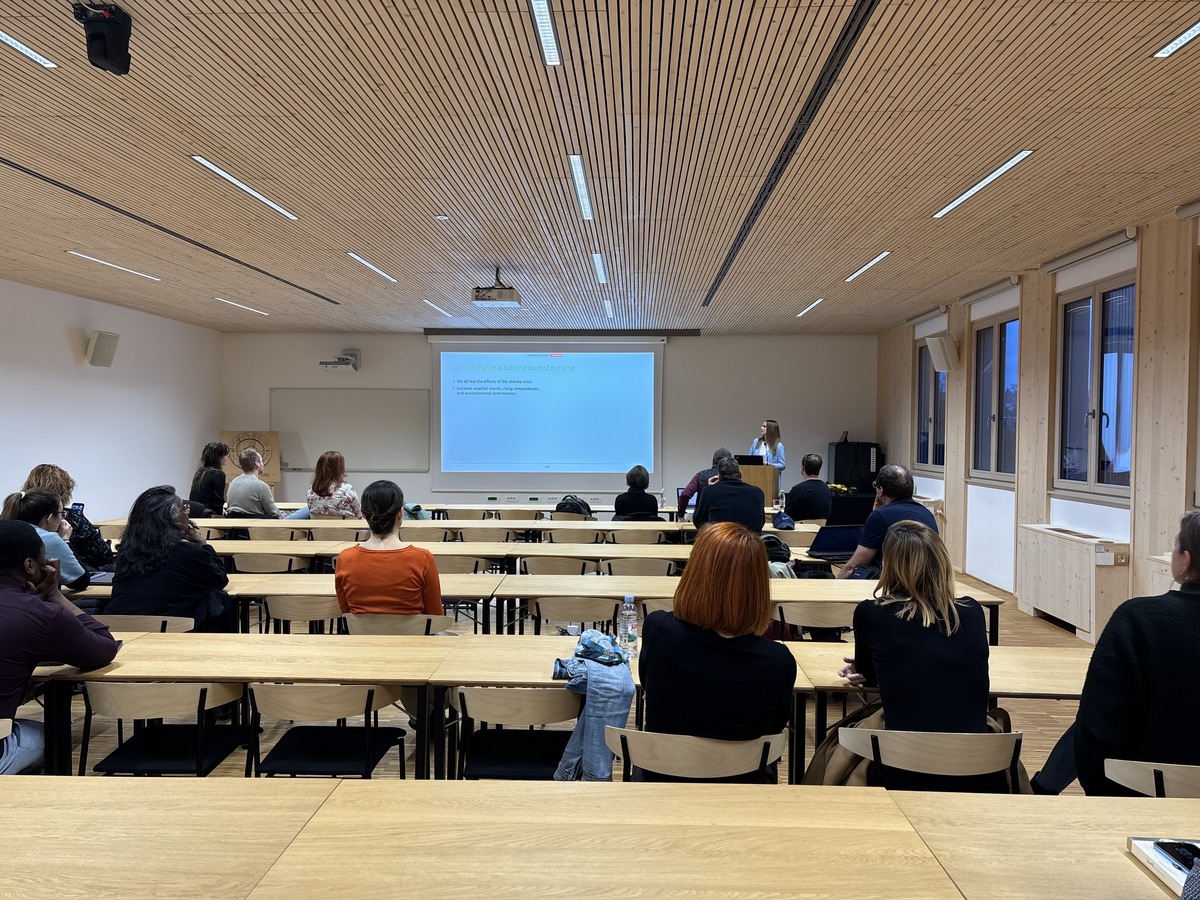
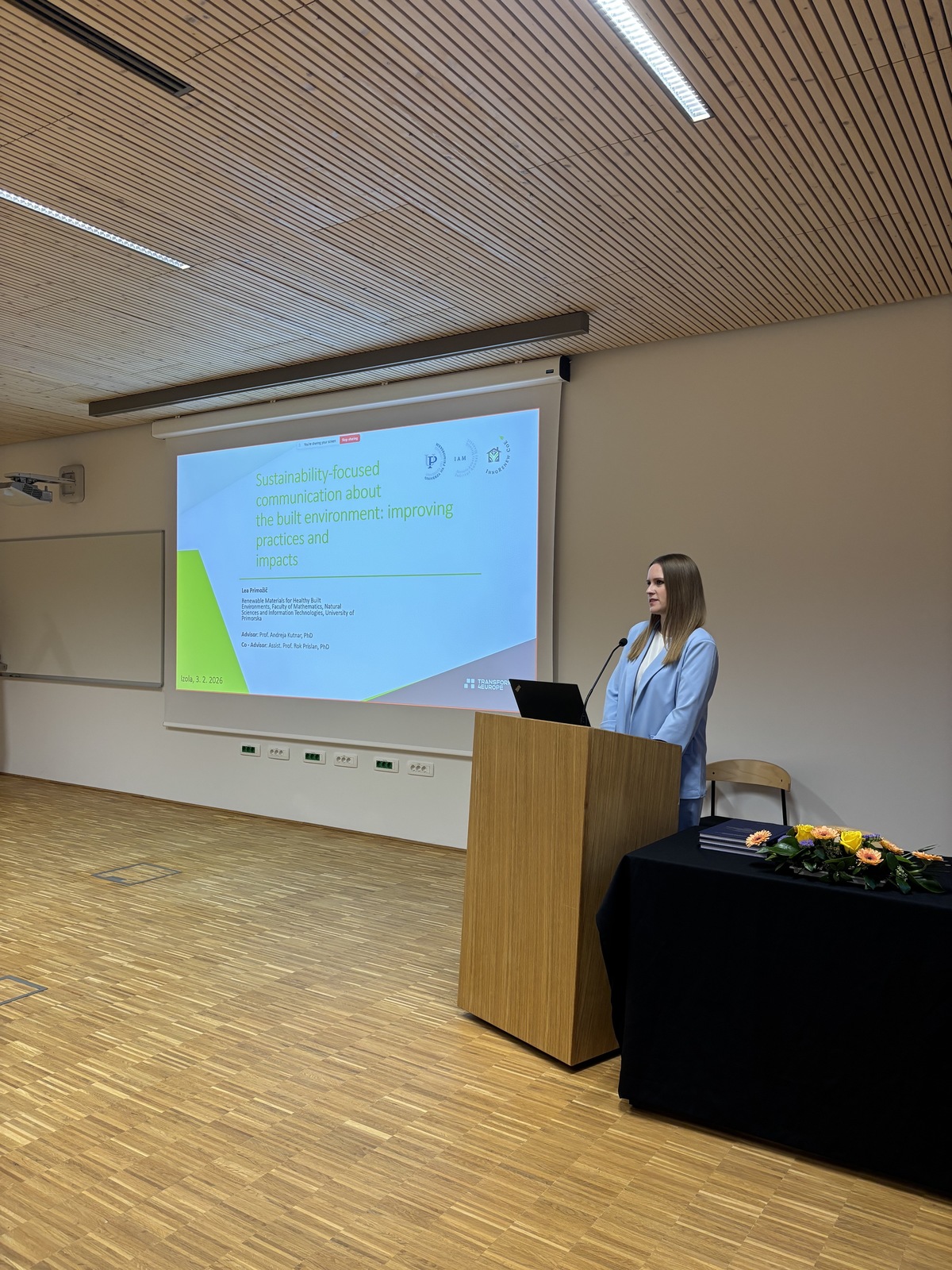
Monday, 2 February 2026 Call for enrolment in undergraduate study programmes and unified master's study programmes of the University of Primorska in the academic year 2026/2027
In the framework of the Call for Enrolment in undergraduate and unified master's study programmes in the academic year 2026/2027, the University of Primorska announces the following free enrolment places for 33 undergraduate study programmes (8 higher professional and 25 academic study programmes) and 1 unified master's study programme:
- 1.691 enrolment places for Slovenian citizens and EU citizens, of which 1.351 are for full-time study and 340 for part-time study,
- 87 enrolment places for Slovenians abroad, of which 69 are for full-time and 18 for part-time study,
- 267 enrolment places for citizens of Western Balkans countries, with which the Republic of Slovenia has a bilateral agreement in the field of education (Bosnia and Herzegovina, Montenegro, Kosovo, Serbia, North Macedonia), of which 240 are for full-time and 27 for part-time study,
- 88 enrolment places for foreign citizens of non EU countries, of which 74 are for full-time and 14 for part-time study.
For the 1st year of study, there are also 110 enrolment places for candidates for parallel studies.
|
The Call of Enrolment is available at >>this LINK<< |
The application for enrolment is entirely electronic on the eVŠ web portal. The candidate submits the application with a means of electronic identification of at least a medium level of reliability (with a qualified digital certificate, smsPASS, e-identity card) or with an AAI account (account of the authentication and authorization infrastructure) or with a username and password via the system SI-PASS, which operates within the framework of the Trust Service Authority of Slovenia.
Each candidate can submit one application for enrolment, where they select a maximum of three study programmes in the order of priority, in which they wish to enrol and for which they meet or will meet the conditions for enrolment by the deadline. The order of the selected study programmes is important, as the candidate will be ranked in the first study programme for which they will meet all the conditions.
The first application period for enrolment will be:
- for Slovenian citizens, citizens of the EU Member States and Slovenians abroad from 18 February to 18 March 2026,
- for foreign citizens from non EU countries from 18 February to 30 June 2026.
What’s new in the call 2026/2027?
- The Call includes four new study programmes:
- Wood Innovation for Sustainability, professional study programme (UP FAMNIT),
- Mathematics and Computer Science, academic study programme (UP FAMNIT),
Friday, 30 January 2026 INFO DAYS 2026
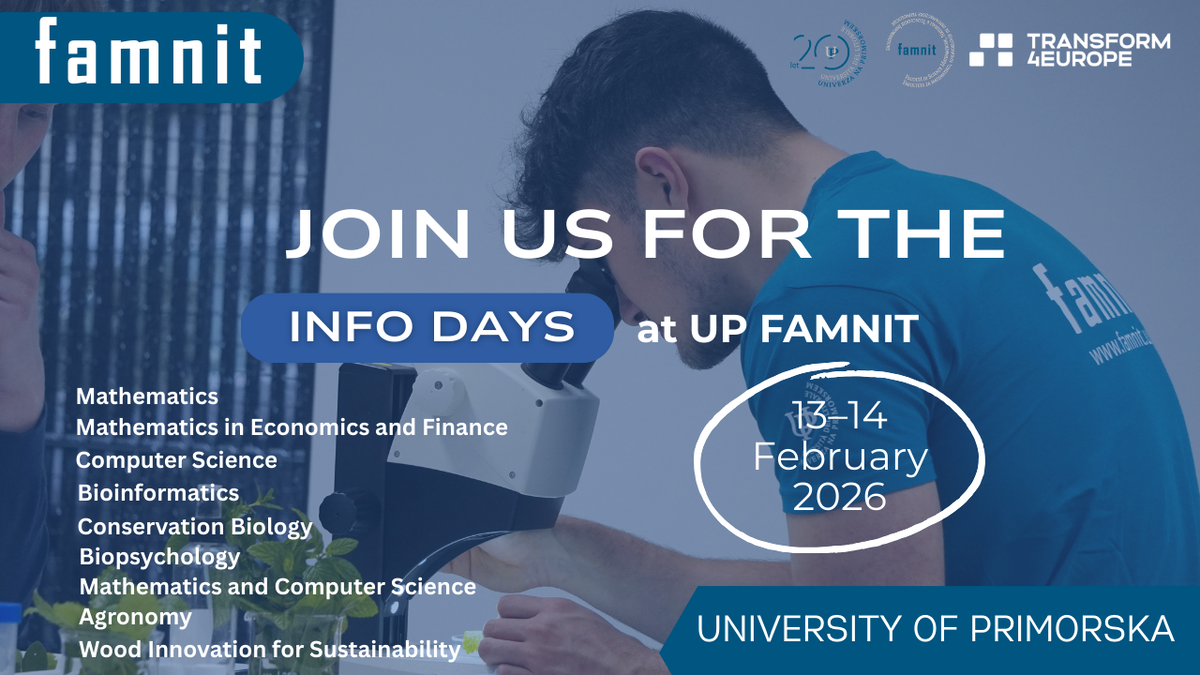
You are invited to join our main informative events, which will be held live and via ZOOM on 13 and 14 February 2025. The event schedule and Zoom links are available below. Some general presentations and presentations of study programmes will be held in Slovene, however, for study programmes that are also implemented in English, presentations will be held in English via ZOOM as well (14 February, 15:00-16:30). Besides that, online presenatations of the application and enrolment procedures will be held in English (13 February, 14:00–15:00 and 4 March, 14:00–15:00).
Detailed information can be found HERE.
Wednesday, 28 January 2026 The doctoral thesis defence of Lea Primožič
Lea Primožič, a student of the doctoral study program Renewable Materials for Healthy Built Environments (in English) of the Faculty of Mathematics, Natural Sciences and Information Technologies of University of Primorska (UP FAMNIT), will defend their doctoral dissertation entitled Sustainability-focused communication about the built environment: improving practices and impacts (Komuniciranje o grajenem okolju, usmerjeno v trajnostni razvoj: izboljšanje praks in učinkov), under the mentorship of Prof. Andreja Kutnar, PhD and co-mentorship of Assist. Prof. Rok Prislan, PhD.
The defence will be on Tuesday, 3 February 2026 at 8.00 at the InnoRenew CoE, Livade 6a, Izola, classroom Sequoia.
The doctoral disertation is available in the University Library.
You are kindly invited!
Wednesday, 28 January 2026 The doctoral thesis defence of Lei Han
Lei Han, student of the doctoral study programe Renewable Materials for Healthy Built Environments (in English) at UP FAMNIT will defend her doctoral thesis Viscoelastic properties of thermo-hydro-mechanically (THM) densfied wood Viscoelastic properties of thermo-hydro-mechanically (THM) densfied wood; under the mentorship of Prof. Andreja Kutnar, PhD and co-mentorship of Prof. Dick Sanberg, PhD.
The defence will take place on Thursday, 5 February 2026 at 14:00 in InnoRenew CoE, Livade 6a, Izola, classroom Pseudotsuga.
The doctoral disertation is available in the University Library.
You are kindly invited!
Wednesday, 28 January 2026 Math-Themed Day at UP FAMNIT: Visit from Students of Gimnazija Koper
Today, on January 28, 2026, the Department of Mathematics UP FAMNIT organized the traditional Mathematics Day for students of Gimnazija Koper at the premises of UP FAMNIT. The event was attended by 100 students who listened to lectures on the applicability of mathematics in everyday life.
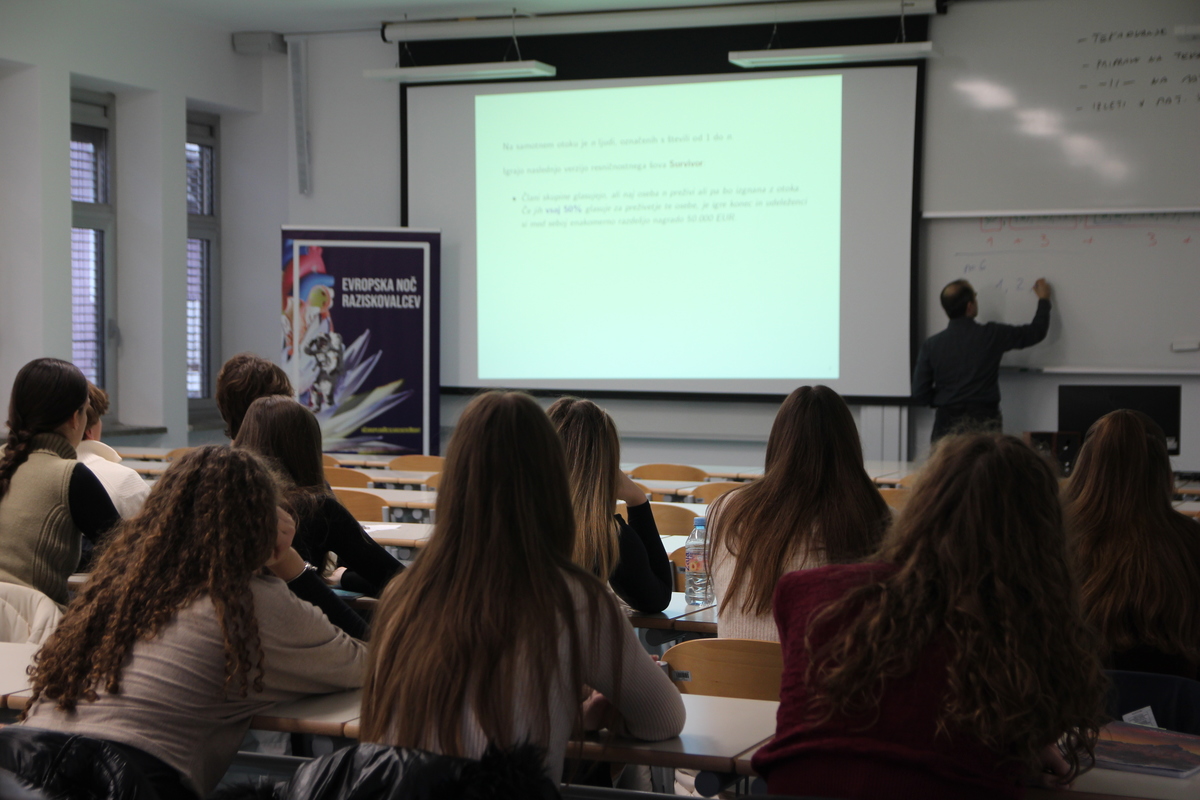
The students were welcomed byProf. Dr. Marko Orel, the coordinator of the first-cycle study program in Mathematics at UP FAMNIT, Prof. Dr. Ademir Hujdurović, the Dean of UP FAMNIT; andProf. Dr. Bojan Kuzma, the Head of the Department of Mathematics at UP FAMNIT.
The students were first divided into three groups, where they attended lectures, and then continued with interactive workshops.
The lecture titled “The Essentials of Primality Testing" was presented by Assist. Prof. Dr. Aleksander Simonič UP FAMNIT. During the session, students examined methods for determining whether a given one-hundred-digit odd natural number is prime. While this task might seem humorous in a mathematics classroom, it holds significant importance in modern cryptography.
The lecture “Applications of Linear Algebra in Computer Graphics” was delivered by Assoc. Prof. Dr. Safet Penjić (UP IAM and UP FAMNIT), who presented how simple mathematical operations on vectors shape computer games.
Prof. Dr. Martin Milanič from UP IAM and UP FAMNIT delivered a lecture titled “Seven Puzzles on Powers of Two. ” During this session, students engaged in solving seven puzzles related to powers of two, utilising concepts from number theory and game theory.
The workshop “Basics of 3D Modelling with Blender ” was led by Assoc. Prof. Dr. Karla Ferjančič, also from UP FAMNIT and UP IAM. Students learned about Bézier curves and observed their application through a practical example. They also explored the fundamentals of 3D modelling using Blender, a powerful open-source tool for creating animated films, 3D models, video games, and other digital content.
Assoc. Prof. Dr. Slobodan Filipovski from UP FAMNIT presented the lecture “Mathematics Behind the Game Sudoku .” In this session, students examined the minimum number of initial clues required to define a unique solution and received tips for solving Sudoku more effectively.
The workshop “Game Theory: Strategic Decision-Making in Theory and Practice ” was conducted by Assist. Prof. Dr. Žiga Velkavrh from UP FAMNIT. In this workshop, students were introduced to the basics of game theory—a field that employs mathematics and statistics to study, explain, and predict the behavior of companies, markets, individuals, and other entities. Particular emphasis was placed on classical games and the renowned concept of Nash equilibrium, which represents a stable state in a strategic situation.
Mathematics Days at UP FAMNIT have been organized since 2013 to promote science, especially mathematics, among young people. The Faculty of Mathematics, Natural Sciences and Information Technologies at the University of Primorska offers six undergraduate study programs, including Mathematics and Mathematics in Economics and Finance. More information about studying at FAMNIT will also be available during the upcoming Informative Days, scheduled for February 13 and 14, 2026.
We would like to thank the students and their accompanying teachers for their visit and invite them to attend our future events as well!
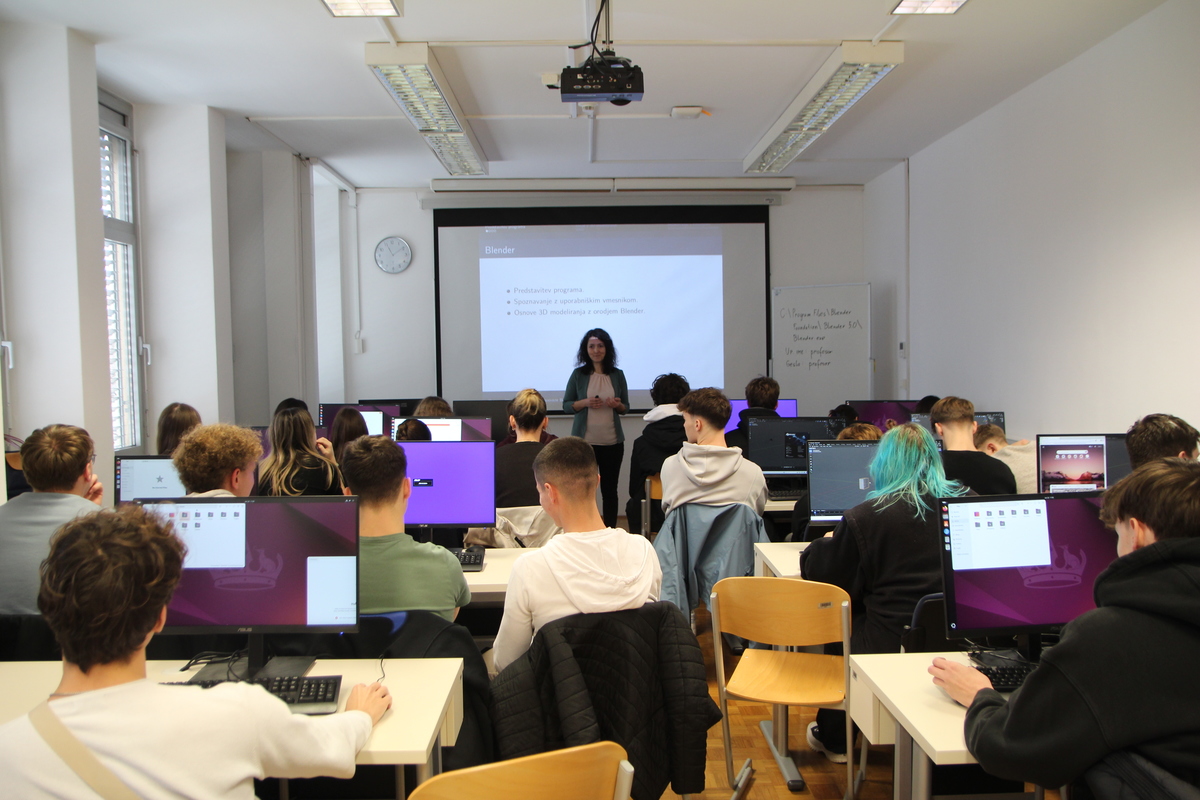
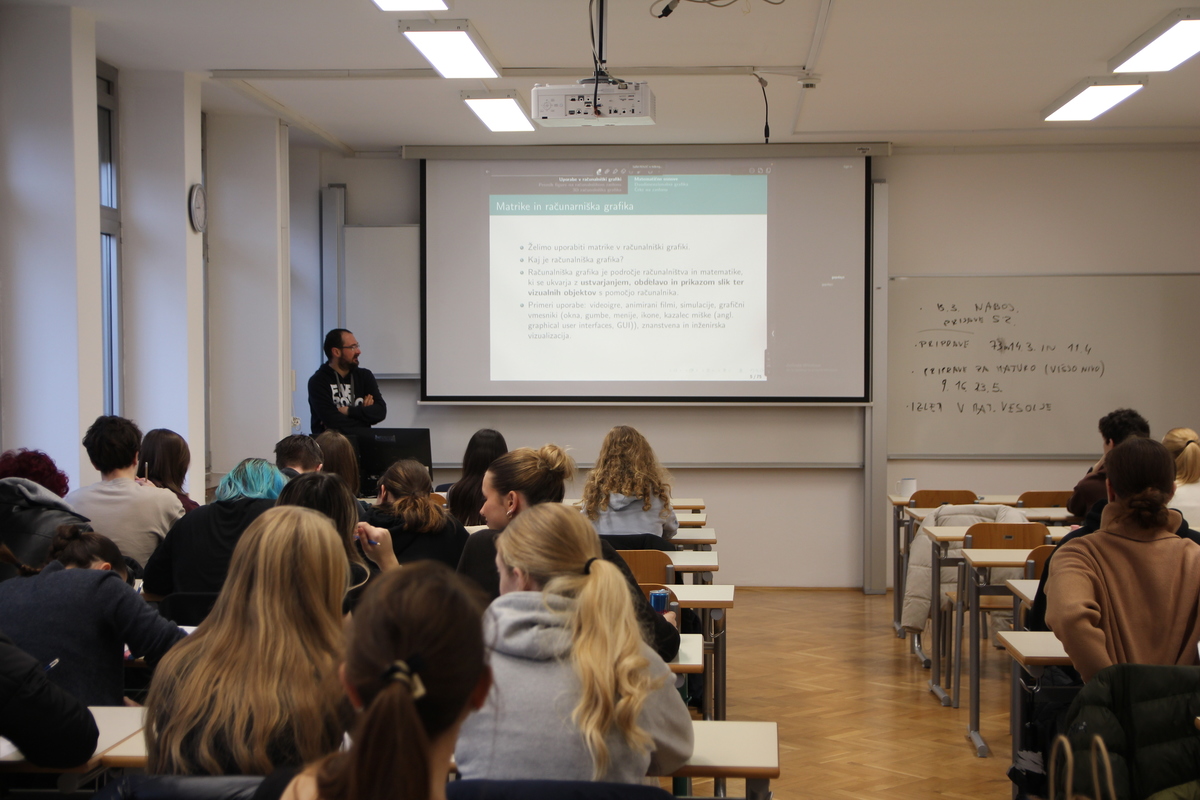
Monday, 26 January 2026 The University of Primorska and the University of Trieste Announce a Joint Call for Applications for Visiting Professorship
The University of Primorska and the University of Trieste have launched a joint international call to select Visiting Professors for the academic years 2025/2026 and 2026/2027, within the framework of the Transform4Europe Alliance.
The call is addressed to departments and faculties of both universities that wish to invite distinguished scholars from institutions outside the T4EU Alliance with the aim of:
- expanding and enriching educational activities,
- strengthening research cooperation, and
- fostering the international dimension beyond the T4EU Alliance.
Selected Visiting Professors will carry out teaching and research activities during their stay and deliver lectures within bachelor’s, master’s, specialist, or doctoral study programmes at both universities.
More information about the call, available funding, obligations of the Visiting Professor, the number of available positions, as well as the application and selection procedure, is available in the call documentation via this link: https://www.upr.si/en/about-the-university/t4eu-/t4eu-opportunities/for-staff/the-university-of-primorska-and-the-university-of-trieste-announce-a-joint-call-for-applications-for
The application deadline is 27 February 2026.
For further information, please contact the UP FAMNIT / UP IAM International Office at international@famnit.upr.si.
You are kindly invited to apply!
Thursday, 22 January 2026 Notice for Students - Change in Classroom Usage During the Exam Period
Dear students,
We would like to inform you of a minor change regarding the use of classrooms for studying during the exam period. Classrooms at the Brolo location are now available for study until 5:00 PM, while the use of classrooms and the hall at Glagoljaška and Galeb remains unchanged.
At these locations, classrooms are available from 8:00 AM to 8:00 PM, and their use is strictly for study purposes. You can check classroom availability on the online schedule.
This does not apply to RLABs, but to all other classrooms at Glagoljaška. At the Livade location, only the FAMNIT-3 classroom is available for use without prior approval.
Outside the exam period, the existing system remains in effect, under which prior reservation through the Student Office is required to use the classrooms.
Thank you for your understanding, and we wish you every success in your studies.
Kind regards,
Student Services Office of UP FAMNIT
Thursday, 22 January 2026 The Symposium of Good Practices for Biodiversity Conservation in the Agricultural Landscape of the Karst brought together 60 practitioners
On January 22, 2026, a symposium titled Good Practices for Biodiversity Conservation in the Agricultural Landscape of the Karst was held in Livade at Facility 1.0. The event was attended by approximately 60 practitioners.

The symposium aimed to facilitate the exchange of knowledge and experience among experts in the fields ofnature conservation, biology, and ecology, as well as other stakeholders, including landowners, farmers, decision-makers, residents, and nature enthusiasts, all of whom are involved in the conservation of biodiversity in agricultural landscapes.
The event was structured into three thematic sections:
- sustainable management of pastures, grasslands, and ponds,
- restoration of burned areas and biodiversity,
- sustainable management and circular economies in the Karst.
Assistant Professor Dr. Sara Zupan from the Department of Biodiversity, the event’s organizer, emphasized the importance of such meetings for connecting science and practice and for finding effective solutions for the conservation of the Karst landscape:
“When we think of the Karst, each of us probably forms a slightly different image. Today, the Karst is largely overgrown, but my image still reflects the Karst commons, dry-stone walls, bare rocky terrain, ponds, and grasslands with beautiful plants, butterflies, and birds. However we imagine it, the fact remains that the Karst as we know it today is the result of long-term coexistence between humans and nature. What it will look like in the future largely depends on our decisions.
The Kras4us project – Opportunities for the Conservation of Biodiversity and the Identity of the Karst – is based on the belief that many solutions already exist in the area itself, in the knowledge, experience, and good practices developed by researchers, land managers, farmers, and local communities. The project aims to identify, connect, and further develop these practices and to place them within a broader framework of long-term management of the Karst landscape.
The contributions we heard today, which are also collected in the book of abstracts, reflect the diversity of approaches to biodiversity conservation in agricultural landscapes. I believe that the exchange of knowledge, experience, and perspectives is exactly what can contribute to more thoughtful and long-term solutions.”
One of the key initiatives in this field is the Kras4us project, which is co-financed under the Interreg Italy–Slovenia Programme. The project connects partner organisations on both sides of the border, including the University of Primorska (UP FAMNIT).
The project partners are: the University of Primorska (UP FAMNIT), the Slovenian BirdLife Association (DOPPS – BirdLife Slovenia), Škocjan Caves Park, and the Local Action Groups Kras VAM.
The book of abstracts is available > here.


Wednesday, 21 January 2026 UP SENATE ADOPTS A NEW BACHELOR STUDY PROGRAMME “MATHEMATICS AND COMPUTER SCIENCE”
At its 27th regular session on 21 January 2026, the Senate of the University of Primorska adopted a new bachelor study programme “Mathematics and Computer Science”. It is an interdisciplinary study programme designed to educate future professionals with a strong mathematical foundation and advanced computer science expertise, particularly in the fields of software design and algorithm theory, which are at the core of the modern artificial intelligence industry and high value-added information technology. The study programme will be included in the Call for enrolment in undergraduate study programmes of the University of Primorska for the academic year 2026/2027.
The new study programme is designed as a three-year full-time study programme (180 ECTS) and will be delivered in Slovene and English. The programme combines solid mathematical foundations with computer science and practical skills. Students are first introduced to the fundamental areas of mathematics, such as analysis, algebra, and discrete mathematics, while at the same time progressively developing skills in programming, algorithmic thinking, and working with computer systems. This combination enables them to learn problem-oriented thinking and to effectively solve complex tasks using modern computational tools.
The study programme provides graduates with in-depth knowledge and key competences in programming, data science, software design, and algorithm theory, which are at the core of modern information technology and artificial intelligence. Graduates will therefore be well prepared for employment in technologically advanced, high value-added environments, such as software development, data analysis, and information security. At the same time, the programme enables successful continuation of studies at Master level in mathematics, computer science, data science, and related fields, both in Slovenia and abroad. The quality of the study programme has also been recognised by external experts, who emphasised the relevance of the acquired knowledge for effective performance in the workplace.
Upon successful completion of the study programme, graduates are awarded the professional title “diplomirani/a inženir/ka matematike in računalništva (UN)«.
This is the first study programme adopted by the University of Primorska on the basis of the new Higher Education Act, which stipulates that a university whose accreditation has been extended twice consecutively for a full accreditation period may independently adopt its study programmes with public validity without accreditation by the National Agency of the Republic of Slovenia for Quality Assurance in Higher Education (NAKVIS), and in accordance with the Instructions for the Preparation, Adoption and Implementation of Study Programmes with Public Validity without Accreditation by NAKVIS, adopted by UP (hereinafter: the Instructions). In accordance with the Instructions, the study programme proposal was first reviewed by an internal expert. It was then submitted for evaluation to a group of independent external experts, consisting of two independent external experts in the field of the study programme (one international and one Slovenian expert) and a student selected from the pool of the European Students’ Union (ESU).

Wednesday, 21 January 2026 The Department of Biodiversity UP FAMNIT hosted 12 organisations from practices
On Monday, 12 January 2026, the Department of Biodiversity at UP FAMNIT hosted an event titled “Practical Training for Students – Exchange of Opinions and Experiences.”
The event was organised to improve the quality of students’ practical training experience and strengthen connections with organisations interested in cooperating with the department and its students. In the study programmes Conservation Biology (Bachelor’s level) and Nature Conservation (Master’s), completing mandatory practical training in a professional working environment is one of the study requirements.
The event, which took place in the premises of Building 1.0 (Livade), was attended by a total of 12 organisations, which presented themselves either in person (6) or via Zoom (6).
“We organised this event for the fifth consecutive year. Each time, I am pleased by the strong interest and openness of the organisations that join us. Cooperation with our students is of great interest to them. In recent years, I have noticed that many organisations wish to establish initial contact with students even before they enter the labour market. By organising such events, we aimed to improve the quality of practical training and encourage early contact with organisations that responded to our invitation and are particularly interested in cooperating with us. We have achieved this goal. At the same time, such events provide students with their first—yet extremely valuable—insight into the work and mission of various organisations in the fields of nature conservation, biology, education, and research. Ultimately, these organisations may become their future employers,” summarised the coordinator of practical training, Assistant Martin Senič from the Department of Biodiversity at UP FAMNIT.
We would like to thank all participating organisations and their representatives for their attendance and cooperation:
- Debeli Rtič Landscape Park
- Škocjan Caves Public Service Agency
- Aquarium Piran, University of Primorska
- Triglav National Park Public Institution
- The Strunjan Landscape Park Public Institution
- The Institute of the Republic of Slovenia for Nature Conservation
- REVIVO – Institute for Ichthyological and Ecological Research
- Goričko Landscape Park
- Morigenos – Slovenian Marine Mammal Society
- Arboretum Volčji Potok Public Institution
- Kozjansko Park
- G.R. Carli High School – Ginnasio Koper-Capodistria


Tuesday, 20 January 2026 A solemn event marked the launch of KCUI
On Tuesday, January 20, 2026, the Slovenian Competence Center for Artificial Intelligence (KCUI) marked the launch of its operations with a solemn event at the Slovenian Chamber of Commerce and Industry (GZS).

The KCUI is the central national initiative for supporting the development, introduction, and responsible use of artificial intelligence in the economy, public sector, and society. It acts as a gateway for knowledge, training, expert support, and stakeholder networking, and contributes to strengthening Slovenia's competitiveness, productivity, and innovation potential in the field of artificial intelligence.
The event began with a ceremonial address by mag. Ksenija Klampfer, Minister for Digital Transformation, who emphasized "Today, the key question is not whether we will use artificial intelligence, but how we will use it safely, effectively, responsibly, and for the benefit of people—the answer to this is the Competence Center for Artificial Intelligence, which is launching today." The minister also emphasized that the center's key objectives include supporting both businesses and the public sector in achieving better results and increasing efficiency through the introduction of artificial intelligence tools.
This was followed by speeches on behalf of the Chamber of Commerce and Industry of Slovenia (GZS), the leading partner of the KCUI consortium. Vesna Nahtigal, Director General of GZS, Marko Štefančič, MBA, Director of the KCUI consortium, and Dr. Vida Groznik, Scientific Director of KCUI, addressed the audience.
The project to establish and operate the center at the UP is led by Dr. Marko Tkalčič (UP FAMNIT), who stated at its establishment: “Artificial intelligence is a very powerful tool which, when used responsibly, can significantly contribute to the functioning of the economy, public administration, and people’s everyday lives. It is important to understand that Slovenia cannot afford to fall behind the rest of the world. We must be proactive and participate in research. Precisely the fact that knowledge gained through research can be transferred to Slovenia in a responsible manner seems to me to be the greatest advantage of this competence center. This project represents a structured framework in which the knowledge held by top Slovenian experts is transferred for the benefit of the Slovenian economy, public administration, and citizens in general. At the University of Primorska (UP), we are proud to be part of a consortium of exceptionally strong Slovenian institutions in the field of artificial intelligence, as we will also be able to contribute our expertise to the achievement of these goals.
The event was also attended by the Rector of the University of Primorska, Dr. Klavdija Kutnar, and the Dean of the Faculty of Arts and Humanities, Dr. Ademir Hujdurović, along with the project leader, Dr. Marko Tkalčič, and other participants in the project – Dr. Jernej Vičič, Dr. Ernest Ženko, and Nataša Miletić.
The consortium, led by the Chamber of Commerce and Industry of Slovenia, also includes: the University of Primorska, the University of Maribor, the University of Ljubljana, the University of Nova Gorica, the Jožef Stefan Institute, the Chamber of Craft and Small Businesses of Slovenia, and the ASEF Institute for Education and Research. The consortium was formed and successful in the context of the public call for (co-)financing the establishment and operation of a Competence Center for Artificial Intelligence (ARIS).


Wednesday, 14 January 2026 Famnits' Excursion into the mathematical universe: The role of dice in world domination - a case study of Risk: the board game
"The role of dice in world domination - a case study of Risk: the board game"
which will take place on Wednesday, 21. January 2026 at 16.00, VP 3 lecture room, UP FAMNIT and ZOOM link.

Board games have been an integral part of human history across cultures and societies, and the theory and strategies of traditional games such as Chess and Go have long been studied and analyzed. In this talk, we explore the mathematical mechanics behind a much more recent — though a classic by modern standards — board game: Risk. We will showcase how game states can be represented and how transitions between these states can be described with the help of probability theory, more specifically, Markov chains.
Balázs Dávid received his PhD in computer science in 2018 at the University of Szeged, Hungary. His research areas include combinatorial optimization, mathematical programming and algorithm development, particularly in public transport and logistics. His main research interest is the modelling and optimization of problems that are motivated by real-life industrial application. He is currently an assistant professor at InnoRenew CoE, UP IAM and UP FAMNIT.
Tuesday, 13 January 2026 The doctoral thesis defence of Aljaž Kosmač
Aljaž Kosmač, student of the doctoral study programe Mathematical Sciences (in Slovene) at UP FAMNIT will defend his doctoral thesis On smooth spline spaces and isogeometric methods for solving high-order partial differential equations over multi-patch domains; under the mentorship of Prof. Vito Vitrih, PhD.
The defence will take place on Thursday, 5 February 2026 at 14:00 in Famnit-MP1.
The doctoral disertation is available in the University Library.
You are kindly invited!
Tuesday, 13 January 2026 Notice for Students - Use of Tables in the Lobby
Dear students,
The faculty has received several complaints from students regarding the use of the lobby.
We would like to inform you that the tables in the lobby are intended for actual use for studying or socializing and not for leaving personal belongings to reserve them for extended periods of time.
Only short absences (approximately up to 10 minutes), for example for a break, are considered acceptable. Leaving personal belongings on tables for several hours without being present is not permitted, as it unfairly prevents other students from using the space.
We kindly ask for your understanding, patience, and consideration for others, especially during periods of increased study demands and the exam period.
Thank you for your cooperation and for respecting shared spaces.
Kind regards,
Student Services Office of UP FAMNIT
Tuesday, 13 January 2026 (BIO)PSYCHOLOGICAL DAY AT UP FAMNIT
Today, UP FAMNIT welcomed 40 students from Gimnazija Celje – Center.
As part of the event, Sara Vidmar and Polonca Borko led the workshop “Are You OK? OK! with the students. The workshop explored key aspects of mental health, including its definition, influencing factors, and the importance of self-care. Participants engaged in discussions and activities to deepen their understanding. The session also addressed stress and the factors that affect how it is experienced.
In addition, Assoc. Prof. Dr. Vesna Posavčević and Assoc. Prof. Dr. Nina Krohne presented the Biopsychology study programme and the Slovene Centre for Suicide Research.
Today, science explains the complexity of human perception, memory, thinking, emotions, personality, behaviour, and similar phenomena through an integration of insights from psychology and related fields such as medicine, biology, and pharmacy. With such knowledge, we gain a better understanding of human beings and can strengthen their qualities.
The coordinator of the study programme, Assoc. Prof. Dr. Vesna Posavčević presented the Biopsychology study programme in more detail, including the course structure, timetable, and employment opportunities. Assoc. Prof. Dr. Nina Krohne presented the Slovene Centre for Suicide Research, which focuses on studying various aspects of mental health and on the prevention of suicide and suicidal behaviour across different age groups – from adolescents to older adults.


Monday, 12 January 2026 A postdoctoral researcher position is available
The UP Faculty of Mathematics, Natural Sciences and Information Technologies (UP FAMNIT) invites applications for postdoctoral researcher positions. We welcome outstanding candidates with a strong research record in mathematics who are motivated to develop independent research and to contribute to the preparation of competitive project proposals.

Position description
UP FAMNIT offers a dynamic international research environment and encourages postdoctoral researchers to pursue independent high-quality research, build collaborations, and contribute to the research profile of the faculty. Since this is an open call, the exact research topic and mentoring arrangements will be determined based on the candidate’s expertise and research plan, as well as alignment with UP FAMNIT’s research strengths.
A key expectation is that the successful candidate will be proactive in preparing and submitting competitive research proposals, in particular to:
- Marie Skłodowska-Curie Actions (MSCA) postdoctoral calls,
- ERC Starting Grant,
- Slovenian Research and Innovation Agency (ARIS) research project calls.
The postdoctoral researcher is expected to:
- Develop and carry out an independent research programme leading to high-quality publications;
- Initiate and contribute to research proposals (MSCA, ERC, ARIS and other relevant schemes);
- Collaborate with UP FAMNIT researchers and engage in international scientific networks;
- Present results at seminars, conferences, and other dissemination activities;
- Contribute to the vibrant academic community at UP FAMNIT (mentoring of junior researchers and/or limited teaching may be possible depending on needs and mutual interest).
Conditions
- Duration: 2 years, with possible extension subject to funding and performance
- Starting date: flexible; preferably by June 2026
- Host institution: UP FAMNIT, University of Primorska, Slovenia
- Deadline for application: January 31st 2026.
Requirements
- PhD in Mathematics;
- Strong research track record appropriate to career stage, evidenced by publications and research achievements;
- Demonstrated potential for scientific independence and leadership;
- Motivation and capability to prepare competitive research proposals (MSCA, ERC, ARIS);
- Excellent written and spoken English.
Employment terms
- Full-time employment, with contract conditions in line with Slovenian regulations;
- Salary and benefits according to Slovenian national postdoctoral salary scales (approximately 1900 EUR/month net, depending on individual circumstances);
- Support for research visits and conference participation.
How to apply
- To apply, please email the following documents to razpisi.famnitiam@upr.si with the subject line:
- “University of Primorska Postdoc – Open Call 2026”
- Curriculum Vitae,
- Publication list,
- Research statement (including a short outline of a project idea),
- Copies of up to three recent papers or preprints,
- Names and e-mail addresses of two or three persons who can be contacted for reference (and who have agreed to be contacted).
Thursday, 8 January 2026 Public Lecture by Dr. Julian Eliah Heger
Dr. Julian Eliah Heger will present a public lecture on Monday, 12 January 2026, at 10:00, as part of the procedure for his first appointment to the academic title of higher education teacher – Assistant Professor in the field of Physics.
The lecture entitled “Understanding Functional Materials Through Synchrotron X ray Scattering” will take place at the InnoRenew CoE premises, Livade 6a, 6310 Izola.
You are kindly invited to attend.
Wednesday, 7 January 2026 Presentation of the topic of the doctoral dissertation of Ivan Damnjanović
We invite you to the presentation of the topic of the doctoral dissertation Some results in spectral and extremal graph theory of the student Ivan Damnjanović, enrolled in the doctoral study programme Mathematical Sciences (in English).
The presentation will take place on Wednesday, 14 January 2026 at 11.00 in the classroom FAMNIT-MP6.
You are kindly invited!
Monday, 5 January 2026 Co-create the future of wood industry: New undergraduate programme at UP FAMNIT
UP FAMNIT will offer a new first-cycle (undergraduate) programme Wood Innovation for Sustainability starting in the 2026/2027 academic year. The programme is designed to meet the modern needs of the wood industry in Slovenia and Europe and to prepare future professionals with a combination of innovative technologies, sustainable approaches, and digital skills. It will be implemented in Slovene and in English language.
The three-year programme is divided into six modules: foundational knowledge, core professional subjects, digital skills for working with wood, business and sustainability competencies, wooden built environments, and practical training, including an international mobility component. The mobility component allows students to gain experience abroad – at 12 partner universities and companies in Austria, Belgium, Germany, Italy and the USA – and to learn about different educational systems, work environments, and cultural approaches.
In addition to international experience, students will carry out practical training at leading Slovenian companies, giving them direct exposure to real projects and innovative technologies. This approach ensures that graduates are prepared to meet the challenges of the modern wood industry, which demands digital competencies, sustainable thinking, and the ability to solve complex problems.
The programme is based on an interdisciplinary approach and innovative teaching methods – from project work and collaborative learning to case studies and discussions. Students will gain skills that enable creative problem-solving and the integration of sustainable solutions in the wood industry. The programme includes 22 courses, practical training, a mobility component, and a final seminar.
The programme will be conducted in Izola, with some components also in Koper, providing students access to modern learning spaces and research environments.
»With the programme Innovations in Wood Industry for Sustainable Development, we are shaping the future leading experts in sustainable materials. The programme offers more than just a degree – it opens doors to innovation, international collaboration, and knowledge essential for the green transition,« summarized Prof. Dr. Andreja Kutnar, study programme coordinator.
Career Opportunities
Graduates of the programme will be prepared for independent or collaborative work as professional and technical staff in the wood processing and construction industries, as technical associates in research and development activities of companies or research institutions, as entrepreneurs, producers, or consultants, and as professional staff in administrative institutions such as ministries, inspectorates, various agencies, and municipal offices. Graduates can further enhance their knowledge at the master’s level – UP FAMNIT offers a master’s study programme in Sustainable Built Environments.
More information about the new study programme is available here.
Students, join us and become part of the innovative world of wood industry!

