


Friday, 29 May 2026 CLT Passport project of Stilles nominated for GZS Gold Award with involvement of InnoRenew CoE, UP IAM in development
The CLT Passport project, developed by Stilles, has been nominated for the Chamber of Commerce and Industry of Slovenia Gold Award for regional innovations 2026. The InnoRenew CoE, UP IAM team was involved in the development of the CLT Passport, showcasing a synergy between industry and science that is essential for the competitive development of the European wood industry.
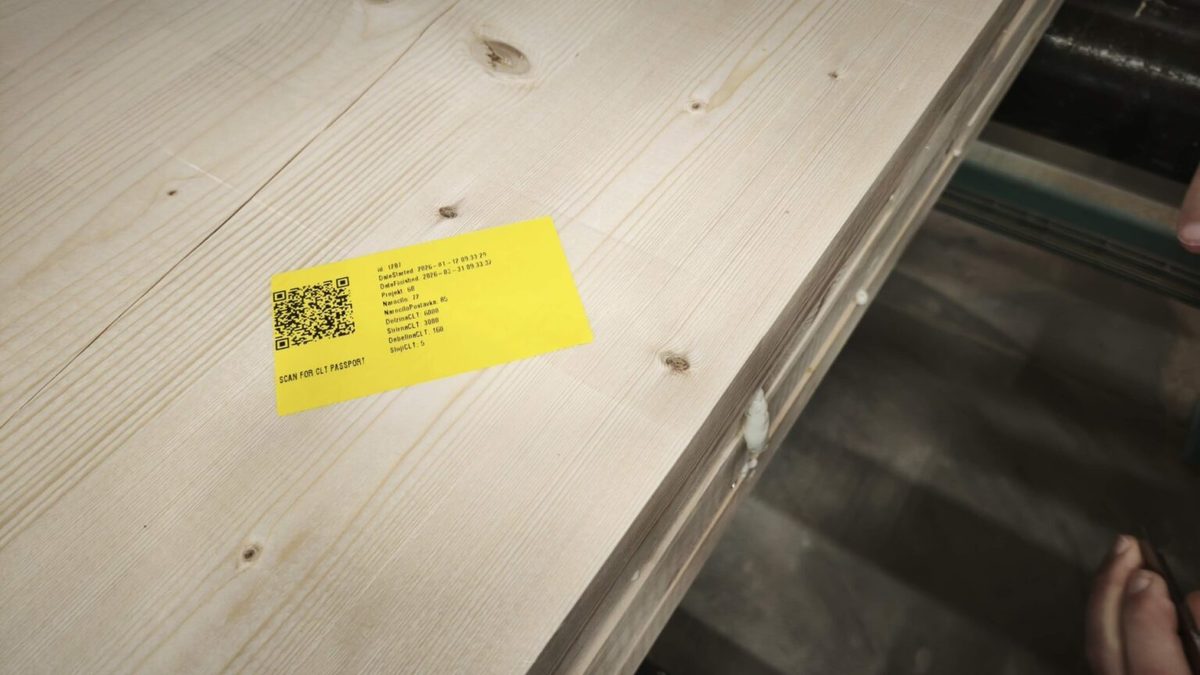
The digital solution enables full lifecycle traceability of cross-laminated timber (CLT) panels and provides structured access to key production and material data from raw material origin to final installation in buildings. This supports increased transparency, data-driven decision-making, and improved reliability in timber construction.
Each CLT element is linked to a QR code that provides access to verified production and quality data, including wood origin and grading, adhesive information, pressing parameters, equipment calibration, environmental production conditions, and quality control records. This enables efficient retrieval of information throughout the service life of a building.
The project is positioned within the framework of current European regulatory developments, including the Construction Products Regulation (CPR, 2024/3110) and the Ecodesign for Sustainable Products Regulation (ESPR, 2024/1781), which are related to the development of digital product passports for construction materials.
This nomination highlights the importance of collaboration between industry and research organisations in the development of digital and sustainable solutions for the built environment, particularly in the field of timber construction and material traceability systems.
More about the project can be found in the article “Stilles’ CLT Passport Project Nominated for the Chamber of Commerce and Industry of Slovenia Gold Award”, published on the Stilles website.
Thursday, 28 May 2026 Successfully Concluded the 5th REGALNICA Event - inventory of the European tree frog
Thursday, 28 May 2026 UP FAMNIT Welcomed Students from II. Gymnasium Maribor
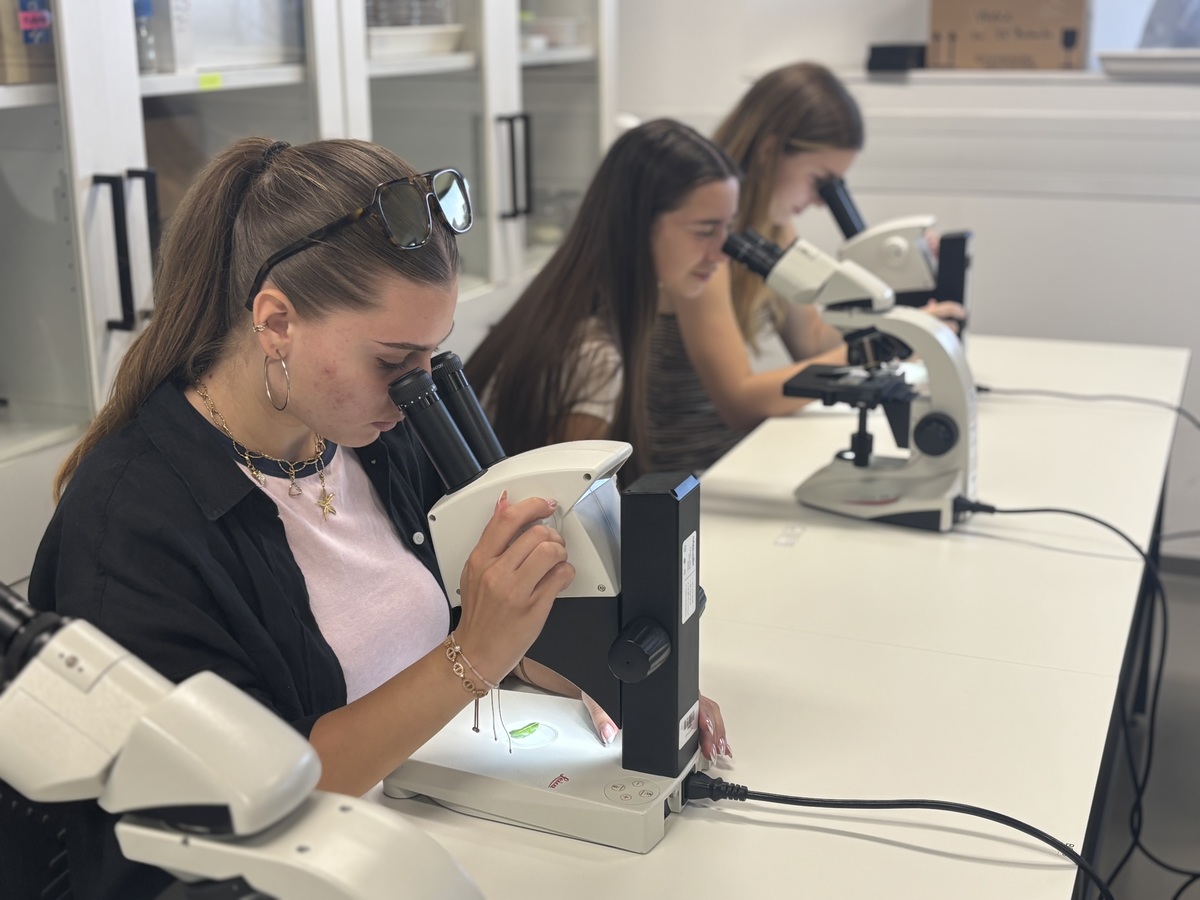
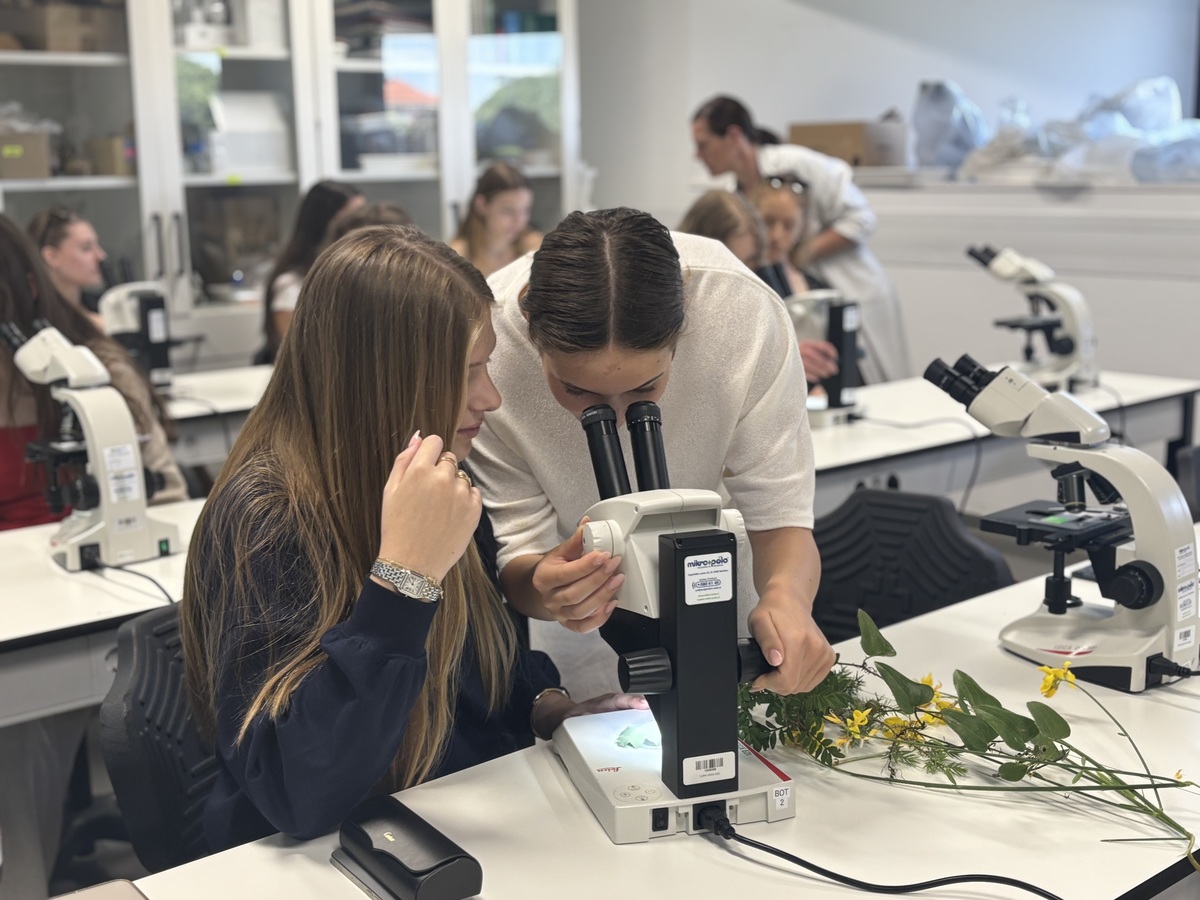
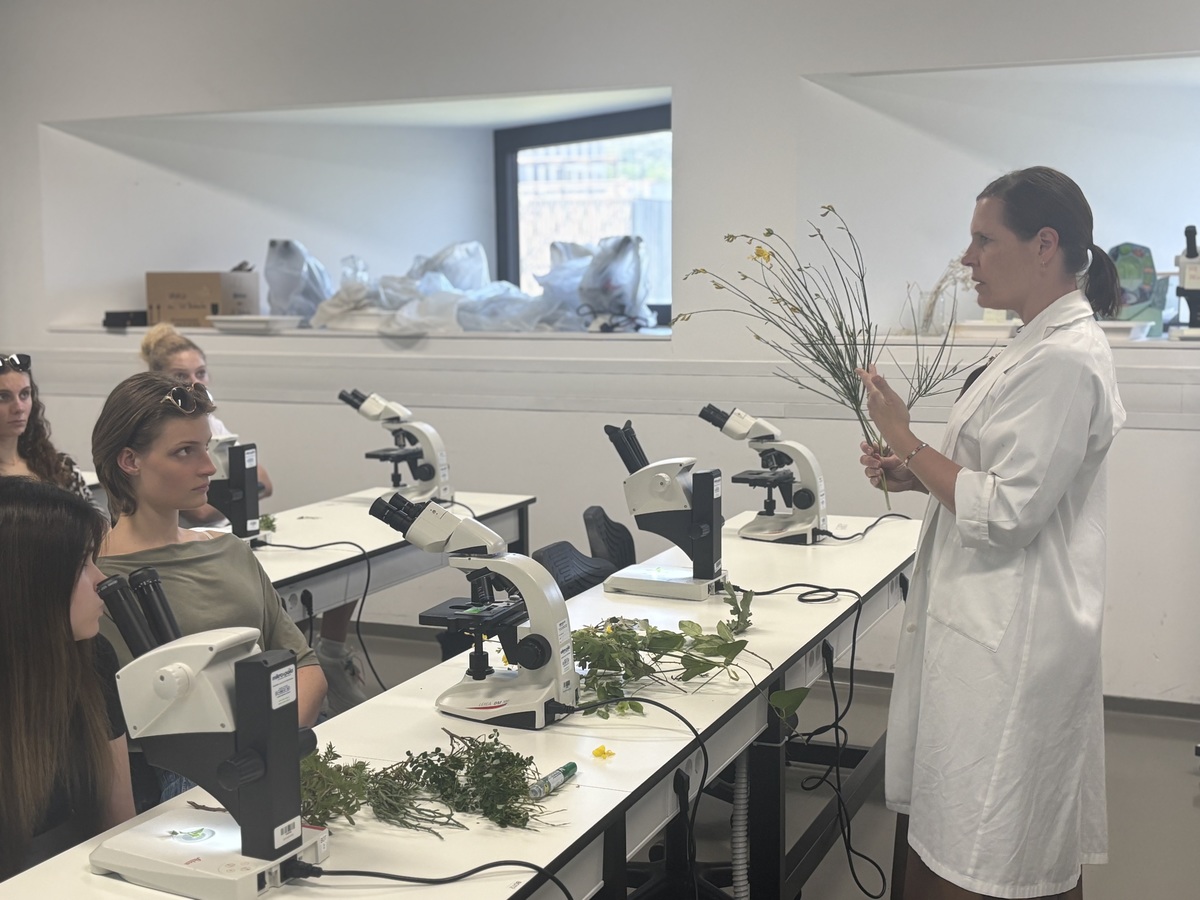
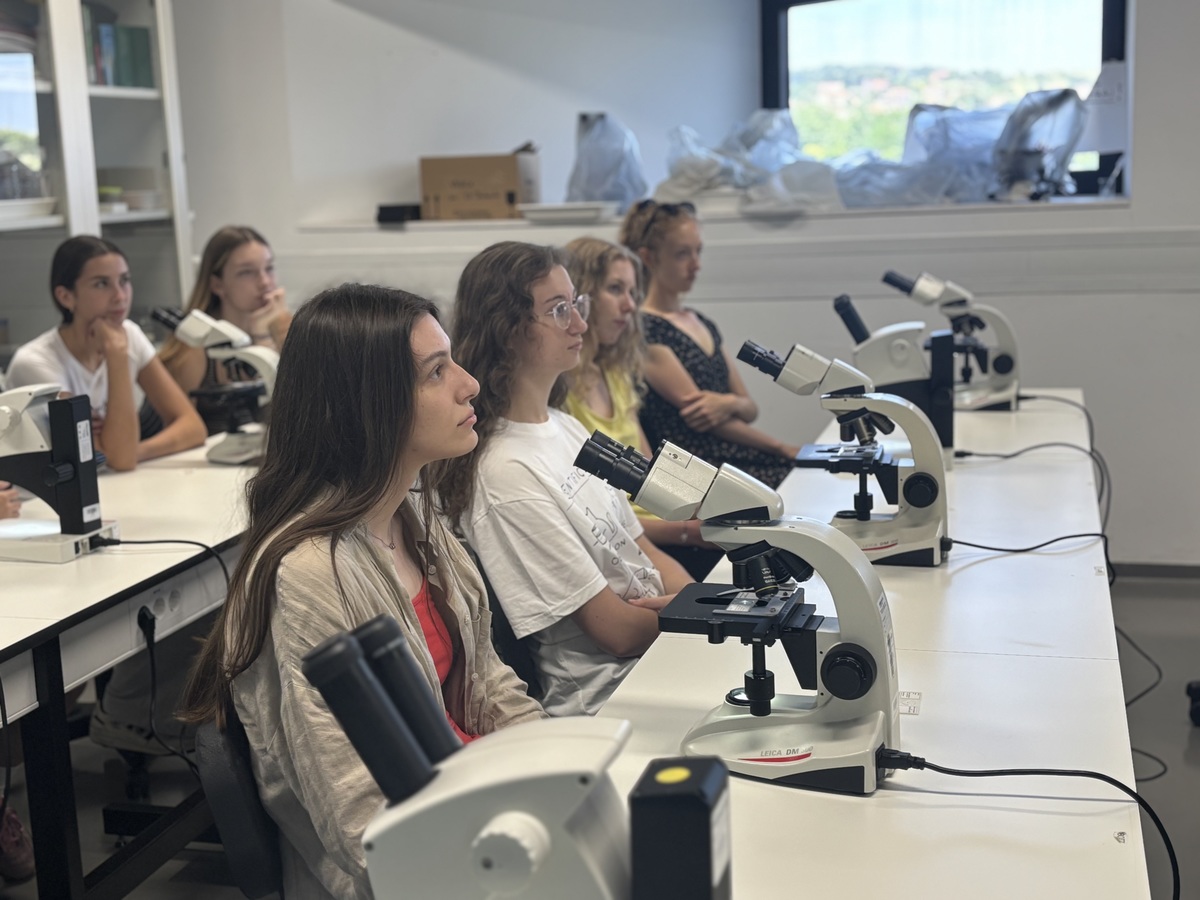
Today, we hosted19 students and two teachers from the II. Gymnasium Maribor at the Livade 1.0 facility. The students were first divided into two groups, within which two workshops took place.
The first workshop, entitled Flora of the Slovenian Littoral, was led by Assoc. Prof. Dr. Živa Fišer from the Department of Biodiversity (UP FAMNIT). During the workshop, the lecturer presented several representatives of the flora of the Slovenian coast, with an emphasis on Mediterranean species such as laurel and olive trees, as well as their morphological adaptations to environmental conditions characterized by drought, high temperatures, and intense solar radiation. Along the Slovenian coast, we can also find halophytes, plants adapted to growing in environments with higher salt concentrations. These plants also exhibit numerous adaptations, some of which are similar to adaptations to water scarcity. The students learned why this is the case during the workshop.
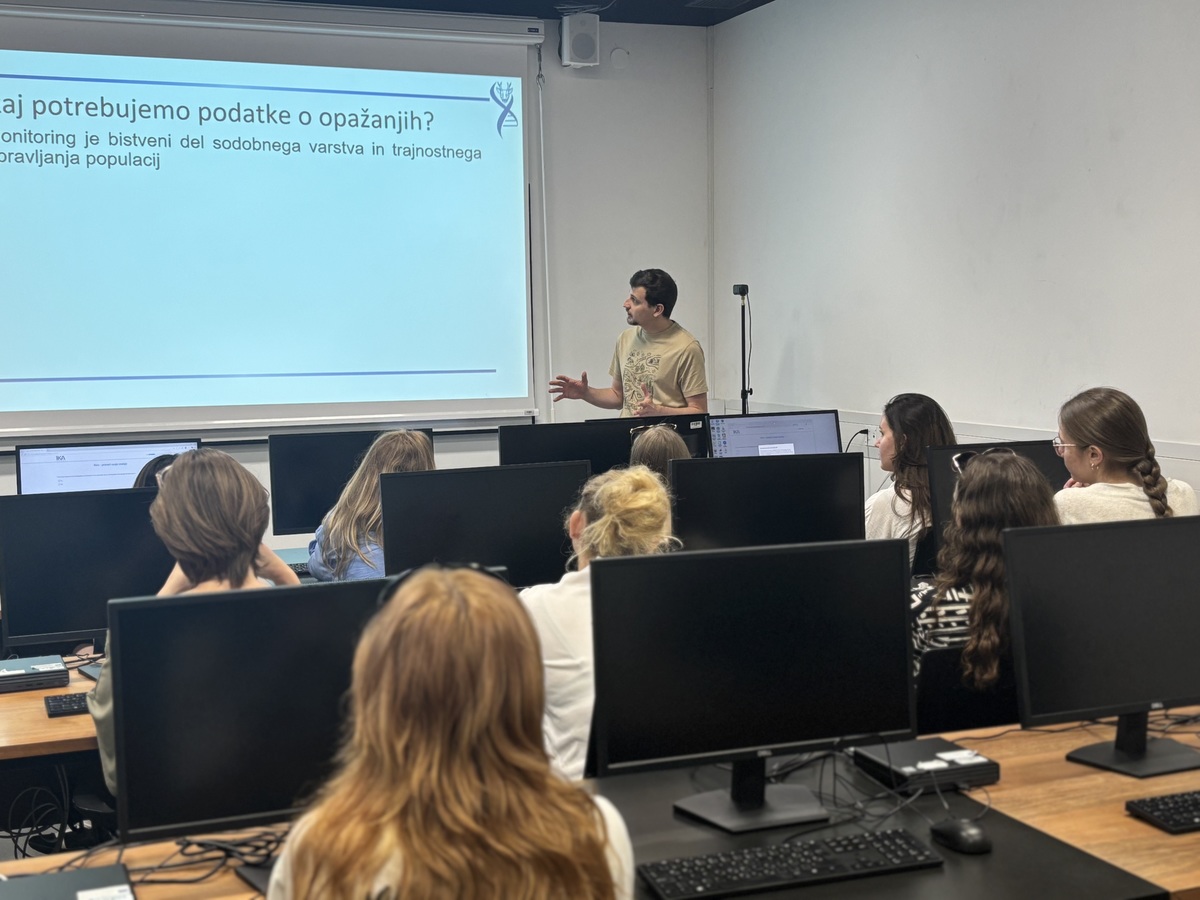
The second workshop, entitled Presentation of the SRNA Application for Monitoring Wildlife Populations, was conducted byAssist. Luka Duniš. Students and teachers had the opportunity to participate in a treasure hunt called “Fantastic Animals and Where to Capture Them”, during which the students learned how to collect and use wildlife data. The scientific application SRNA, developed as part of the Step Change project and intended for collecting wildlife data, was also presented. During the workshop activities, the students became familiar with the principles of citizen science and learned how to record data on the presence of wildlife using the SRNA application, as well as how to use camera traps for monitoring wild animals.
At the end of the visit, the students and teachers went to Piran, where they enjoyed a guided tour of the Aquarium Piran.
Thursday, 28 May 2026 Successfully Concluded the 5th REGALNICA Event - inventory of the European tree frog
On Saturday, May 23, 2026, the fifth edition of the traditional REGALNICA event took place, starting at the Pr Nanetovh Promotion and Congress Center in Matavun.
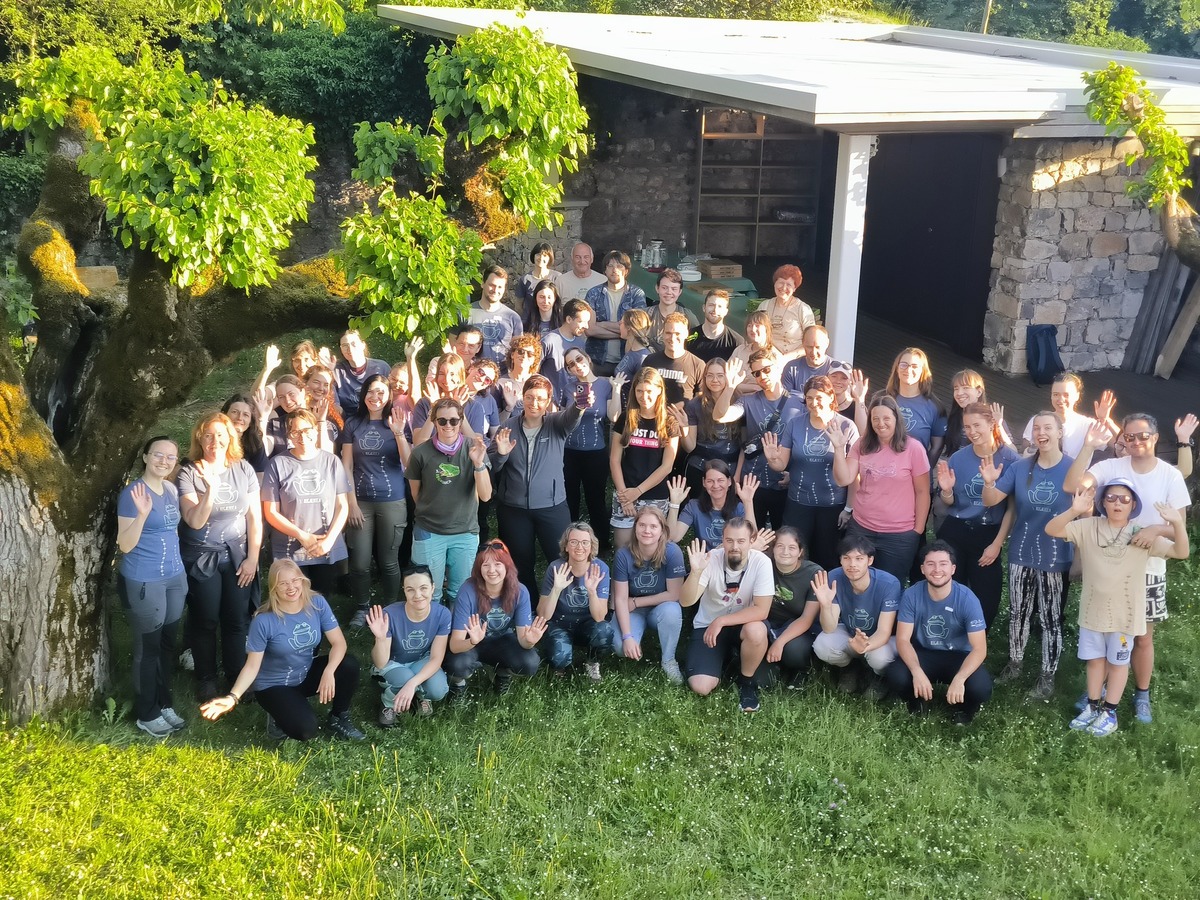
The event was organized by the Škocjan Caves Park, Slovenia, the Department of Biodiversity UP FAMNIT, and the National Institute of Biology (EKOS – Department for Organism and Ecosystem Research, NIB). Its main objective was to collect data on the occurrence of the European tree frog (Hyla arborea) in ponds across southwestern Slovenia, where this charming amphibian was once widespread and abundant.
This year’s survey brought together around 65 participants from various organizations. The largest group consisted of students, but the event also attracted experts, local and cross-border nature enthusiasts, as well as several families with children. At the beginning of the event, the organizers presented the results from the previous year and explained the fieldwork procedures. Each of the 19 survey teams, consisting of two to five members, then received information about their assigned locations. Before heading into the field, participants also enjoyed a social gathering organized by the hosts.
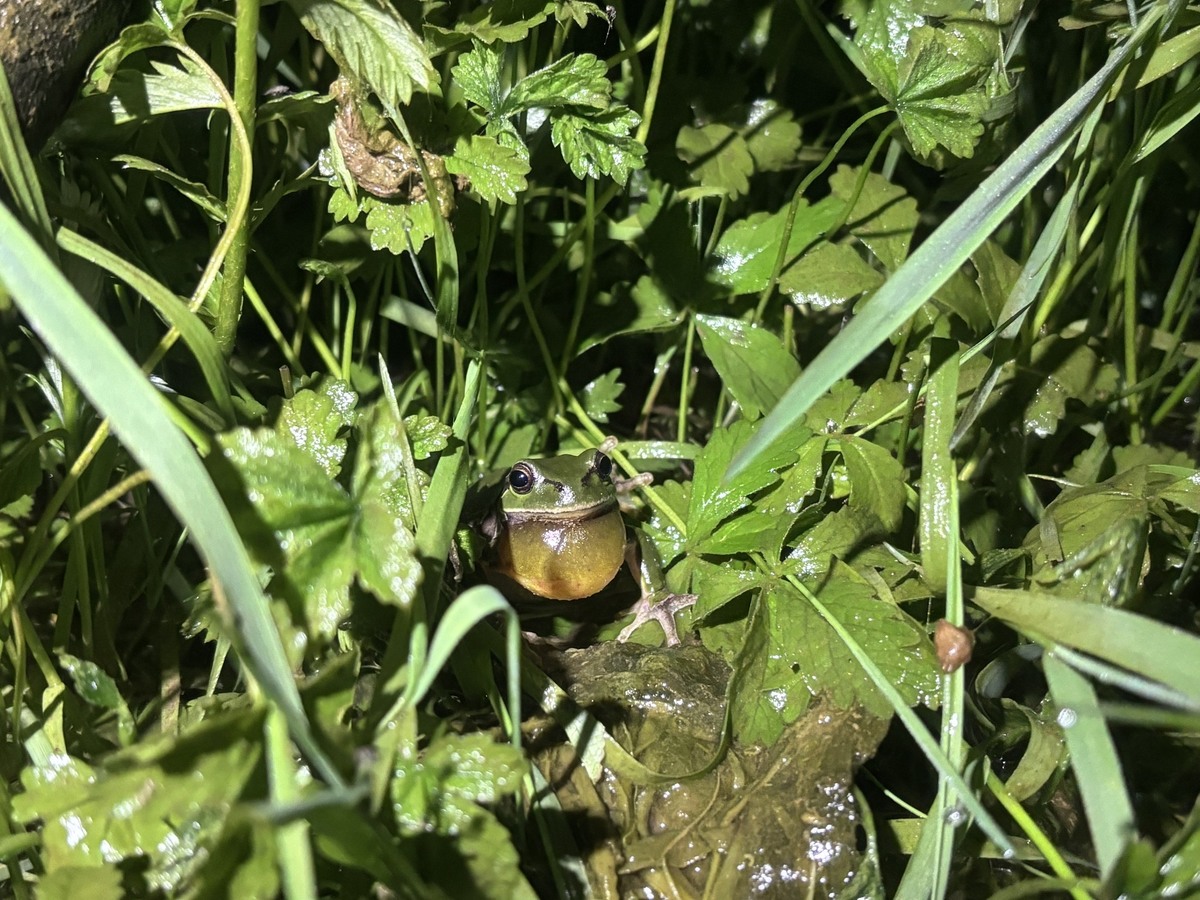
Between 9:00 PM and 1:00 AM, each team visited between four and eight ponds, surveying them for the presence of the target species and other amphibians. This was primarily done by listening for calling frogs, while some participants were also successful in obtaining photographic records. Altogether, the teams surveyed 129 ponds and confirmed the presence of the European tree frog at 20 locations.
Through the combination of academic expertise and a citizen science approach, the project generated valuable information that will help clarify the baseline status of local tree frog populations and support future research in the surveyed areas. The results of REGALNICA will also contribute to habitat restoration planning, particularly regarding pond restoration in the region. Preliminary findings indicate that the presence of the European tree frog in local ponds has declined significantly in recent years compared to historical records stored in the database of the Centre for Cartography of Fauna and Flora.
Given the positive response from participants, without whom such an event would not have been possible, the organizers hope that REGALNICA will continue and further develop in the years to come.
Wednesday, 27 May 2026 An Important Contribution to Understanding Plant Diversity in the Mediterranean
A study co-authored by Assist. Prof. Peter Glasnović, PhD, from the Department of Biodiversity, as the lead author, makes an important contribution to understanding patterns of plant diversity in the Mediterranean.
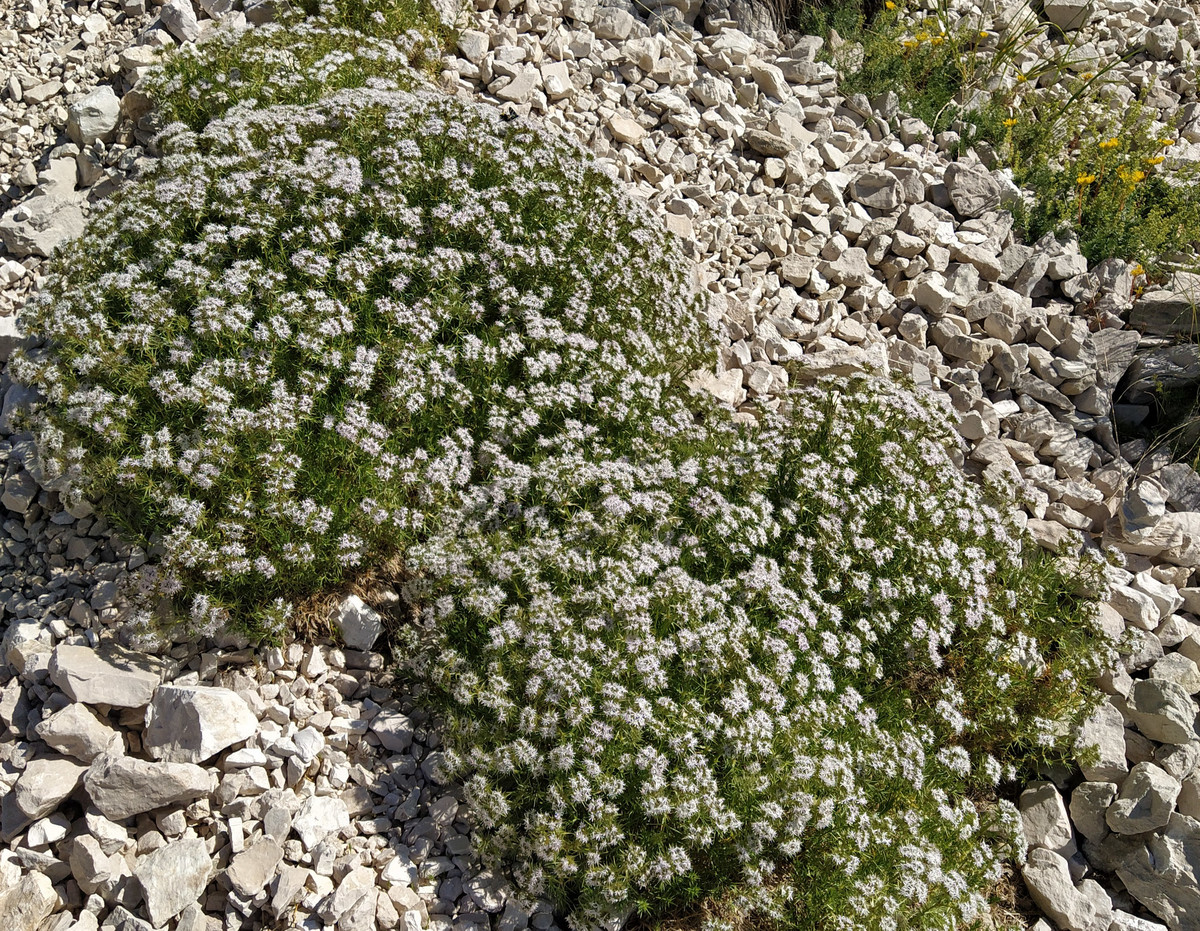
About the study:
The research sheds light on the evolutionary history of Drypis spinosa, a plant species of the amphiadriatic-ionian region that inhabits scree slopes across the Balkan and Apennine Peninsulas, with disjunct populations in the Kamnik–Savinja Alps. Using modern molecular, morphometric, and spatial approaches, the researchers investigated the species’ genetic diversity and its distribution both today and during the Last Glacial Maximum.
The results show that the mountainous regions of the western Balkans play a key role in preserving genetic diversity, while also revealing previously unrecognized historical connections between populations on the Balkan and Apennine Peninsulas. The findings contribute to a better understanding of biogeographical processes in the Mediterranean, one of the world’s biodiversity hotspots, and offer new insights into the evolution of plant species in this region.
The study was published in the Journal of Biogeography and is freely accessible at the following link.
Tuesday, 26 May 2026 The Faculty Hosted Numerous International Researchers and Professors in May
Every year, our faculty hosts numerous distinguished professors and researchers from universities around the world, with whom our faculty members have maintained successful long-term research collaborations . Such visits play an important role in strengthening the faculty’s international connections, fostering the exchange of knowledge, and developing joint research projects, scientific publications, and doctoral collaborations. This May, we once again welcomed several renowned experts who visited our faculty as part of research stays and collaborations with our research groups.
Among the guests was Prof. Dr. Daniel le Roux, who visited the HICUP laboratory hosted by Assoc. Prof. Klen Čopič Pucihar and Prof. Dr. Matjaž Kljun from the Department of Information Sciences and Technologies. During his visit, he highlighted the long-standing and successful cooperation between the researchers: “This is my second time here. I first visited in 2023, and shortly afterwards, Matjaž and Klen from the HICUP lab visited me in South Africa. At the moment, we are once again hosting researchers from your faculty at Stellenbosch University, where I work. We have already published one joint research paper together, and we are currently working on a second one, which will be very exciting. We are also delighted that one of my students from South Africa has applied for a PhD position in Matjaž and Klen’s lab, which would make him the first PhD student from South Africa at your faculty.”

Researcher Dr. Jordan Aiko Deja from De La Salle University was hosted by Prof. Dr. Matjaž Kljun and Assoc. Prof. Klen Čopič Pucihar from the Department of Information Sciences and Technologies. Professor Marko Tkalčič was visited by Assoc. Prof. Petar Knees from TU Wien and Assoc. Prod. Bruce Ferwerda from Jönköping University.
"My time visiting FAMNIT and HICUP has always been a delightful one. Not only does it bring back memories, but it also reminds me that I will always have a home in Koper. During my visit, I even got the chance to get my old desk and setup back, and now I have to set up two more prototypes for our future collaborations. I'm looking forward to all the results and scientific findings that we will get to share in the future. One day, I hope to come back and present a lecture too. Always grateful for the time!" summed up his experience, Dr. Jordan Aiko Deja.

The faculty also welcomed Professor Vladimir Gurvich, a renowned expert in operations research and a long-time researcher at the RUTCOR center at Rutgers University. During his visit, he stated: “I am happy to be in Koper again and to continue our long-standing collaboration with Professor Milanič and Matjaž. I am also pleased to present my work here.” His research focuses primarily on combinatorial game theory and graph theory, particularly classes of perfect graphs. He is well known for his key contributions to positional game theory and the analysis of Boolean functions, where his results closely connect structural graph properties with theoretical computer science.

His research combines mathematics and theoretical computer science, and he is regarded as one of the leading experts in structural and extremal graph theory as well as graph limits. He has received numerous prestigious scientific awards, including two ERC grants and the European Prize in Combinatorics. He is also widely known for solving several decades-old open mathematical problems, including the Lovász–Plummer conjecture. Professor Vladimir Gurvich and Professor Daniel Kráľ were hosted by Assoc. Prof. Matjaž Krnc from the Department of Information Sciences and Technologies.
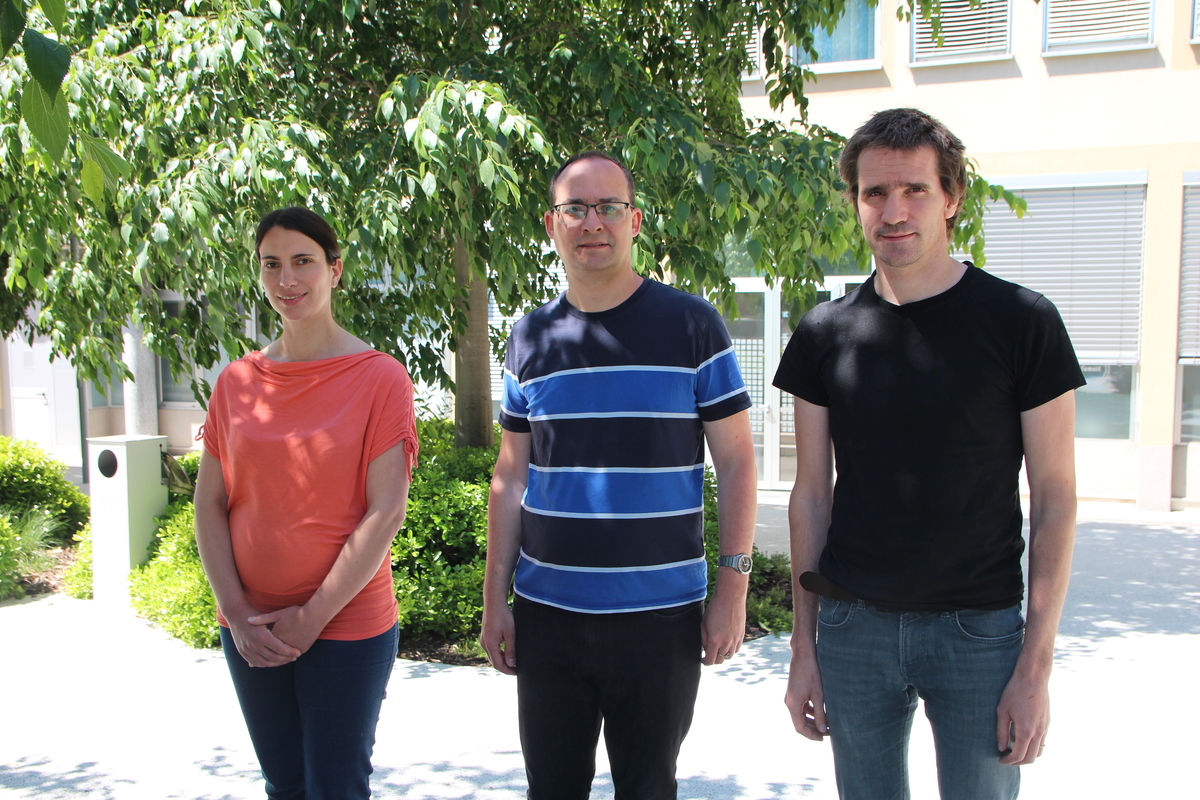
Among the May visitors was also Prof. Dr. Francesco Ricci from the Free University of Bozen-Bolzano, whose research focuses on recommender systems. During his visit, he emphasized his collaboration with Prof. Dr. Marko Tkalčič: “I work in the field of recommender systems, and I am particularly interested in methods for evaluating these systems. Professor Tkalčič is also an expert in this area, especially in research concerning the influence of users’ emotions and moods during interaction with recommender systems. Current technologies are still not sufficiently developed to effectively incorporate these aspects. I believe that in the future, together with Marko, we will be able to develop new approaches and technologies that will better help us understand human emotions, personality, and their influence on the use of recommender systems.”

Monday, 25 May 2026 How AI Is transforming film and media: Marko Tkalčič led discussion with Oscar winners
Professor Marko Tkalčič moderated the panel discussion »The Impact of AI on the Future of Film, Gaming, and Media Arts« on May 23 at ISFMF (International Sound & Film Music Festival) in Varaždin, Croatia.
ISFMF is recognised as one of the world’s leading festivals dedicated to film music and sound. The festival began its journey in 2012, with its first edition taking place in 2013. It was founded with a clear and powerful vision — to create a space where sound is not secondary but essential, and where film music is recognised as a fundamental element of storytelling and emotional expression in cinema. For more than a decade, the festival has brought together internationally acclaimed composers, sound designers, filmmakers, and creative industry professionals, fostering dialogue on the future of film and media arts. The 14th edition of the festival, which was held from 21 to 24 May, featured numerous distinguished guests, including several Academy Award winners and nominees.
The panel moderated by Prof. Tkalčič focused on the impact of artificial intelligence on the future of film, video games, and media arts. The discussion raised questions of authorship, creative control, and ethical boundaries at a time when artificial intelligence is already actively transforming production processes and the ways in which sound and media content are created.
The panel featured internationally renowned experts from the film industry:
- Alex Serdiuk, Co-founder and CEO of Respeecher, a leading company in AI voice technologies;
- James Mather, Oscar winner for Top Gun: Maverick;
- Mark Ulano, Oscar winner, known for his work on Titanic and collaborations with Quentin Tarantino and Martin Scorsese;
- Laia Casanova, internationally recognised for her work on Sirât.
Prof. Tkalčič explores the intersection of artificial intelligence, psychology, and human behaviour. His work brings a critical, human-centred perspective to the evolving relationship between technology and creativity. Through his work, he makes an important contribution to understanding how technology can support, rather than replace, human creativity in contemporary media.
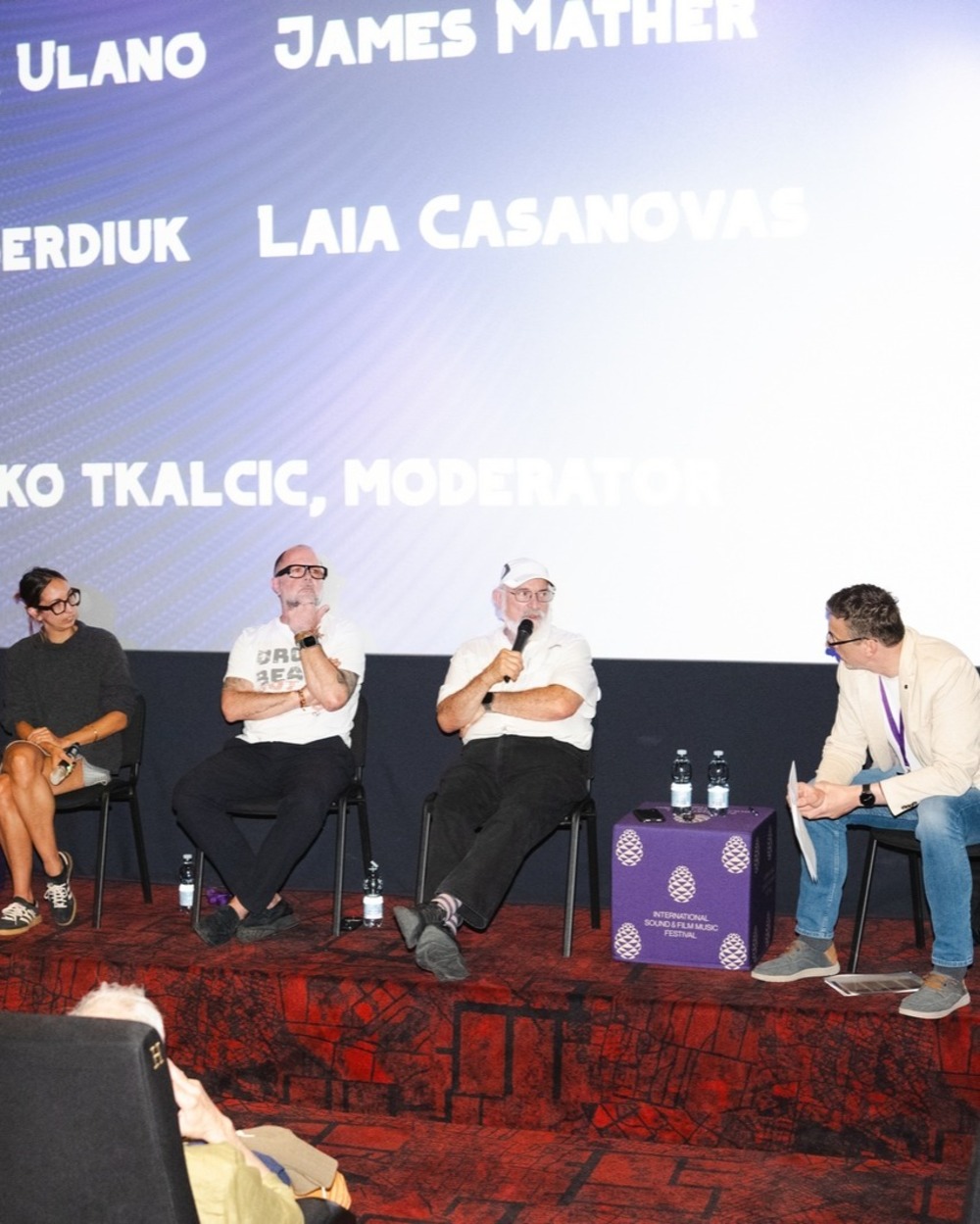
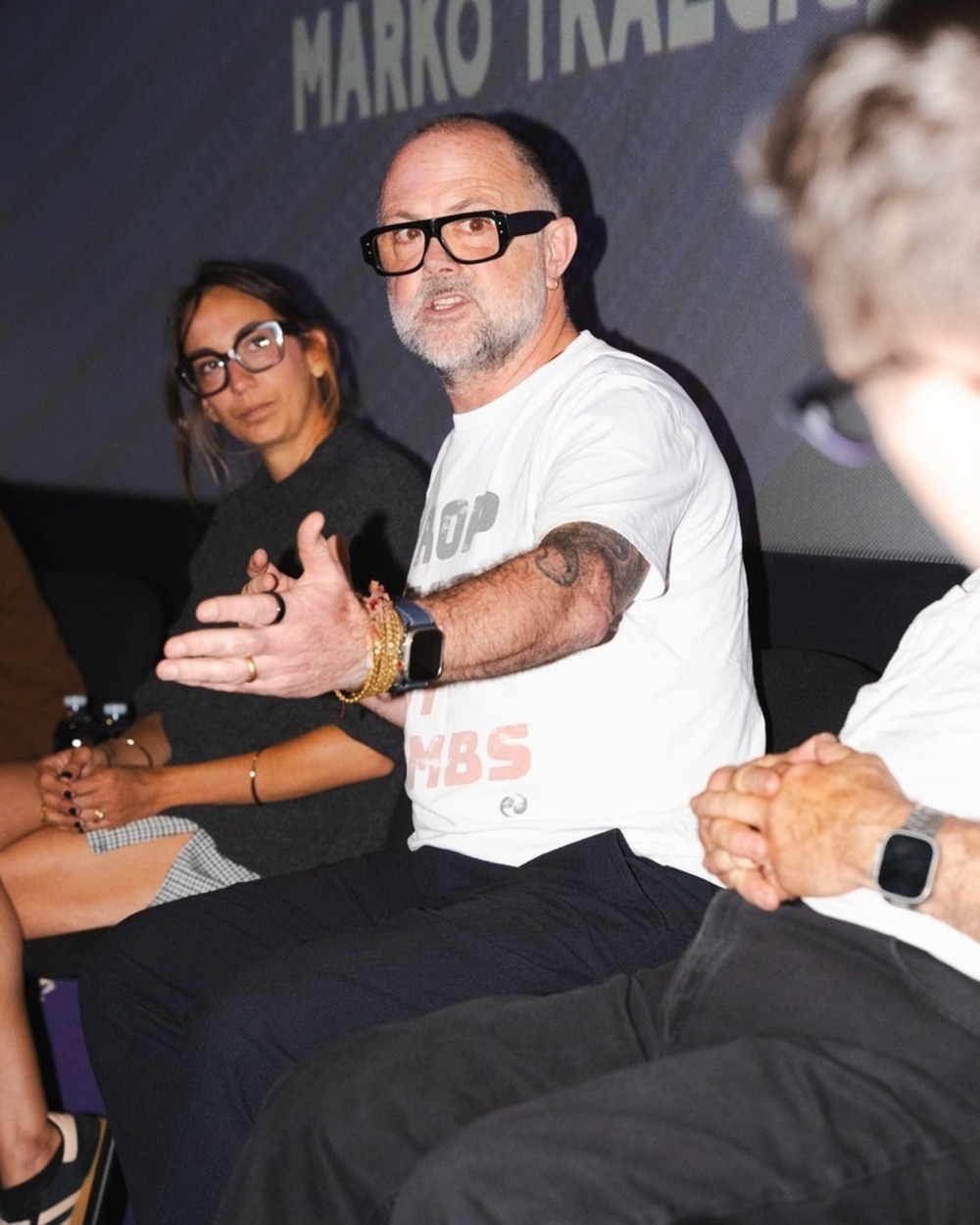
Foto: ISMF

Friday, 22 May 2026 Research Day at the Piran Grammar School and Secondary School for Electrical Engineering and Maritime Studies
Each year, third-year students at the Piran Grammar School and Secondary School for Electrical Engineering and Maritime Studies undertake research projects on topics of their own choosing. At the end of the process, the school hosts its traditional “Research Day,” an event designed to highlight the importance of research and give students insight into how research is conducted in practice.
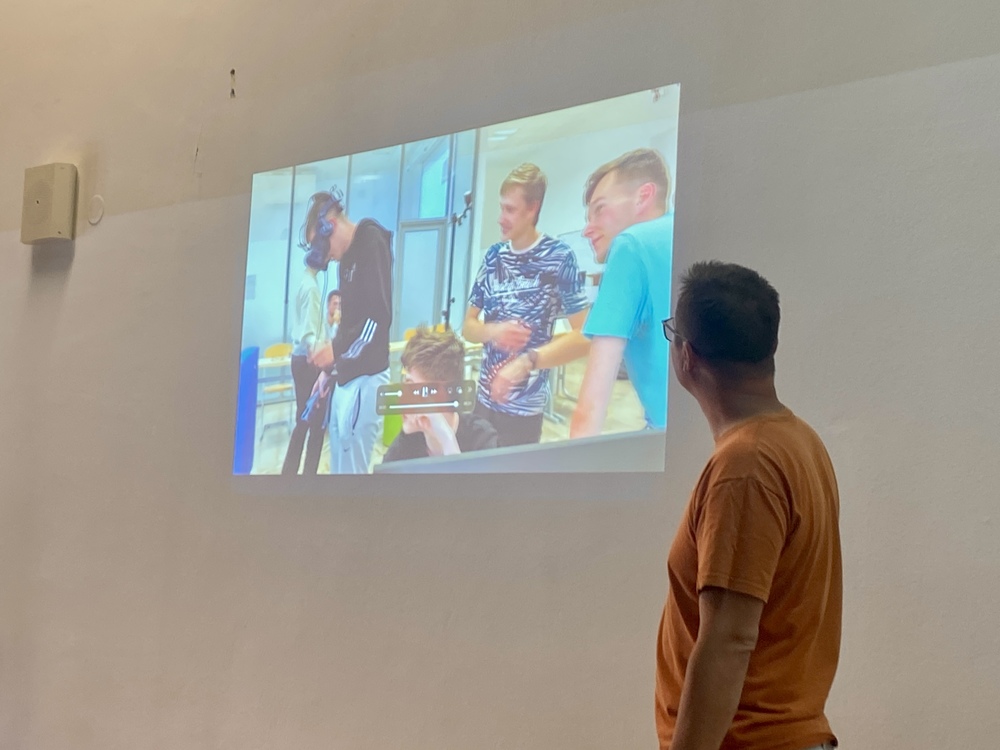
This year’s event was also attended by Prof. Matjaž Kljun from the Department of Information Sciences and Technologies, who introduced students to his research work and the fields of modern information technologies.
After the presentation, some students also presented their first research findings, showcasing the diversity of research topics and the creativity of young researchers.
At UP FAMNIT, undergraduate, master’s, and doctoral study programmes in Computer Science are offered. Application deadlines are published here, and anyone interested can contact the Student Services for additional enrollment information.

Thursday, 21 May 2026 New book titled Radar-Based Human-Computer Interaction has been published by Springer Nature
We are pleased to announce that Springer Nature has published the new book Radar-Based Human-Computer Interaction, edited and co-authored by Assoc. Prof. Dr. Klen Čopič Pucihar from the Department of Information Sciences and Technologies at UP FAMNIT. Prof. Dr. Matjaž Kljun, also from the Department of Information Sciences and Technologies at UP FAMNIT, made an important contribution to the book as a co-author of several chapters.
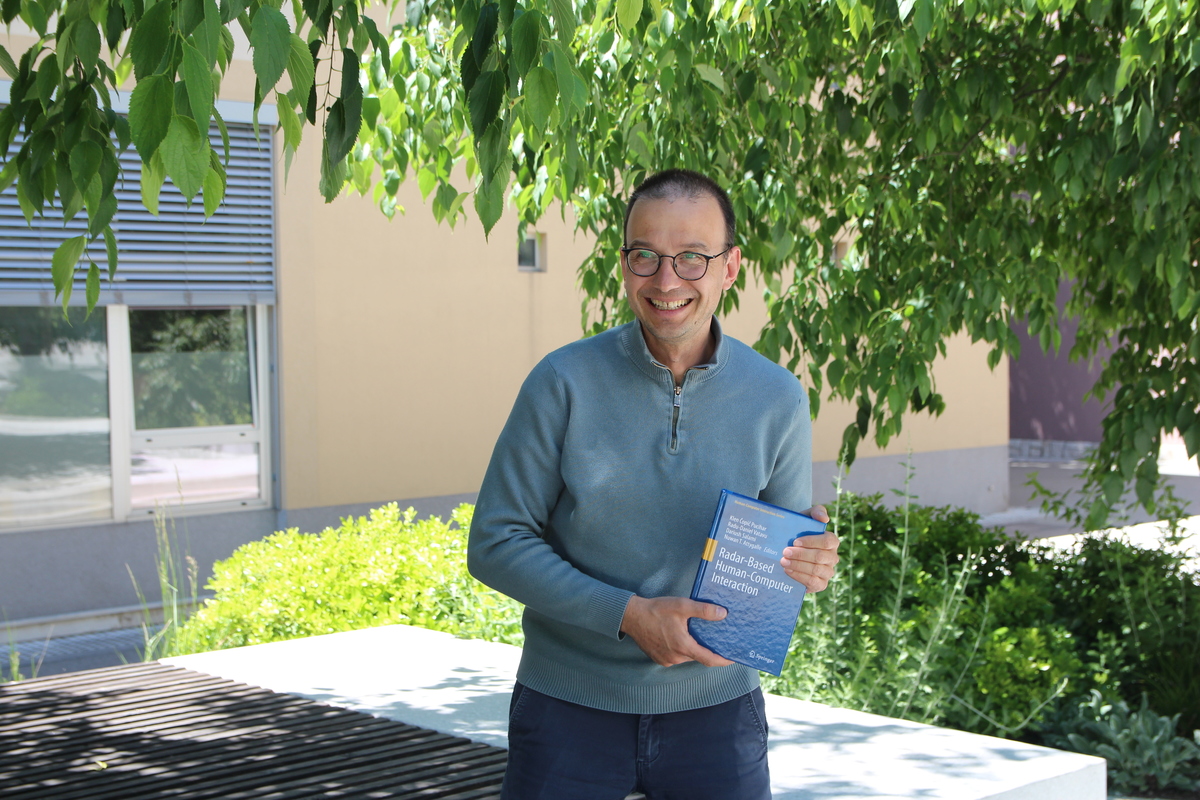
The book explores how radar enables reliable, contactless sensing of human presence, gesture-based interaction, and the recognition of user intentions without physical contact. Through scientific and technical contributions by experts in radar engineering, signal processing, human-computer interaction, computational modelling, and machine learning, it presents techniques and tools for signal processing, provides an overview of publicly available datasets, and highlights new applications involving radar-based sensing.
Radar-Based Human-Computer Interaction lays the foundations for this emerging interdisciplinary field. It addresses researchers and professionals interested in developing the next generation of reliable, adaptive, and privacy-preserving user interfaces using radar technology.
Wednesday, 20 May 2026 The Transform4Europe (T4EU) Chair Programme – Open Call for the Academic Year 2026/2027 is now open for recruiting!
We are pleased to announce that the Call for Transform4Europe Chair Programme within the T4EU Alliance for the academic year 2026/2027 is now open.
We invite members of the teaching staff to apply for mobility opportunities within the partner universities of the T4EU Alliance in areas related to the Alliance’s priority fields:
- Social Transformation, Community Building and Inclusion
- Digital Transformation and Smart Regions
- Environmental Transformation and Sustainability
Applicants must:
- be employed in a teaching and/or research position at one of the T4EU Alliance universities and hold at least a doctoral degree or be currently enrolled in a doctoral programme at the respective university,
- have relevant teaching and research experience in the T4EU priority areas,
- have relevant intercultural communication experience,
- possess adequate knowledge of English and/or other languages, as required by the host university,
- demonstrate general digital literacy and any specific digital competencies required by the host university,
- demonstrate an entrepreneurial mindset, characterised by competences that enable them to identify and seize opportunities and ideas, and transform them into social, cultural, or productive value.
Please make sure to review the conditions and requirements of the individual host university before applying. Please also note that funding from the University of Primorska is not foreseen within this programme. We also recommend contacting the relevant academic contact person at the host university before submitting your application.
Link to the Open call: /en/resources/files/news/t4euchairprogrammeopencall.pdf
This call is open from 1 May 2026, and all approved mobilities must be completed by 30 August 2027.
Applications must be submitted via the online application form available at the following link: https://forms.office.com/Pages/ResponsePage.aspx?id=bISeJtSi0Um-kYOp6zRiky9k64RUVLNMm7iHwY-PCMpUQjAxMzc1TEwyMklSSEFGQVQ1QkpIQzhVNy4u&origin=Invitation&channel=1
Wednesday, 20 May 2026 The 5th Famnit Hackathon 2026 brought together 56 young programmers
The GDG on Campus University of Primorska team brought together programming and coding enthusiasts for the fifth consecutive year at the FAMNIT Hackathon 2026, held at the UP FAMNIT premises.
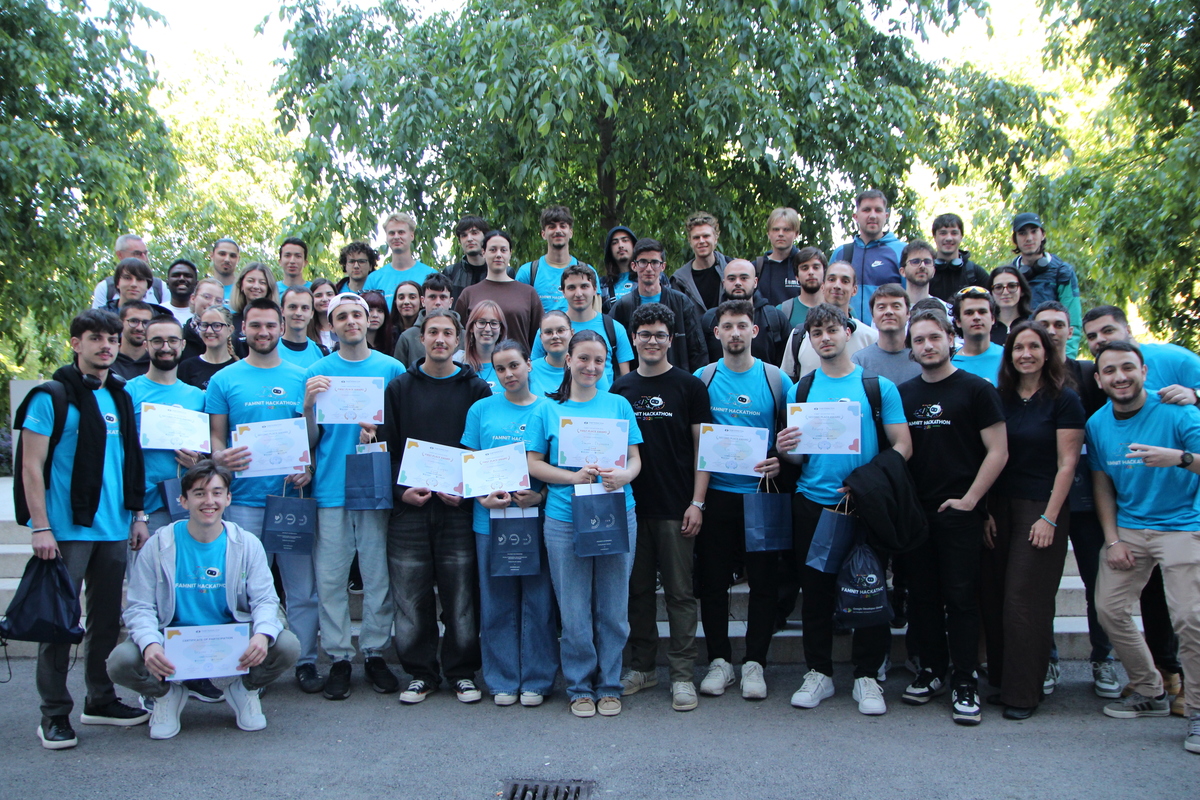
Between May 16 and 17, 2026, 56 programming enthusiasts participated in the UP FAMNIT Hackathon 5.0. During the two-day event, they demonstrated creativity, teamwork, and problem-solving skills while tackling various challenges.
One of the highlights of this year’s Hackathon was the presence of a special guest, Professor Toralf Trautmann from the Dresden University of Applied Sciences (HTWD).
At the end of the event, the best teams received generous prizes sponsored by the event partners. Members of the first-place team received 600 euros and a Raspberry Pi 5, the second-place team received 500 euros and an Arduino Uno Q, while the third-place team received 300 euros and a Raspberry Pi Zero 2 W. In addition, all members of the winning team received Sony WH-CH720N headphones, while 40 lucky participants also received Raspberry Pi Pico W devices.
The judges of the 5th Hackathon included representatives from HTW Dresden, Prof. Trautmann, Arsen Matjaž Finc from the Nielsen Lab, Irena Fonda from the YouSea Institute, and Dr. Branko Kavšek (UP FAMNIT).
The first-year students did an exceptionally good job. Their projects ranked among the top-rated entries, and they delivered outstanding work in just 24 hours — despite competing against Master’s and graduate-level students.
Winning Teams of the 5th Hackathon
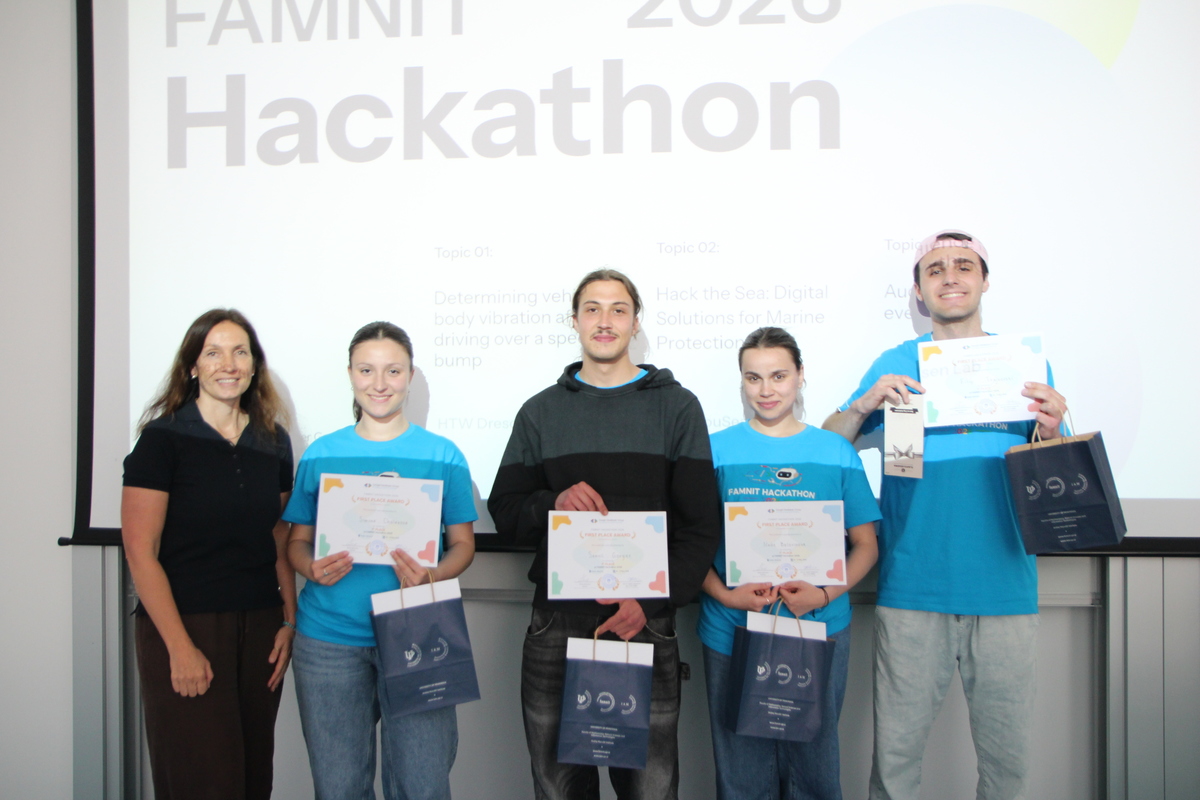
1st Place – smile.py
(Simona Cholakova, Nade Belovinova, Samoil Gorgiev, Filip Trajkoski) Project: Hack the Sea: Digital Solutions for a Thriving Ocean – Harnessing the Power of Technology to Protect Our Planet’s Most Vital Resource
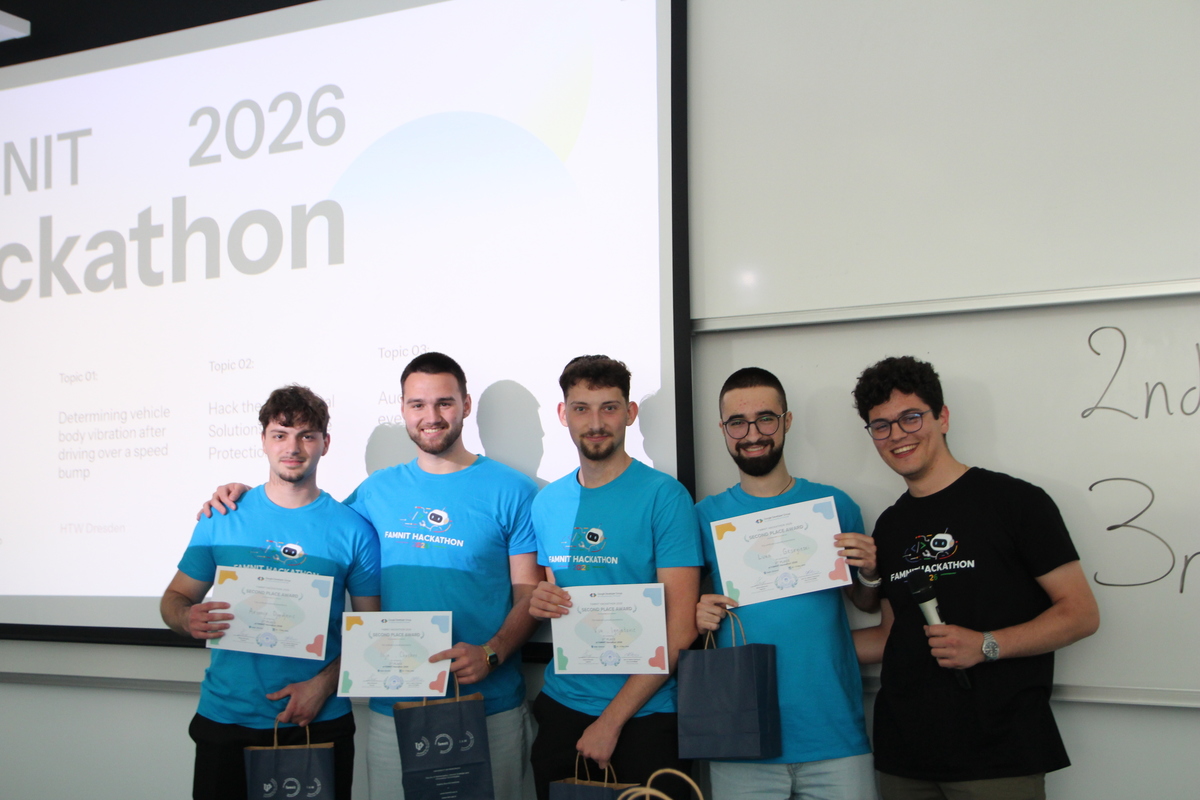
2nd Place – Beli Gavrani
(Luka Georgieski, Ilija Chrchev, Arsenije Djordjevic, Vuk Ignjatović) Project: Water Clarity Prediction System
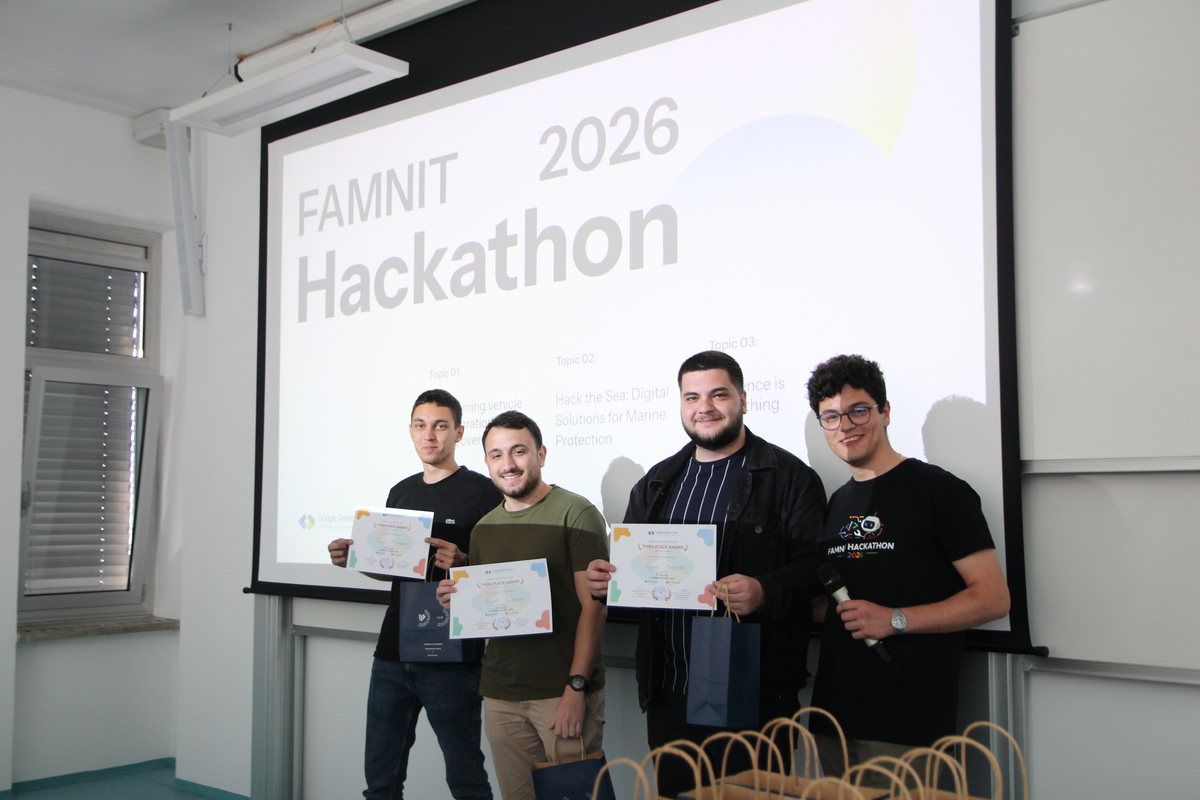
3rd Place – Diznac
(Nikola Murgovski, Pavel Jolakoski, Gjore Janevski) Project: Attention-Score: A Real-Time Viewer Attention Analysis Platform
Other teams also developed excellent programming solutions, while many students were invited to follow-up meetings with sponsors to discuss potential internship opportunities.
We would like to thank all companies and organizations that expressed interest in networking with our students. Their representatives also took on mentoring roles during the competition and participated in the jury evaluating the final solutions.
The main sponsors of the event were Nielsen Lab, Razum, Dinit Card Services, and HTW Dresden. Event partners included InnoRenew CoE, Better, EURES, UP FAMNIT, HICUP Lab, DLTLT Lab, Visit Koper, Red Bull, and Sladoledarna.
Throughout the entire weekend, participants were provided with meals and energy drinks.
The organizers would also like to express sincere gratitude to the mentorsMilan Milivojčević, Karolina Trajkovska, Nilukshan Krishnaram, Nikola Kovačević, Nevena Stojnić, and Danilo Lazić for their support in connecting with students, to the FAMNIT promotional team for increasing the visibility of the event, to the FAMNIT Student Council for their support in organizing the event and to the event photographer, Anastasija Damnjanovska.
Google Developer Groups on Campus are communities of undergraduate and postgraduate students at universities around the world who work in the field of Google technologies.
GDG on Campus University of Primorska – Koper, Slovenia, provides developers with a learning environment and welcomes students from all undergraduate and postgraduate study programs who strive to enhance their knowledge and skills in the field of modern technologies. Learning takes place through interactive workshops and seminars, with lecturers who equip members with broad knowledge and best practices.
We also invite you to visit the GDG Primorska Instagram profile and official website.
Wednesday, 20 May 2026 Dr. Vita Poštuvan finalists for the 2025 Mentor of the Year Award
The Young Academy Association has presented the Mentor of the Year Award for the seventeenth consecutive year. The award highlights the importance of quality mentorship for successful doctoral studies. This year, they received 78 valid applications, in which 68 different mentors were nominated. Among the five finalists is Dr. Vita Poštuvan (UP IAM, UP FAMNIT) , who was nominated for the award by her doctoral student Vanja Gomboc, also on behalf of her colleague Lucija Rojc, as well as Dr. Nina Krohne and Dr. Meta Lavrič, who have already earned their doctorates under her mentorship. Thus, her nomination was supported by absolutely all of her former and current mentees, which in itself is proof of her high-quality work.
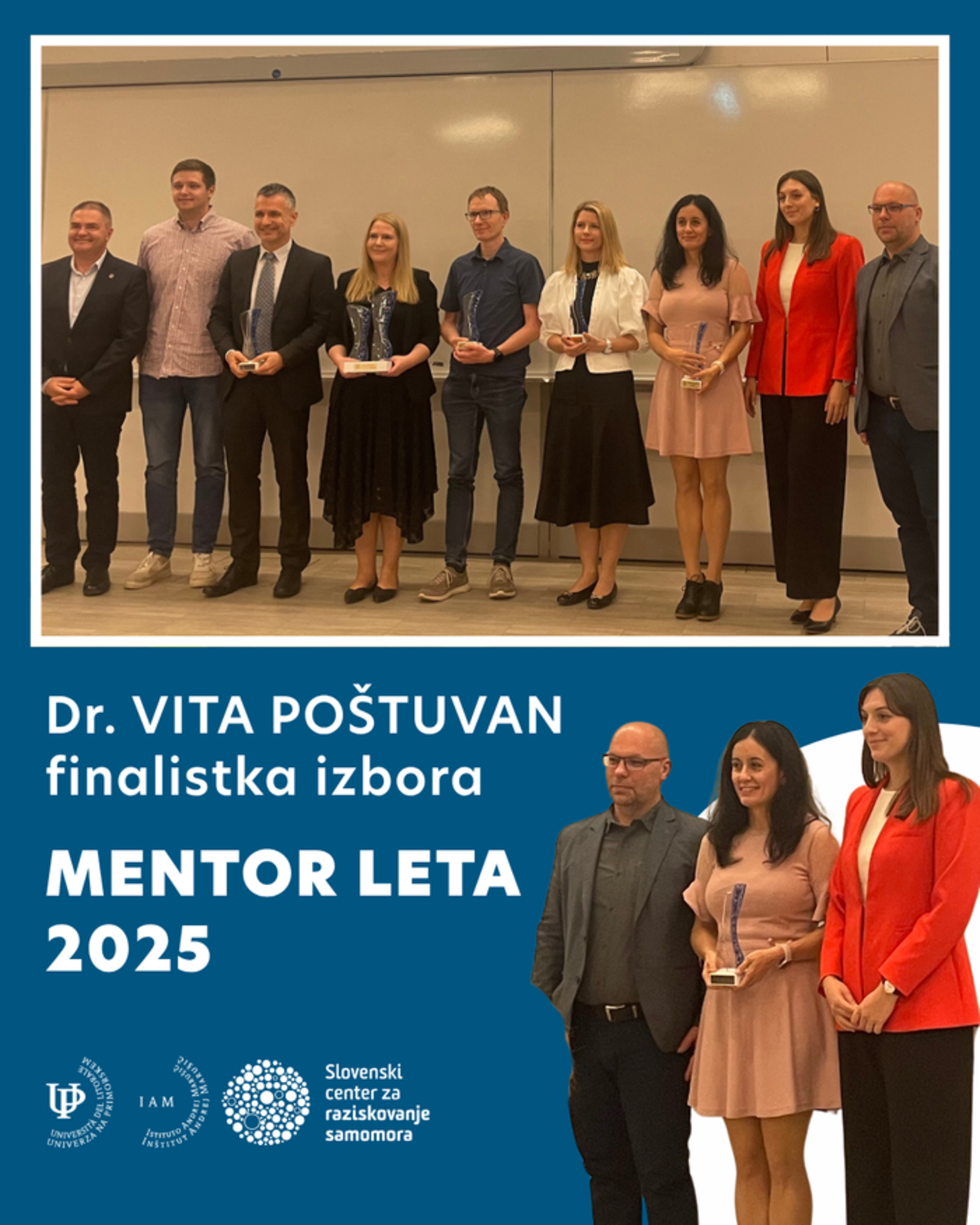
Dr. Vita Poštuvan is a psychologist who, in her research and intervention projects, focuses on the study and prevention of suicidal behavior, the promotion of mental health, the grieving process, and ethics; she is the deputy head of UP IAM SCRS. She is actively involved in teaching at various faculties and coordinates the doctoral program in Suicidology and Mental Health at UP FAMNIT.
She has supervised more than 80 students on their final projects, primarily master’s students in psychology and doctoral students in suicidology and mental health. She is the author of numerous publications: she has published 85 scientific articles—a large proportion of which in the world’s most prestigious journals—more than 50 chapters in scientific monographs, and has over 620 entries recorded in the SICRIS database; and in the SCOPUS database, she has an h-index of 33, which ranks her among the most cited Slovenian experts in the fields of psychology and psychiatry. She is a regular guest at prestigious institutions and conferences both in Slovenia and abroad.
She is the editor-in-chief of the journal GeroPsych and an active member of professional associations such as the IASP and EFPA at the international level, and the DPS and DVKT at the national level. As a researcher, she has visited Austria, the United Kingdom, and Japan, and has also worked professionally in China and India. As a cognitive-behavioral therapist, she provides psychological counseling, and as a member of the National Civil Protection Unit for Psychological Assistance, she offers psychological support during crises and disasters. By providing direct support to people, she combines her academic and scientific work with professional psychological practice.
Upon her nomination, Vanja Gomboc emphasized that she values her mentor’s ability to identify the mentee’s strengths and, through professional support, encourage them to achieve the best possible results.
We sincerely congratulate Dr. Viti Poštuvan and wish her continued success in supporting young people at the start of their research careers!
The Young Academy (MA) is the successor to the Slovenian Association of Young Researchers (DMRS), which was founded in 1995. After twenty years of operation, they decided in 2016 to expand their focus beyond doctoral students to include early-career researchers in their activities. The main purpose of the association is to bring together doctoral students and early-career researchers, as well as young people active in research and higher education in Slovenia and Slovenians working in these fields abroad.
Friday, 15 May 2026 Participation in the Erasmus+ BIP Program Monitoring Transitional Ecosystems at the University of Patras (Greece)
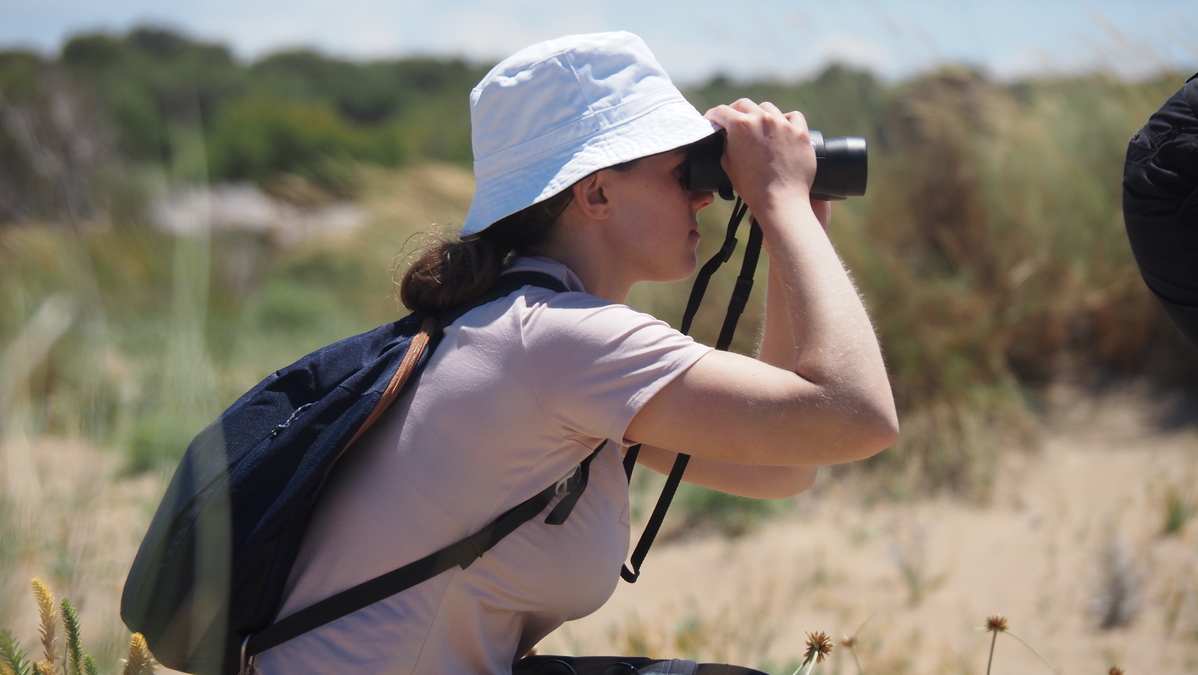
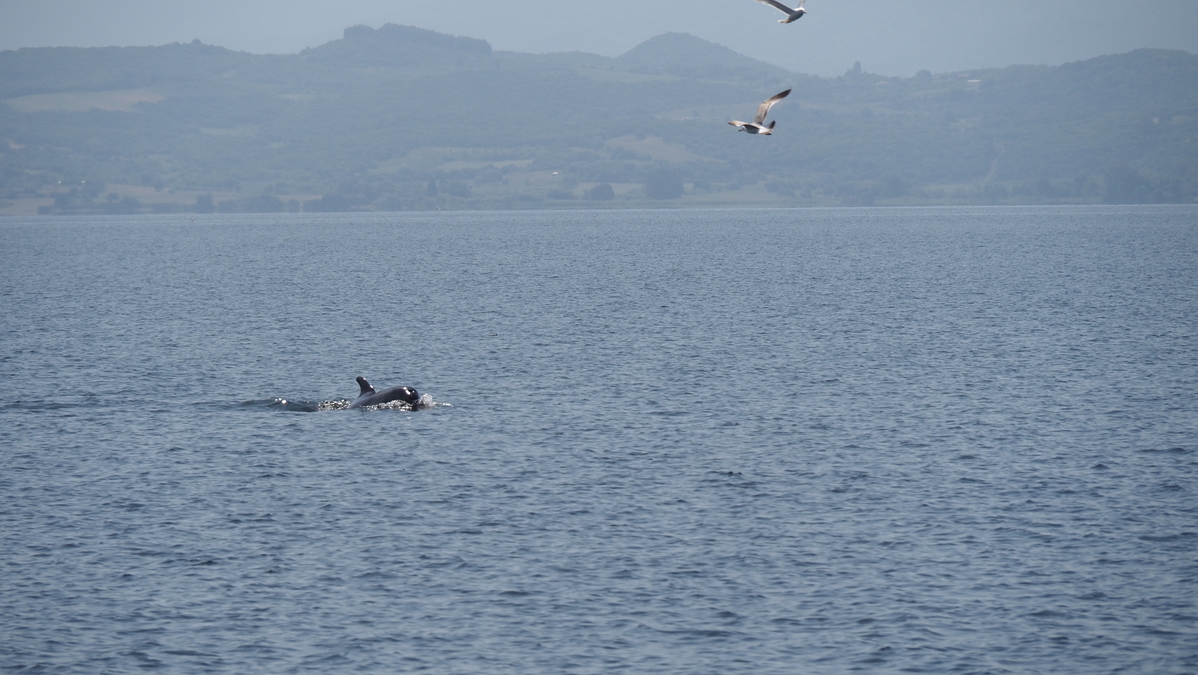
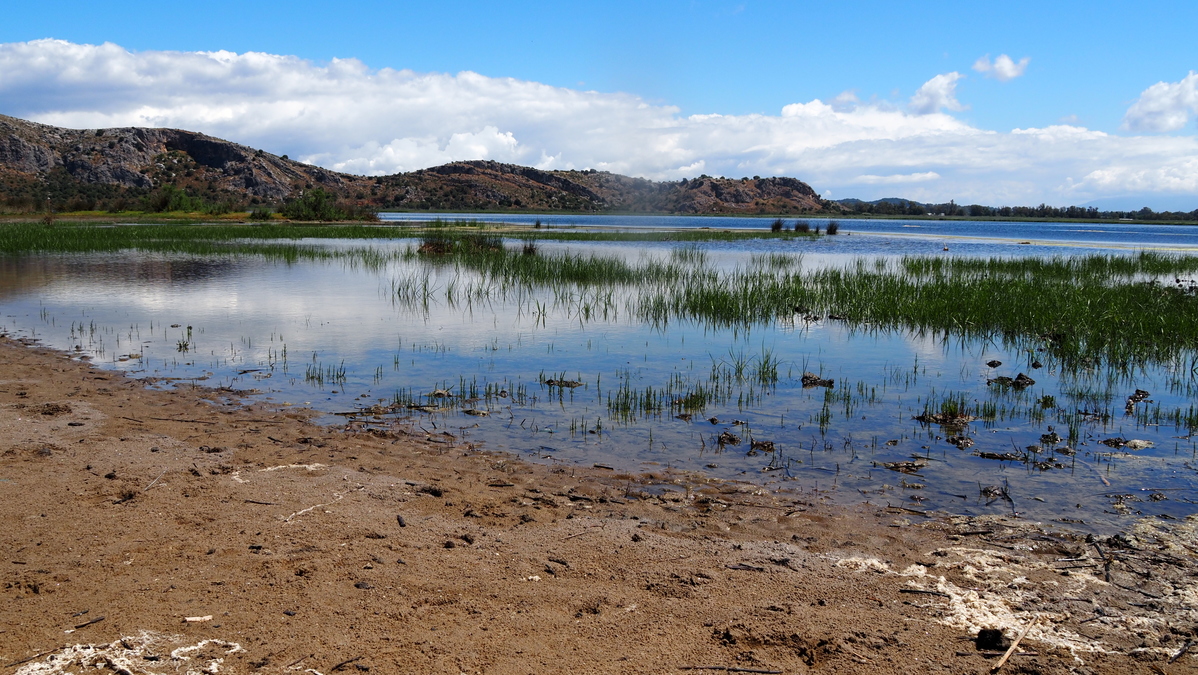
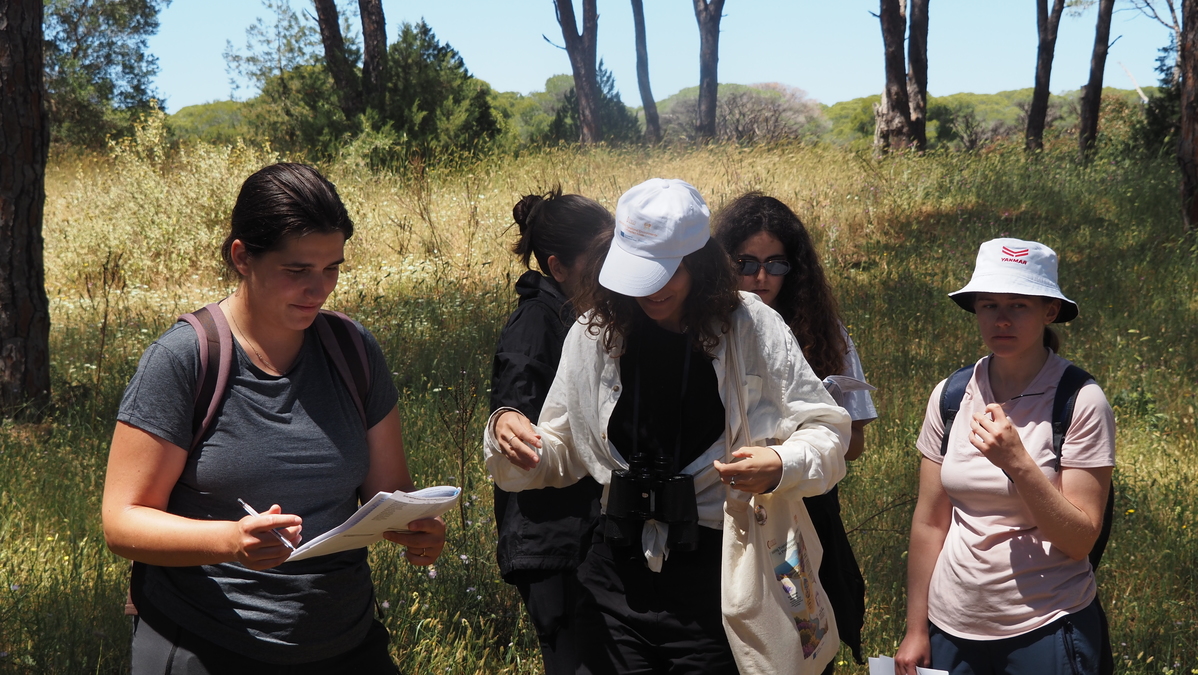
Five students from the Nature Conservation study program and Associate Professor Dr. Živa Fišer from the Department of Biodiversity at UP FAMNIT participated in the international Erasmus+ BIP program Monitoring Transitional Ecosystems, which was held this year at the University of Patras in Greece. The program brings together universities from Slovenia, Italy, and Greece and promotes interdisciplinary cooperation in the research and conservation of Mediterranean transitional ecosystems.
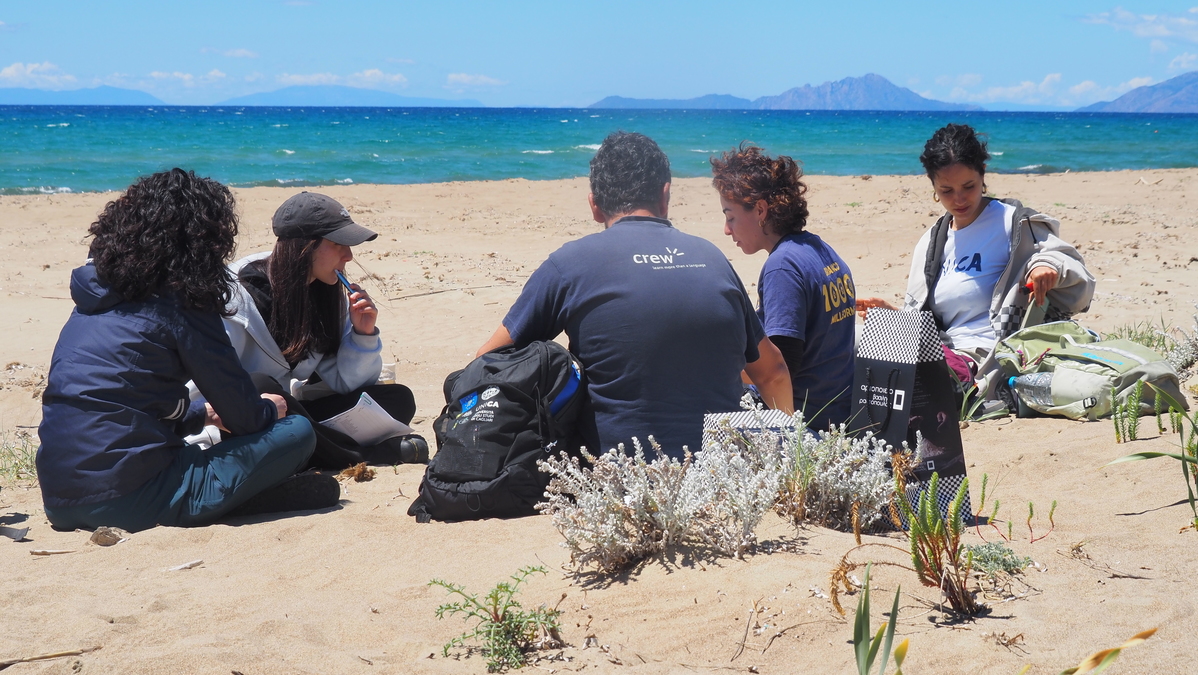
This year marked the second consecutive edition of the program; last year, a similar program was organized at the University of Cagliari in Sardinia.
Participants spent two days at the University of Patras, where lectures, presentations on research methods, and group work in international settings took place. Three additional days were dedicated to fieldwork in important protected areas of western Greece, including the national parks and Ramsar sites of Kotychi–Strofylia, Messolonghi–Aitoliko, and Amvrakikos National Park. Working in international groups, the students monitored the status of species, habitats, and ecosystem services, and also met with managers of protected areas.
The program offers students valuable international experience, opportunities to develop practical fieldwork skills, and participation in an interdisciplinary and intercultural environment. At the same time, it strengthens cooperation between universities and opens opportunities for further collaboration in biodiversity research and conservation in the Mediterranean.
Thursday, 14 May 2026 Presentation of the topic of the doctoral dissertation of Donya Bazyar Khoshroodi
We invite you to the presentation of the topic of the doctoral dissertation Development and Analytical Modelling of Demountable CLT–Concrete Composite Floors with Tightenable Notch Connections of the student Donya Bazyar Khoshroodi, enrolled in the doctoral study programme Renewable Materials for Healthy Built Environments (in English).
The presentation will take place on Tuesday, 26 May 2026 at 8.00 in the classroom Pseudotsuga, InnoRenew CoE, UP IAM, Livade 6a, Izola and via Microsoft Teams on link:
https://teams.microsoft.com/meet/372886381698943?p=rE2ma81s2YnpukITwu
You are kindly invited!
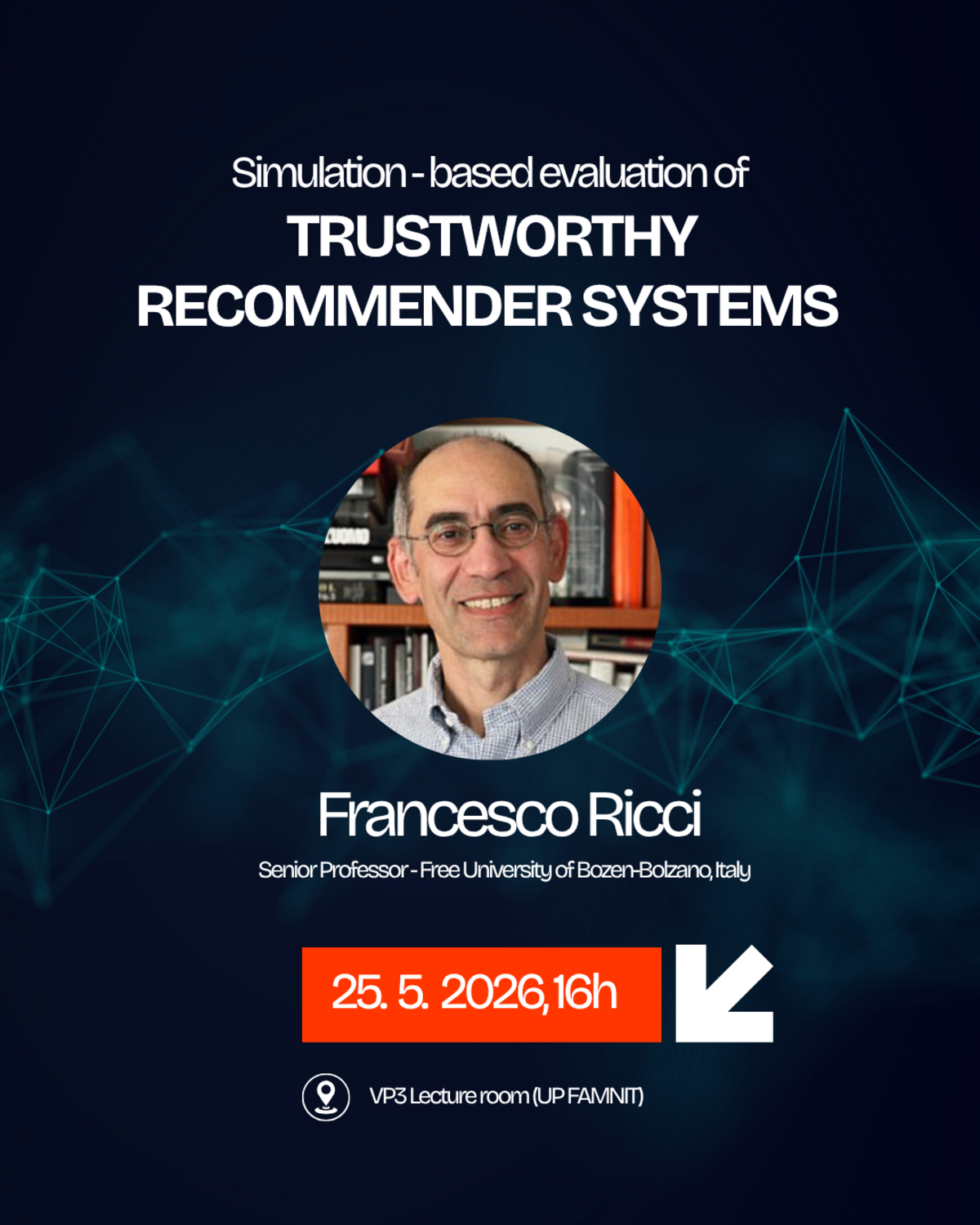
Wednesday, 13 May 2026 Francesco Ricci: Simulation-Based Evaluation of Trustworthy Recommender Systems
You are invited to a lecture by Francesco Ricci, which will take place on Monday, May 25, at 4:00 PM in the lecture room VP3, UP FAMNIT.
Francesco is a senior professor in Computer Science at the Free University of Bozen-Bolzano (UNIBZ), Italy. He is a member of the UNIBZ Competence Center on Sustainability and a member of the Steering Committee of the Digital Humanism Initiative, TUW, Vienna.
His current research interests focus on the usage of Artificial Intelligence techniques, such as Recommender Systems and intelligent agents, in supporting human collaboration with AI, and ultimately improving users' decision-making processes and well-being. He is interested in building systems that can help groups and individuals to make more rational and fair decisions in complex and context-dependent scenarios, such as news and tourism.
He is the author of more than 250 highly cited, refereed publications. He coedited the Recommender Systems Handbook, a reference publication, and served as president of the steering committee of the ACM conference on RSs.
Recommender systems (RSs) are personalized artificial intelligence (AI) tools routinely used by online platforms to promote algorithmically selected news, posts, music, travel, and videos. This talk will focus on the goal of making these systems more trustworthy, ensuring they better serve the various stakeholders interested in their functionality, especially the end users and the providers of the recommended items. A novel type of user/system interaction simulation framework, proposed as an approach to assess RSs performance, will therefore be presented.
Compared to the standard train/test ML evaluation approach, this framework enables a better estimation of the longitudinal and multidimensional effects (positive and negative) that an RS can have. The core idea is to more faithfully simulate users' reactions to the recommendations produced by the tested RS by relying on a calibrated algorithmic model of how users make their choices, i.e., select items among the recommended ones. This approach departs from the standard ML testing mechanism that leverages testing data sampled from historical user/ system interaction logs, which, unfortunately, were acquired when users interacted with unknown and different RSs.
The application and usefulness of this evaluation approach will be exemplified in a particular case study: sustainable tourism management, specifically, how to mitigate overtourism, respect local communities, and still satisfy tourist preferences.
Tuesday, 12 May 2026 May 12: International Women in Mathematics Day and research excellence in Izola
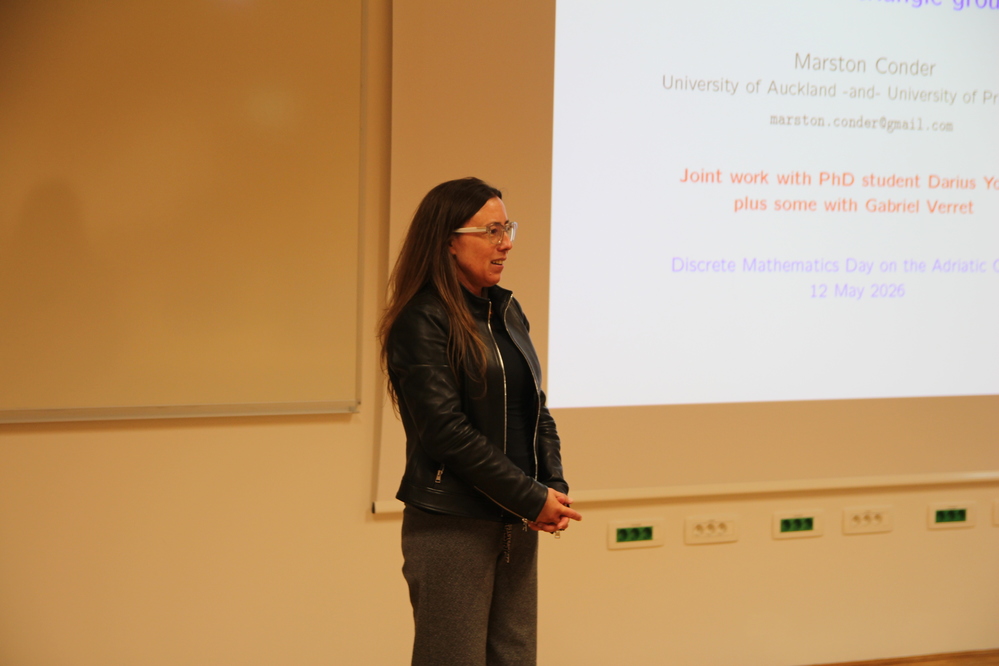
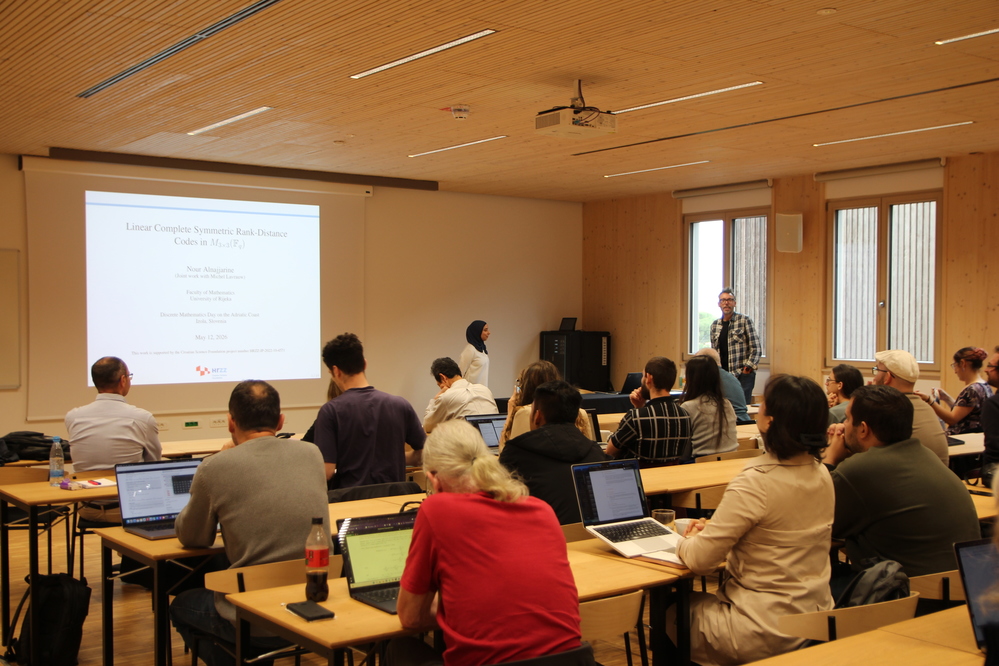
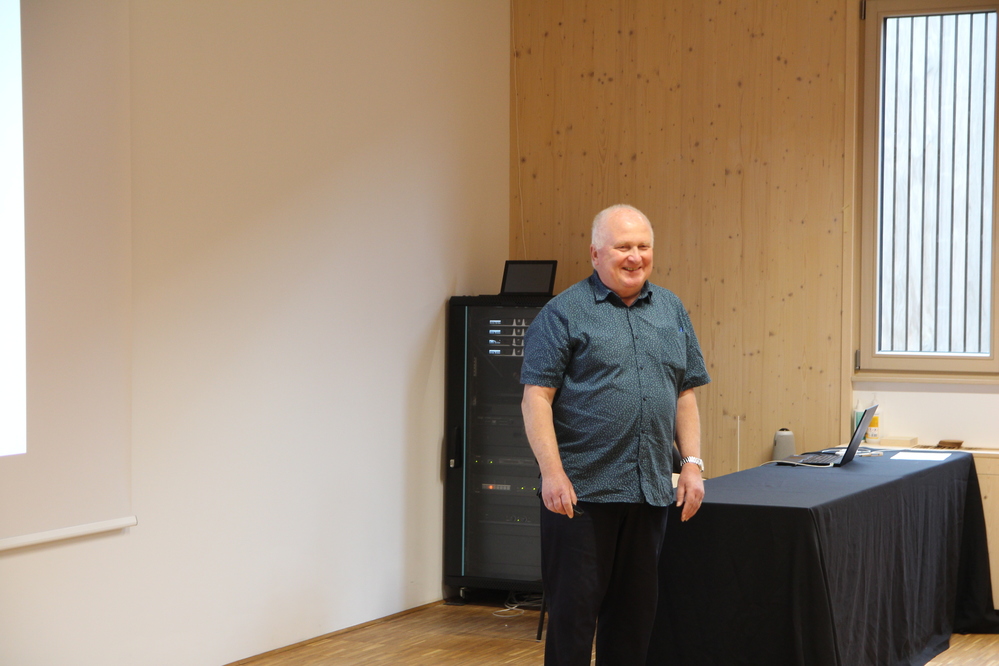
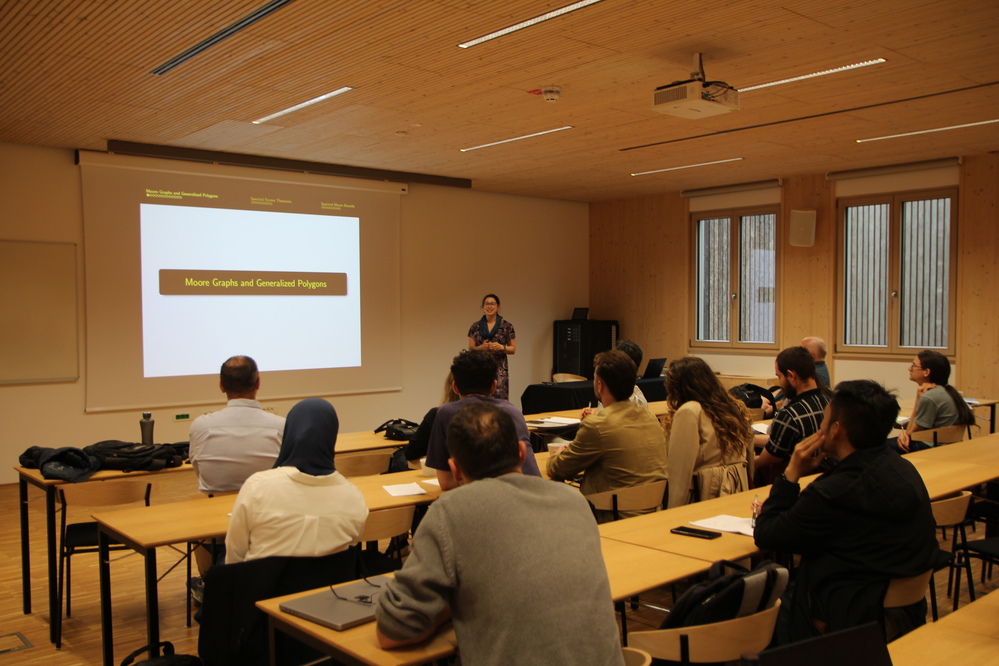
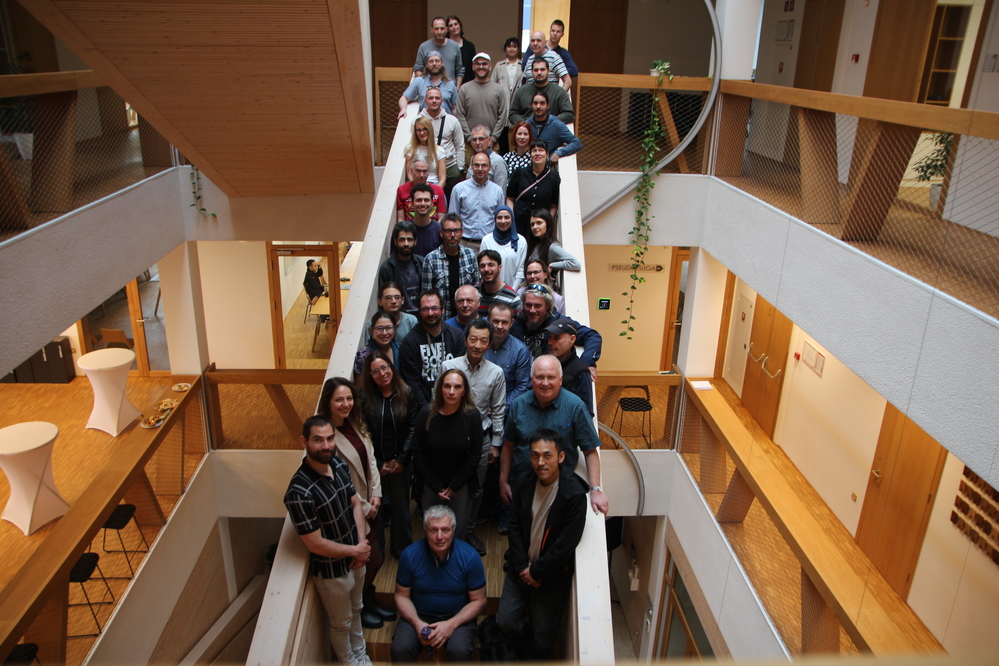
The Discrete Mathematics Day on the Adriatic Coast (DMD AC 2026) workshop is taking place today at the InnoRenew CoE building in Izola. The event brings together 38 mathematicians from across the Adriatic region with the aim of strengthening academic collaboration and fostering new connections between universities and research institutions. Organizers of the workshop are UP FAMNIT, UP IAM and SDAMS.
Several of the invited speakers are already engaged in ongoing collaborations with researchers at UP FAMNIT, while some are visiting our university for the first time. Professor Marston Conder recently participated in the CSD 11 conference in Kranjska Gora, also organized in cooperation with SDAMS. Professor Akihiro Munemasa is visiting UP for the first and he will also be an invited speaker at the 11th Slovenian Conference on Graph Theory, which will take place from June 20–26, 2027, in Bled. We are very pleased to see such ongoing collaborations and to welcome both new and returning colleagues to our university.
International Women in Mathematics Day
In 2019, six regional women-in-mathematics associations launched the first May 12 International Women in Mathematics Day celebration and formed a coordination group, making it the first and unique global initiative linking regional organizations for women in mathematics worldwide.
As May 12 is also celebrated as International Women in Mathematics Day, DMD AC 2026 provides a meaningful opportunity to mark this important occasion. The day is dedicated to recognizing the achievements and contributions of women in mathematics worldwide, promoting equal opportunities in the field, and encouraging young women to pursue mathematical careers. It is celebrated on May 12 in honor of the birthday of Maryam Mirzakhani, the first woman, and the first Iranian, to receive the Fields Medal.
In this spirit, the workshop organizers are especially proud to welcome a number of distinguished women among the invited speakers and to highlight their scientific excellence and leadership in mathematics. DMD AC 2026 is also listed among the global events celebrating women in mathematics: https://may12.womeninmaths.org/2026-list.
Between May 1 and May 20, two movies about women in mathematics are available to watch for free. Viewing links are available here: https://may12.womeninmaths.org/ideas#films.
»If we knew things would be so complicated, I think we would have given up,” she said. Then she paused. “I don’t know; actually, I don’t know,« she said. “I don’t give up easily.«
— from interview with Maryam Mirzakhani, in Quanta Magazine
Monday, 11 May 2026 Presentation of the topic of the doctoral dissertation of Vanja Mileski
We invite you to the presentation of the topic of the doctoral dissertation Time Series Forecasting of Customer Spend using Inception-Residual Convolutional Neural Networks of the student Vanja Mileski, enrolled in the doctoral study programme Computer Science (in Slovene).
The presentation will take place on Thursday, 14 May 2026 at 12.30 in the classroom FAMNIT-MP5.
Thursday, 7 May 2026 European Doctoral Day 2026
The University of Primorska (UP) has joined 200 European universities in their efforts to designate May 13 as European Doctoral Day. In Europe, where science and research are established as fundamental values, this initiative aims to highlight the importance of doctoral education, doctoral candidates, and PhDs for Europe as a whole.
At the University of Primorska, we will mark the first European Doctoral Day 2026 with a series of four events at the University’s member institutions:
 UP Faculty of Mathematics, Natural Sciences and Information Technologies (UP FAMNIT)
Presentation of doctoral students’ research papers
Doctoral students will present their research areas and scientific results. The audience will include both academic staff from the University of Primorska and the wider public, as the event will be held in a hybrid format with the option to join via a publicly available link: https://upr-si.zoom.us/j/65127426860?pwd=kYjS6yFt6yeUcYAGGPcnJShbb5UI7r.1.
May 13, 14:00, lecture room VP3: Enrico Talotti (University of Nova Gorica, and University of Primorska) - Towards the enumeration of EL-semihypergroups
We investigate finite semigroups equipped with a preorder relation that is compatible with the semigroup operation and we develop an enumeration methodology based on automorphism group actions. For a fixed finite semigroup S, the automorphism group Aut(S) acts naturally on the set Pre(S) of compatible preorders via pushforward; the orbits of this action correspond exactly to isomorphism classes of preordered semigroups.Using known classifications of semigroups of small order, together with exhaustive generation of compatible preorders, our method yields a complete enumeration of preordered semigroups up to order five. Finally, this framework opens a computational window toward the study of more complex algebraic systems, particularly EL-hyperstructures arising in hypercompositional algebra, where preordered semigroups serve as a fundamental tool for their construction.
 UP Faculty of Education (UP PEF)
May 13, 2026, 17:30 - 19:00: Doctoral Tea Party: a conversational gathering of graduates, students, and mentors from UP PEF
Doctoral students are invited to a Doctoral Tea Gathering – an informal discussion event aimed at connecting doctoral students and graduates of UP PEF, along with their mentors. Former doctoral candidates of UP PEF will also take part, including the faculty’s first doctoral graduate, who will share their study and career experiences and answer participants’ questions. The event is an internal UP PEF event, intended to foster connections and strengthen the doctoral community at the faculty.
More: https://pef.upr.si/sl/koledar-dogodkov/2026041610170236/doktorska-cajanka-na-up-pef
 UP Faculty of Management (UP FM):
May 13, 2026, 15:30 - 16:30, lecture room 4: Discussion with doctoral students: Sustainable Tourism: Opportunities and Challenges
The discussion will highlight doctoral studies as a crucial phase of research training, with guests sharing their experiences with research work, the development of competencies, and the challenges they face during their doctoral studies. Special emphasis will be placed on the role of research and the placement of research work within a broader scientific and social context, career opportunities, and the transition to the academic or broader professional environment. We will address the challenges of doctoral studies in the rapidly changing Slovenian, European, and global environments, from the perspective of ICT development, artificial intelligence, and sustainability challenges. The discussion will also highlight the importance of international collaboration and knowledge exchange with researchers from European and other universities around the world.
 UP Faculty of Tourism Studies – Turistica (UP FTŠ Turistica)
May 13, 2026: A gathering of graduate students, doctoral candidates, early-career researchers, doctoral program instructors, and potential employers. What competencies can and should a doctoral student in tourism acquire?
The event will be designed as a meeting of postgraduate students, doctoral candidates, early-career researchers, doctoral programme instructors, and potential employers of this graduate profile. It will serve as a platform for exchanging expectations, experiences, and perspectives on doctoral studies in the field of tourism. A key characteristic of this programme is its inter- and multidisciplinary nature, as well as the “contrast” between the applied nature of the field and the academic/scientific standards that shape the choice of dissertation topic, content, and study approach. The central question is how to effectively align the feasibility of the chosen dissertation topic, its scientific contribution, and the competencies expected from doctoral graduates by the professional sector.
The meeting will take place within the 2026 TTRA Europe Annual Chapter Conference; more detailed information is available at: https://www.turistica.si/si/extra-strani/2026-ttra-europe-annual-chapter-conference
The events are designed to foster networking and the exchange of ideas and information among various stakeholders, as well as to facilitate discussions on career paths and opportunities for young PhDs.
European Doctoral Day is a joint initiative of various European associations dedicated to promoting the importance of doctoral education. The initiative stems from a respect for science and research as fundamental European values. European Doctoral Day will also contribute to the formation of a common European identity and to the enrichment of the cultural and intellectual diversity of the European research area.
Thursday, 7 May 2026 International CSD11 conference in Kranjska Gora brought together researchers from 16 countries
The international conference Computers in Scientific Discovery 11 (CSD11) is taking place in Kranjska Gora from 4 to 8 May 2026 under the theme »Computationally Intensive Methods in Mathematics: Applications in Chemistry and Beyond«. The conference brings together researchers working at the intersection of mathematics, computer science, and the natural sciences, with a focus on algorithms, mathematical software, and data-driven approaches in scientific discovery. The organizers of this year’s edition are UP FAMNIT and the Slovenian Discrete and Applied Mathematics Society (SDASMS), while the sponsors are Institute of Mathematics, Physics and Mechanics (IMFM) and European Mathematical Society.
The conference hosts 46 participants from 16 countries: Belgium, Denmark, France, Germany, Hungary, Italy, Kuwait, Macedonia, Malta, New Zealand, Serbia, Slovakia, Slovenia, Taiwan, United Kingdom and USA.
The scientific programme includes invited lectures, contributed talks, and discussions on contemporary developments in discrete mathematics, computer science, chemistry, and physics. Special emphasis is placed on computer-assisted research, curated mathematical databases, and computational methods in scientific discovery.
Renowned scientists are participating in the conference as invited speakers: Marién Abreu (University of Basilicata, Italy), Milica Anđelić (Kuwait University, Kuwait), Marston D. E. Conder (University of Primorska, Slovenia, and University of Auckland, New Zealand), Jan Goedgebeur (KU Leuven, Belgium), Tatiana Jajcayová (Comenius University Bratislava, Slovakia), and Hadrien Mélot (University of Mons, Belgium).
CSD11 continues the long-standing tradition of the Computers in Scientific Discovery conference series, which fosters interdisciplinary collaboration and connects researchers from different continents working in computationally supported science. Previous editions of the conference were held in Belgium, Canada, China, the United Kingdom and USA, and also in Slovenia in 2012.
More information about the conference is available at the website.


Jan Goedgebeur

Milica Anđelić

Irene Sciriha

Patrick W. Fowler

Tatiana Jajcayová

Hadrien Mélot

Jörg Arndt
